
Best Macro Wet Lenses for Underwater Photography
A good wet macro lens can completely change what you are able to photograph underwater. By adding a close-up lens in front of your housing's port, you can increase magnification, focus on much smaller subjects, and move from standard macro photography into true supermacro — often without changing the camera lens inside your housing.
The challenge is choosing the right one.
There are now more underwater macro wet lenses available than ever, ranging from relatively mild close-up lenses that are easy to use to extremely powerful supermacro optics designed for photographing the smallest nudibranchs, shrimp, and other tiny marine life. There are also newer specialty optics that do something different altogether, such as widening the field of view of a traditional 90–105mm macro lens while retaining close-focus capability.
That means choosing a wet macro lens based simply on brand or the highest diopter number is not necessarily the best approach. A +23 lens is not automatically better than a +13, and a lens that works extremely well with a 100mm or 105mm macro lens may not be the best choice for a compact camera or shorter focal-length lens. Magnification, working distance, autofocus performance, sensor size, camera lens, subject size, and the photographer's experience level all matter.
How We Chose the Best Underwater Macro Wet Lenses
At Bluewater Photo, we have spent years photographing and testing underwater camera equipment in real-world diving conditions. Our team has used many of the macro wet lenses in this guide on actual underwater shoots, including different combinations of compact cameras, mirrorless and DSLR systems, and dedicated macro lenses.
That hands-on experience is particularly important with macro optics. Manufacturer specifications can tell you the optical strength of a lens, but they do not always tell you how easy it is to find and hold focus underwater, how much working distance you have in front of the subject, whether you can position your strobes effectively, or how practical the lens is when shooting a moving animal.
For this guide, we are therefore looking beyond specification sheets. We consider:
- Real-world magnification and image quality
- Working distance and ease of focusing
- Compatibility with different camera and macro-lens combinations
- Performance on full-frame, APS-C, Micro Four Thirds, and compact cameras
- How practical the lens is to use and light underwater
- Whether the extra magnification is actually useful for the intended photographer
- Overall value compared with competing macro wet lenses
Rather than simply ranking every lens from strongest to weakest, this guide is designed to help you choose the right macro wet lens for your particular underwater camera system and the subjects you want to photograph.
We will look at the best options for the following:
- Best Wet Macro Lenses for 90–105mm Macro Lenses
- Best Wet Macro Lenses for Compact Cameras & Shorter Lenses
- Best Wet Macro Lenses for Smartphones & Action Cameras
- Best specialty macro optics
We will also explain how diopter strength relates to actual underwater magnification and when choosing a more powerful lens can actually make macro photography harder rather than better.
Whether you are adding your first wet macro lens or looking for an extreme supermacro setup capable of photographing the smallest subjects on the reef, the goal of this guide is to make it easier to understand the differences and choose the lens that will work best for you underwater.
Need some more help deciding what gear is right for you? No problem! Contact our sales team - we are experts at finding the right gear for any situation!
Best Macro Wet Lenses – Quick Picks
There is no single wet macro lens that is best for every underwater photographer. A high-powered supermacro lens that works beautifully with a 100mm or 105mm macro lens may be far too strong for a compact camera, while a lower-powered close-up lens can actually be the better choice for photographers who want more working distance and easier focusing.
Based on our experience using and testing macro wet lenses underwater, these are the options we would start with for the most common types of underwater macro photography.
| Our Pick | Macro Wet Lens | Best For | Shop |
|---|---|---|---|
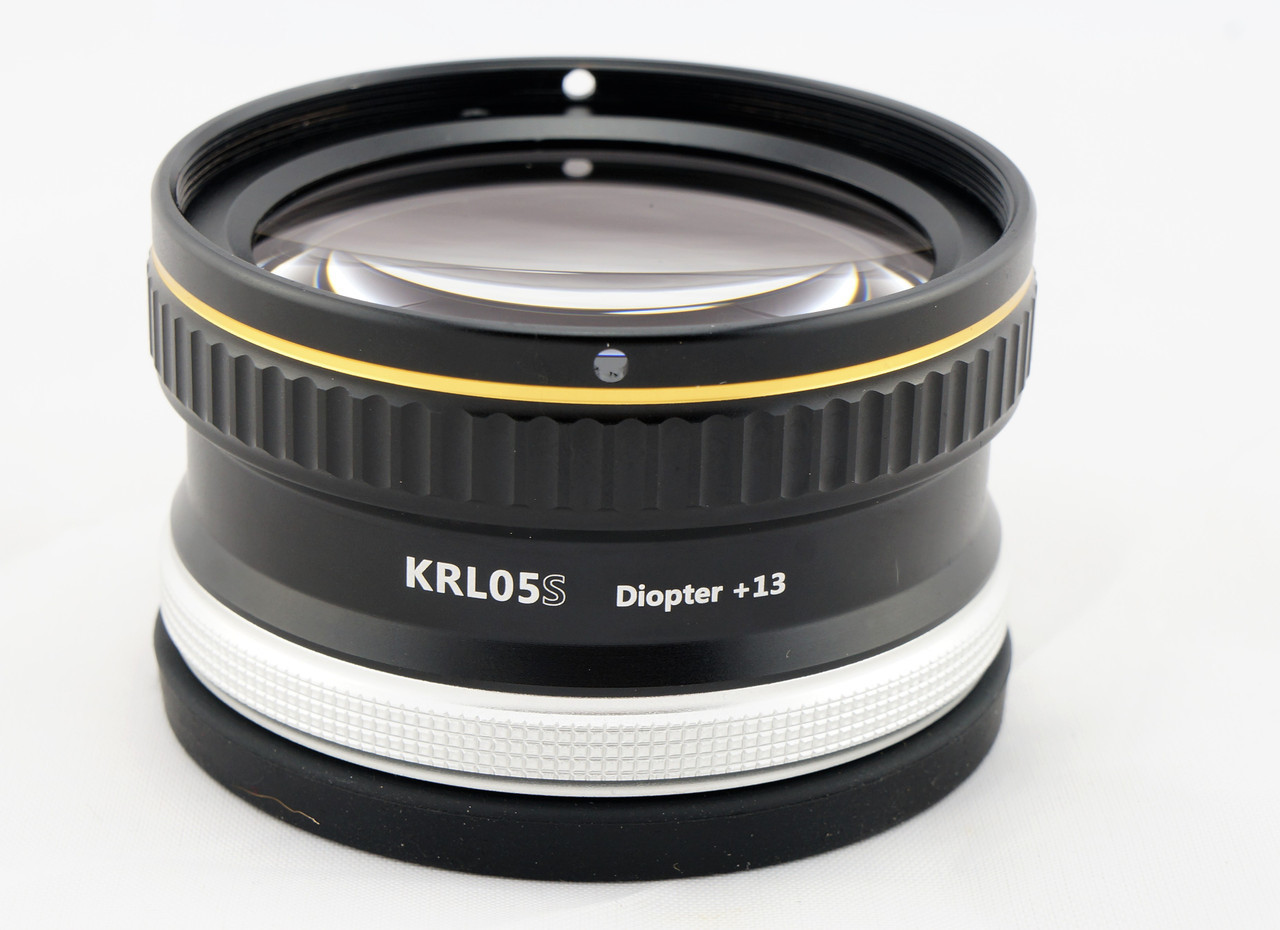
| Best Overall Macro Wet Lens | Kraken KRL-05S +13 | The best balance of magnification, image quality, usability, and value for serious macro shooters. | Buy Now |
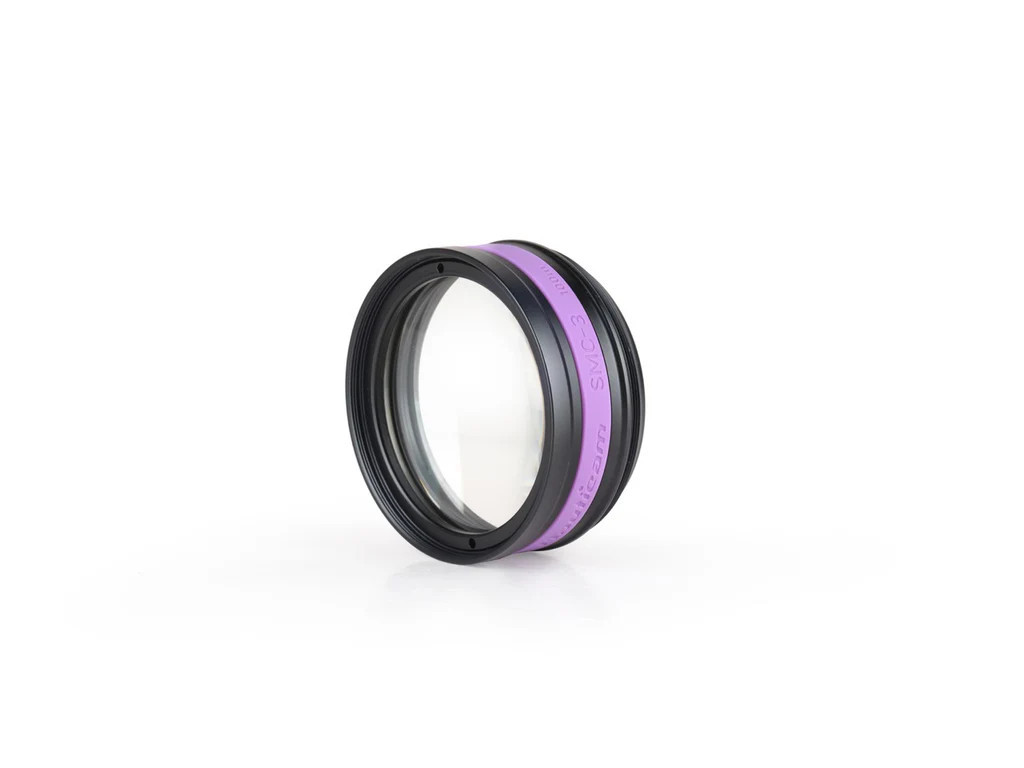
| Best Premium Supermacro Lens | Nauticam SMC-3 | Photographers looking for premium optical performance with 90–105mm macro lenses. | Buy Now |
| Best First Macro Wet Lens | Bluewater +7 Macro Lens | Beginners, compact cameras, kit lenses, and photographers who want easier focusing. | Buy Now |
| Best Extreme Supermacro Lens | Kraken +23 Macro Lens | Experienced photographers trying to photograph the smallest subjects possible. | Buy Now |
| Best for Compact Cameras | Nauticam CMC-2 | Compact and smaller-camera systems where a more manageable close-up optic makes sense. | Buy Now |
| Best Specialty Macro Wet Optic | Marelux MacroView 60 | 90–105mm macro users who want a wider, more flexible field of view rather than more magnification. | Buy Now |
| Best for Smartphone Macro | Kraken +12 Macro Diopter | Smartphone housing users who want substantially better close-up capability underwater. | Buy Now |
Best Wet Macro Lenses for 90–105mm Macro Lenses
Dedicated 90–105mm macro lenses — such as the Sony 90mm/100mm Macro, Canon 100mm Macro, Nikon 105mm Macro, and Sigma 105mm Macro — are some of the best lenses for underwater supermacro photography. They already provide excellent native macro capability, and adding a wet close-up lens lets you move beyond 1:1 reproduction for much smaller subjects.
For most photographers using these lenses, we consider the +12 to +15 range the sweet spot. It provides a significant increase in magnification without making working distance and focusing as restrictive as the strongest +23 lenses. Extreme +23 optics can produce remarkable magnification, but they are specialist tools best suited to photographers already comfortable with supermacro.
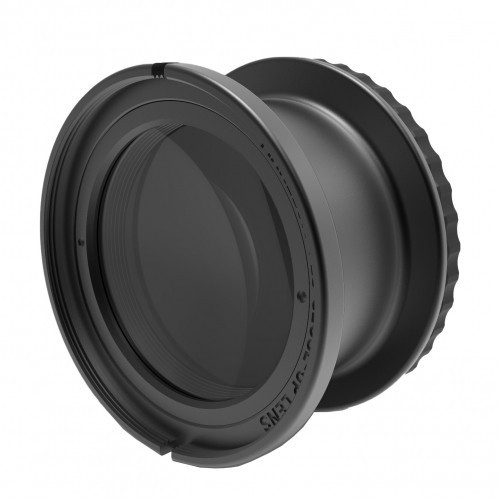
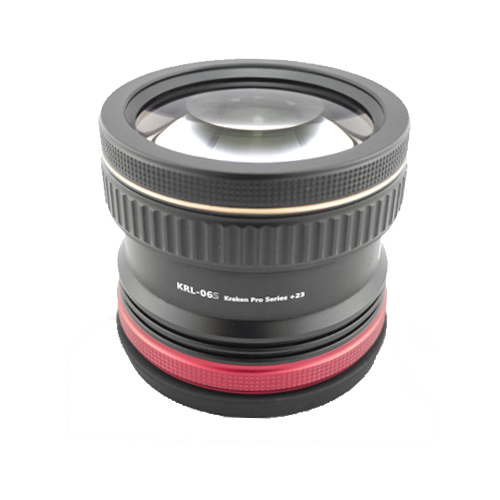
Our Best Overall choice is the Kraken KRL-05S +13. We have tested it underwater with a Canon 100mm Macro and found it capable of excellent sharpness and frame-filling detail on very small subjects. It is rated for up to approximately 2.5x magnification with a 105mm macro lens and strikes an excellent balance between magnification, usability, and price.
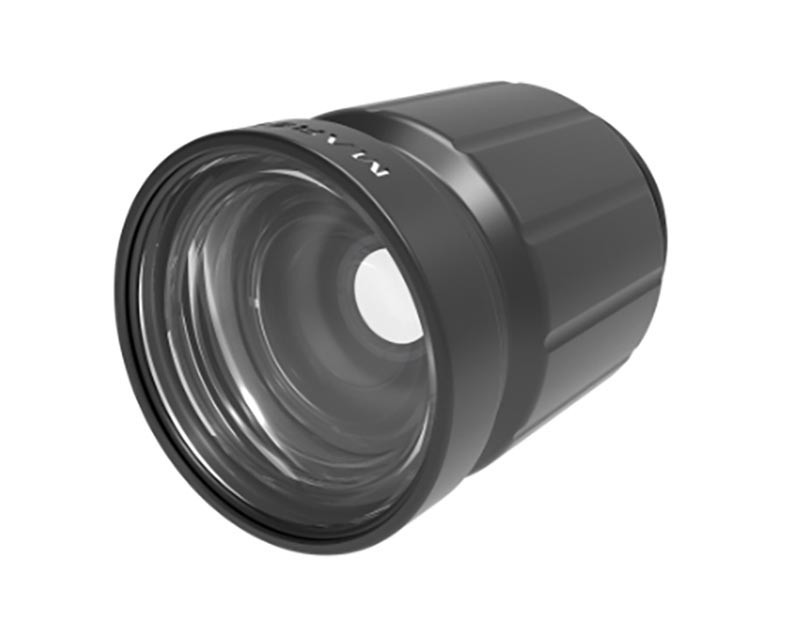
For photographers prioritizing premium optical performance, the Nauticam SMC-3 is our top choice. It is purpose-designed as a water-contact supermacro optic and provides excellent sharpness while retaining useful working distance. The Weefine +13 is another strong alternative in the same general magnification class.
The Marelux MacroView M-15 offers a useful step up in optical power for photographers who want more than a +13 without immediately jumping to extreme supermacro.
At the other end of the spectrum, Kraken and Weefine +23 lenses are designed for maximum magnification of exceptionally small subjects, but the very short working distances make them considerably more demanding.
If this is your first wet macro lens, a moderate Kraken +6 or Bluewater +7 is easier to learn with and provides more forgiving focusing and working distance.
If you are unsure where to start with a 90–105mm macro lens, we generally recommend the +13 class. It provides enough additional magnification for true supermacro while remaining much more practical underwater than an extreme +23 optic.
Our Recommended Wet Lenses for 90–105mm Macro
| Wet Macro Lens | Strength / Type | Our Recommendation | Best For | Difficulty | Shop |
|---|---|---|---|---|---|
| Kraken KRL-05S +13 | +13 Up to 2.5x* | Best Overall | Best balance of serious supermacro magnification, image quality, usability, and value. | Moderate | Buy Now |
| Nauticam SMC-3 | Super Macro Converter Up to 2.3x* | Best Premium Option | High-resolution systems and photographers prioritizing premium optical performance. | Moderate | Buy Now |
| Marelux MacroView M-15 | +15 | Best +15 Option | Experienced photographers wanting more power than +13 without immediately moving to +23. | Moderate–High | Buy Now |
| Kraken +23 | +23 | Best Extreme Supermacro | Experienced supermacro shooters photographing exceptionally small subjects and details. | High | Buy Now |
| Bluewater +7 | +7 | Best for Learning Supermacro | First-time wet-lens users who want easier focusing and more forgiving magnification. | Easy | Buy Now |
*Maximum magnification varies by camera lens and focusing configuration. Figures shown are manufacturer specifications for compatible 100–105mm full-frame macro setups where stated.
Best Wet Macro Lenses for Compact Cameras & Shorter Lenses
Compact cameras and shorter focal-length lenses need a different approach to wet macro than full-frame systems using 90–105mm macro lenses. With cameras such as the Sony RX100, Canon G7 X, and mirrorless systems using shorter zooms or 45–60mm macro lenses, moderate magnification and a usable focusing range are often more valuable than maximum diopter strength.
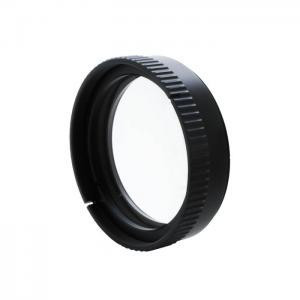
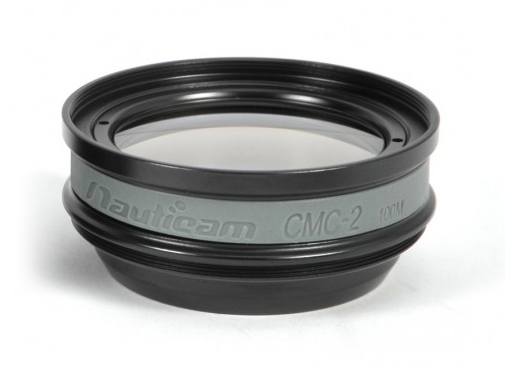
Our Best Overall choice is the Nauticam CMC-2. It was designed specifically for compact and mirrorless systems and provides excellent image quality with less magnification than the CMC-1, making it easier to focus, frame, and use in real-world diving conditions. Bluewater generally considers it the better starting point when the stronger CMC-1 Nauticam wet lens would be unnecessarily difficult.
For photographers looking for a simpler and more affordable first wet lens, the Bluewater +7 remains one of our favorite options. We have used it extensively with compact cameras, and its moderate strength, M67 mount, compact size, and ability to stack a second lens later make it particularly versatile.
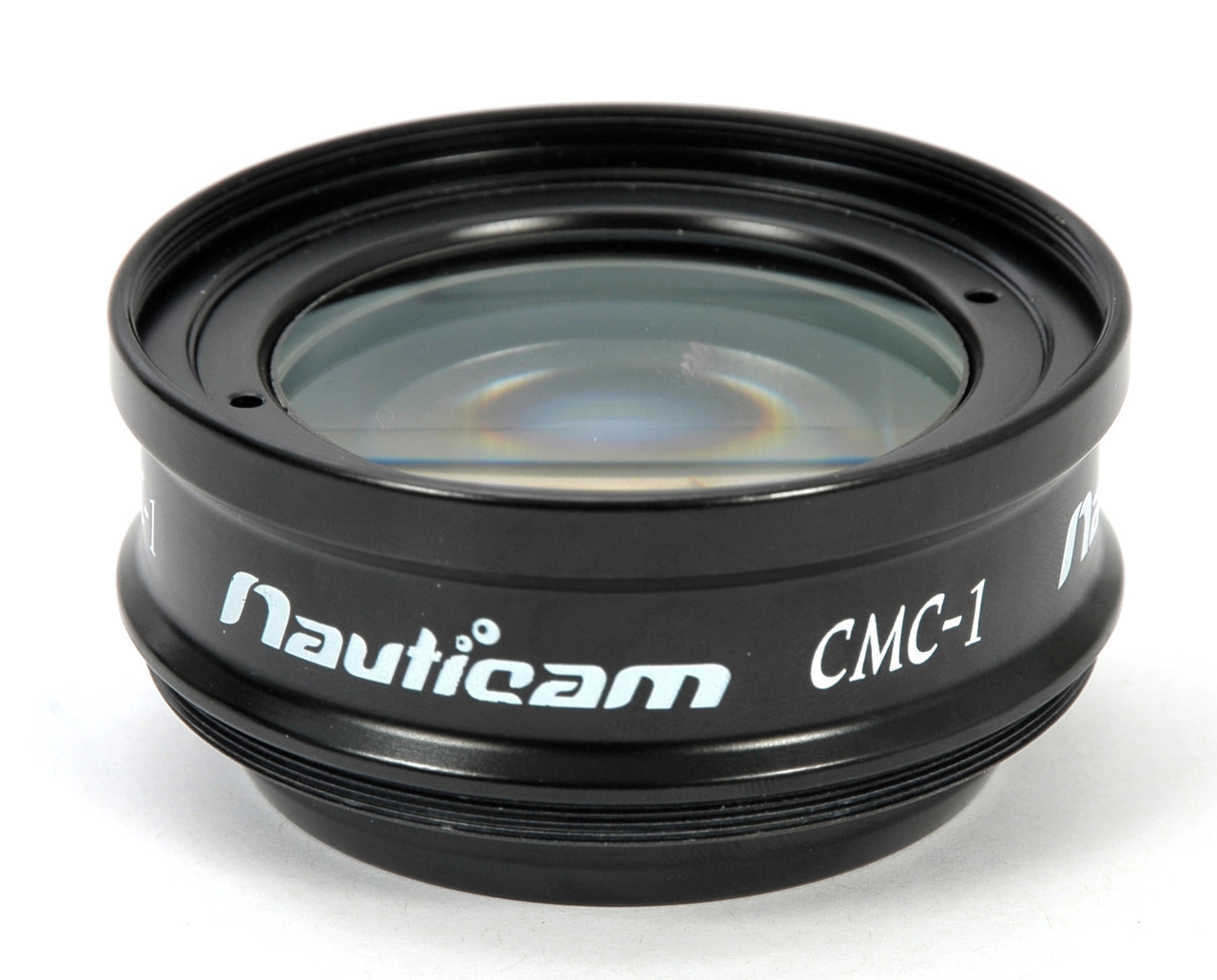
If you already have experience with wet macro and want substantially more magnification, the Nauticam CMC-1 is the logical step up.
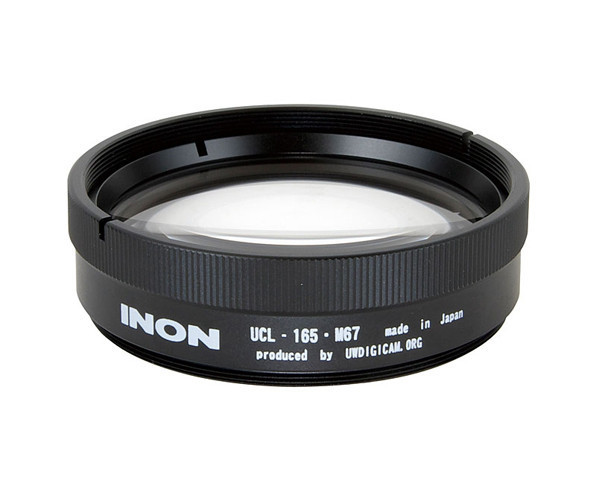
For photographers who prefer a more forgiving optic, the Inon UCL-165M67 +6 offers moderate magnification, a standard M67 mount, and a comparatively comfortable working range. It can also be stacked later if additional magnification is needed.
With compact cameras, don't automatically choose the strongest wet lens. A moderate optic combined with the camera's optical zoom is often easier to focus and can produce more consistent results underwater than an extreme supermacro diopter.
| Wet Macro Lens | Strength / Type | Our Recommendation | Best For | Difficulty | Shop |
|---|---|---|---|---|---|
| Nauticam CMC-2 | Compact Macro Converter Lower power than CMC-1 | Best Overall | Compact cameras and shorter zooms where image quality, flexibility, and manageable magnification are the priority. | Easy–Moderate | Buy Now |
| Bluewater +7 Macro Lens | +7 | Best Value / Beginner Pick | First-time wet-lens users, compact cameras, and photographers wanting affordable and forgiving macro performance. | Easy | Buy Now |
| Nauticam CMC-1 | High-Power Compact Macro Converter | Best High-Magnification Option | Experienced compact and mirrorless shooters who need substantially more magnification than the CMC-2. | Moderate–High | Buy Now |
| Inon UCL-165M67 | +6 | Best for Easier Close-Up Shooting | Compact-camera shooters who value easier focusing, moderate magnification, and a stackable M67 design. | Easy | Buy Now |
Wet-lens performance varies by camera, focal length, housing and port. Compact cameras may need to be zoomed toward the telephoto end of the lens to achieve the best magnification and avoid vignetting.
Best Wet Macro Lenses for Smartphones & Action Cameras
Smartphones and action cameras can produce excellent underwater images, but their short, wide-angle lenses are not naturally suited to filling the frame with very small subjects. A wet macro lens reduces the usable focusing distance and makes subjects such as nudibranchs, shrimp, small crabs, and coral details much easier to photograph.
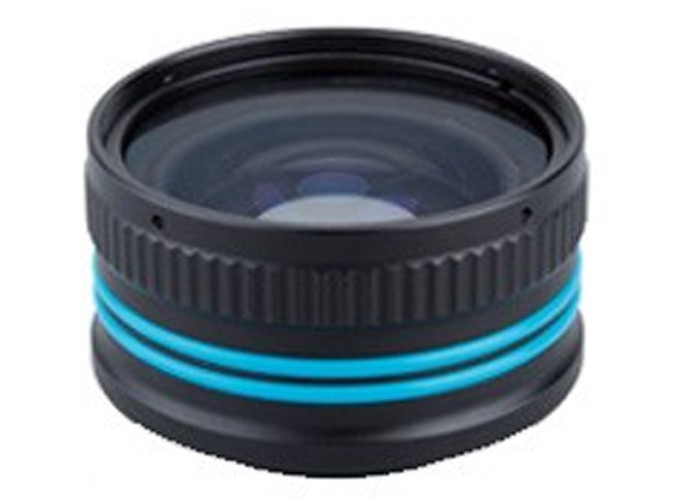
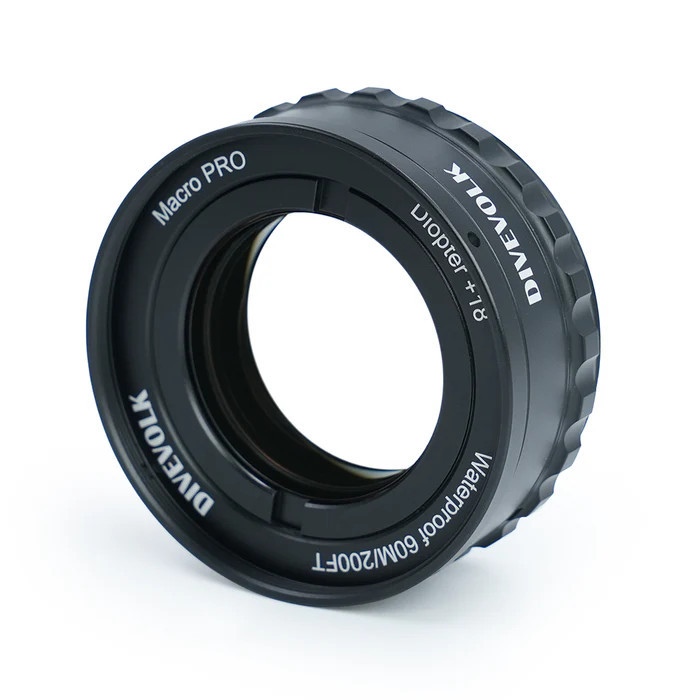
For smartphones, our Best Overall choice is the Kraken KRL-03 +12. It provides a substantial increase in close-up capability and is specifically recommended by Bluewater as a macro option for Kraken smartphone housing systems. For beginners, the Bluewater +7 is a more forgiving alternative with easier focusing and a standard M67 mount. DiveVolk users who want substantially more magnification can step up to the DiveVolk Macro Lens PRO +18, which is designed specifically for the SeaTouch ecosystem and other compatible systems.
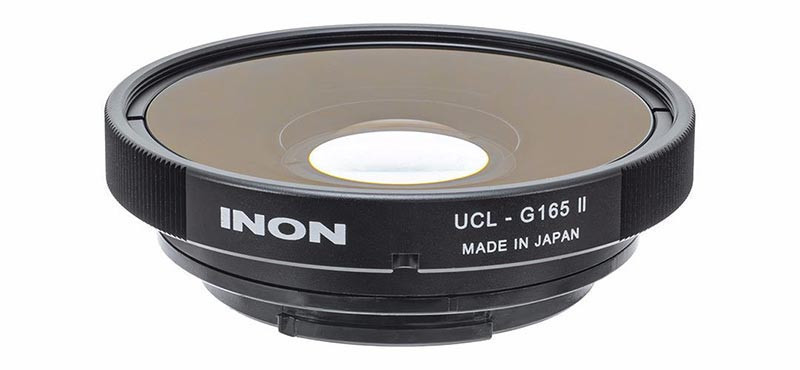
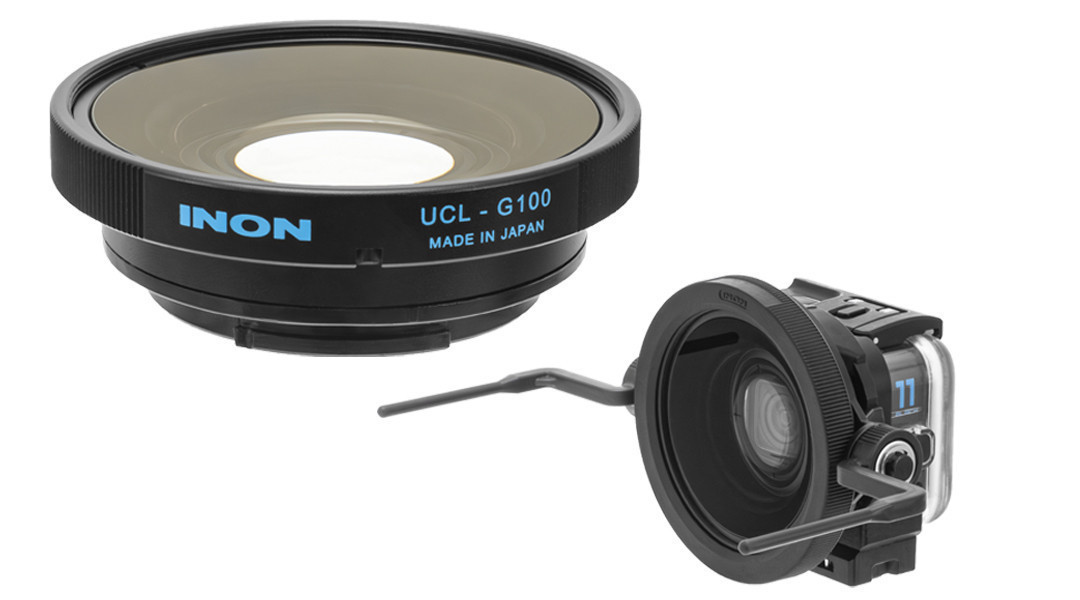
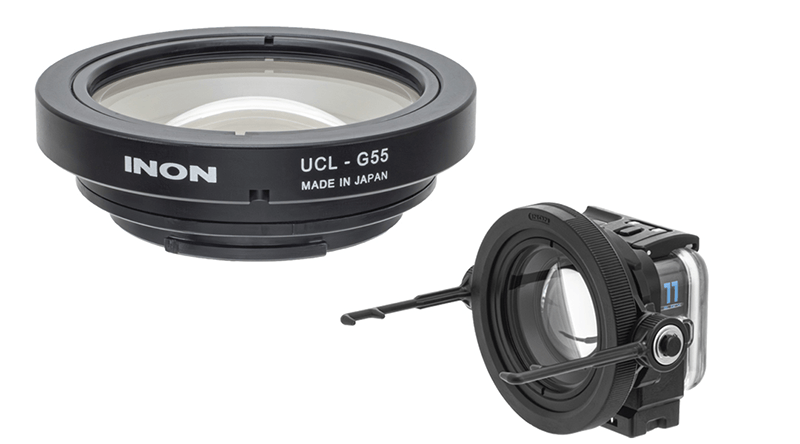
For GoPro and other action cameras, we particularly like INON's dedicated UCL-G series. Unlike conventional diopters, these optics are designed around the wide, fixed-focus behavior of action cameras. Bluewater tested the three main INON options underwater with the GoPro HERO13 and found that they create a very logical progression.
The INON UCL-G165 II is the easiest option to use. It provides a wider close-up perspective and greater depth of field, making it ideal for beginners and environmental macro where you want to show some of the surrounding habitat. The UCL-G100 is our Best Overall action-camera choice, providing a strong balance between close focusing, magnification, and usability.
For genuinely tiny subjects, the INON UCL-G55 moves into action-camera supermacro. It requires the camera to be positioned much closer to the subject, but it is capable of photographing very small nudibranchs, eyes, and fine details that would otherwise occupy only a small portion of the GoPro frame.
Smartphone users should choose magnification based on their housing and camera module, while GoPro users are generally better served by purpose-built action-camera optics. For the INON lineup, think G165 II = easiest and widest, G100 = best all-around, G55 = maximum supermacro.
| Wet Macro Lens | Strength / Type | Our Recommendation | Best For | Difficulty | Shop |
|---|---|---|---|---|---|
| Best Macro Wet Lenses for Smartphones | |||||
| Kraken KRL-03 +12 | +12 | Best Overall for Smartphones | Smartphone shooters wanting strong macro capability without moving to an extreme high-power optic. | Moderate | Buy Now |
| Bluewater +7 Macro Lens | +7 | Best Value / Beginner Pick | First-time smartphone macro shooters wanting easier focusing and a more forgiving close-up lens. | Easy | Buy Now |
| DiveVolk Macro Lens PRO +18 | +18 | Best High-Magnification Smartphone Option | DiveVolk SeaTouch users photographing very small subjects where additional magnification is the priority. | High | Buy Now |
| Best Macro Wet Lenses for GoPro & Action Cameras | |||||
| INON UCL-G165 II | Wide Close-Up | Best for Beginners / Environmental Macro | GoPro and action-camera users wanting easier focusing, greater depth of field, and more surrounding environment. | Easy | Buy Now |
| INON UCL-G100 | General Macro | Best Overall for Action Cameras | Most GoPro shooters looking for the best balance of magnification, close focusing, and usability. | Moderate | Buy Now |
| INON UCL-G55 | Supermacro | Best Action-Camera Supermacro | Experienced GoPro shooters photographing tiny nudibranchs, eyes, and very small marine-life details. | High | Buy Now |
Compatibility varies by housing and mounting system. Smartphone housings may require a 52mm or 67mm threaded adapter. INON action-camera lenses are available in different mount versions, including SD and ZD, so confirm the correct front mask or adapter for your camera and housing before ordering.
Specialty Macro Optics
Not every wet macro optic is designed to give you more magnification. Some of the newest water-contact lenses solve a different problem: making a dedicated macro setup more versatile underwater.
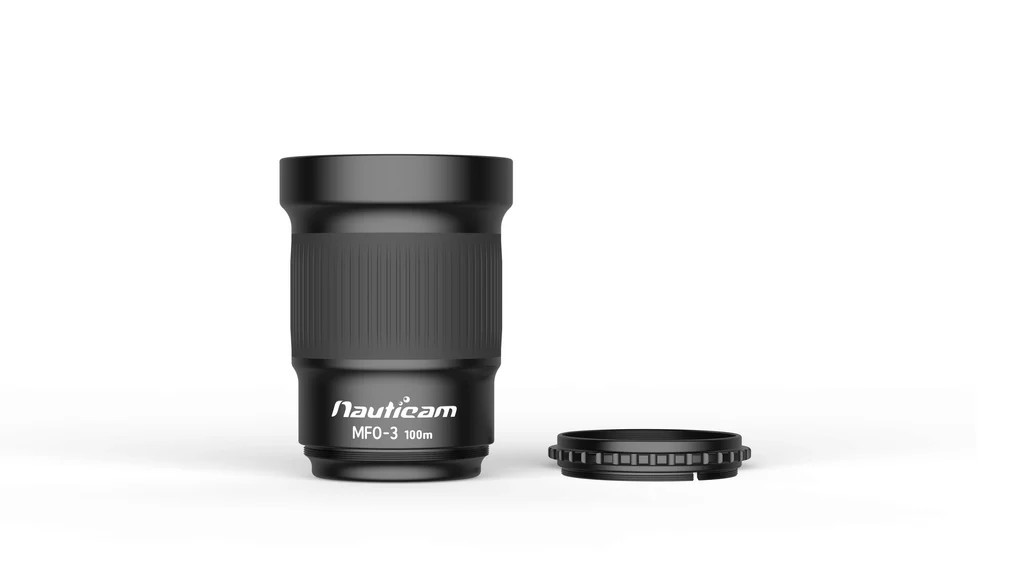
Our Best Overall Specialty Macro Optic is the Nauticam MFO-3 Nauticam wet lens. It is designed primarily for 90–105mm macro lenses and changes their narrow underwater perspective into something closer to a 50–60mm-style macro setup. That makes it much easier to frame larger nudibranchs, frogfish, fish portraits, behavior, and blackwater subjects while still retaining close-focus capability.
The Nauticam MFO-1 takes a different approach. Rather than substantially widening the field of view, it provides a broader usable focus range with a modest increase in magnification. It is a useful option for photographers who like the perspective of their existing macro lens but want greater shooting flexibility.
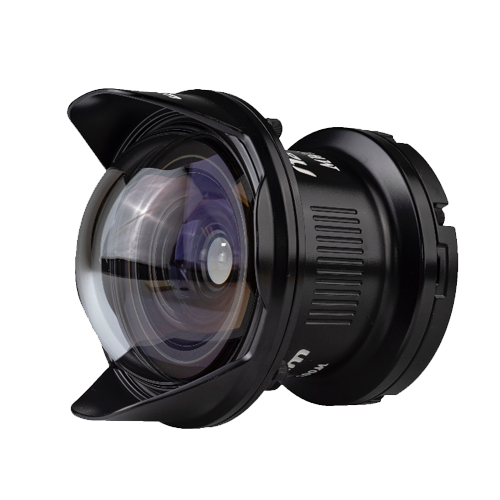
The Marelux MacroView 60 is another interesting solution for photographers using 90–105mm macro lenses. Like the MFO-3, it converts the long-macro perspective toward approximately 60mm, giving photographers another way to handle larger macro subjects without changing the lens or port during the dive.
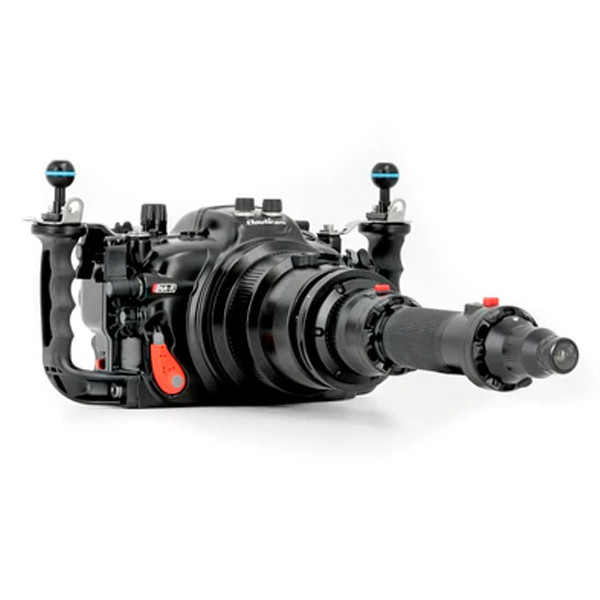
For more creative photography, the Nauticam EMWL goes much further. This modular system combines macro-level close focusing with interchangeable 60°, 100°, 130°, and 160° objective lenses to produce dramatic wide-angle macro images where a tiny foreground subject can be shown together with its surrounding environment. Bluewater has tested the EMWL extensively underwater, and while it has a definite learning curve, it can produce perspectives that conventional macro optics simply cannot.
Finally, the Nauticam MWL-1 is designed around compatible 60mm-equivalent macro lenses and converts them to an ultra-wide 150° field of view. It is less of a supermacro tool and more of a way to shoot macro and true wide angle on the same dive.
Choose a conventional +13, +15, or +23 wet lens when your subject is too small. Choose an MFO-3 or MacroView 60 when your subject is too large for your 90–105mm macro lens. Choose the EMWL or MWL-1 when you want to move beyond traditional macro composition altogether.
| Specialty Optic | What It Does | Our Recommendation | Best For | Difficulty | Shop |
|---|---|---|---|---|---|
| Nauticam MFO-3 | Converts 90–105mm macro toward a wider 50–60mm-style perspective | Best Overall Specialty Macro Optic | Long-macro shooters wanting wider framing for blackwater, behavior, larger critters, and fish portraits. | Easy–Moderate | Buy Now |
| Nauticam MFO-1 | Extends usable focus range with a modest magnification increase | Best for Focus Range & Moderate Magnification | Macro photographers who want greater focusing flexibility while retaining a traditional macro perspective. | Easy–Moderate | Buy Now |
| Marelux MacroView 60 | Converts 90–105mm macro to approximately a 60mm-style view | Best Alternative 60mm-Style Converter | Full-frame long-macro users wanting more framing flexibility for larger macro and blackwater subjects. | Easy–Moderate | Buy Now |
| Nauticam EMWL | Modular wide-angle macro system with 60°–160° objectives | Best for Creative Wide-Angle Macro | Advanced photographers wanting dramatic bug-eye macro images that include the surrounding environment. | High | Buy Now |
| Nauticam MWL-1 | Converts compatible macro lenses to an ultra-wide 150° view | Best Macro-to-Wide Conversion Lens | Photographers wanting traditional macro and true ultra-wide capability from the same compatible lens setup. | Moderate | Buy Now |
Specialty water-contact optics are highly system-dependent. Always confirm compatibility with your camera lens, housing, macro port, and mounting system before ordering. The Nauticam EMWL is a modular system requiring a compatible focusing unit, relay lens, and objective lens.
How Much Magnification Do You Need?
More magnification is not always better. As the strength of a wet macro lens increases, you can photograph smaller subjects — but working distance generally becomes shorter, depth of field becomes shallower, and focusing and lighting become more difficult.
It is also important to remember that diopter strength is not the same as actual magnification. A +13 wet lens does not provide 13x magnification. The final reproduction ratio depends on the wet optic and the camera lens behind it. The same +13 lens will therefore behave differently on a 60mm macro lens than on a 105mm macro lens.
For most photographers using a 90–105mm macro lens, we consider the +10 to +15 range the sweet spot for serious supermacro. Photographers just getting started — or using compact cameras and shorter lenses — will often find a +5 to +7 optic much easier to use. The strongest +18 to +23 lenses are best treated as specialist tools for genuinely tiny subjects.
| Lens Strength | Macro Level | Best For | Typical Subjects | Difficulty |
|---|---|---|---|---|
| Native 1:1 | Standard Macro | General underwater macro without an additional wet lens. | Nudibranchs, shrimp, seahorses, small fish, crabs and fish details. | Easy–Moderate |
| +5 to +7 | Moderate Macro | Beginners, compact cameras, shorter lenses and photographers wanting easier focusing. | Smaller nudibranchs, shrimp, gobies, blennies and small reef details. | Easy |
| +10 to +15 | Supermacro ★ OUR SWEET SPOT | Experienced macro shooters, especially with 90–105mm macro lenses. | Hairy shrimp, pygmy seahorses, tiny nudibranchs, skeleton shrimp and rhinophores. | Moderate |
| +18 to +23 | Extreme Supermacro | Experienced supermacro specialists where maximum magnification is the priority. | Tiny shrimp, eggs, eyes, individual rhinophores, polyps and minute marine-life details. | High |
Important: Diopter strength does not equal actual magnification. Final reproduction depends on the wet lens, camera lens, focal length and focusing configuration. Always check performance and compatibility with your complete camera system.
How to Choose a Wet Macro Lens
The best wet macro lens is not necessarily the strongest or most expensive option. The right choice depends on your camera lens, the subjects you want to photograph, how much working distance you need, and how the wet lens fits into your complete underwater system.
Before choosing a lens, focus on these six factors.
1. Start With Your Camera Lens
The lens inside your housing has the biggest influence on how a wet macro lens will perform. 90–105mm macro lenses are ideal for stronger +10 to +23 supermacro optics because their longer focal lengths gain substantial magnification from a wet lens. 45–60mm macro lenses, shorter zooms, and compact cameras generally work better with more moderate optics such as +6, +7, or dedicated compact converters like the Nauticam CMC series.
Smartphones and action cameras should be matched with lenses proven for those specific systems rather than assuming a conventional camera diopter will perform well.
2. Match Magnification to Your Subjects
Think about what you actually photograph most often. A moderate +5 to +7 lens is often enough for nudibranchs, shrimp, gobies, and smaller reef subjects.
The +10 to +15 range is our preferred starting point for serious supermacro with a 90–105mm macro lens. Stronger +18 to +23 lenses are specialist tools for tiny shrimp, eggs, rhinophores, eyes, and other subjects only a few millimeters across. Don't choose more magnification than you regularly need.
3. Consider Working Distance and Difficulty
Higher magnification usually means a shorter working distance and a narrower focusing range. That affects much more than focus. Less working distance also makes it harder to position strobes, photograph shy animals, work in surge, and avoid contacting the reef or substrate. For this reason, we often favor a slightly less powerful wet lens that is easier to use consistently underwater. If two lenses provide similar image quality and magnification, the one with the more practical working distance may be the better choice.
4. Consider Your Camera and Sensor Format
Full-frame, APS-C, Micro Four Thirds, compact cameras, and smartphones do not frame the same subject in the same way. A smaller sensor does not increase the true optical reproduction ratio, but the subject occupies more of the final frame. This means crop-sensor photographers may not need as much additional magnification as a full-frame photographer to achieve similar framing. Rather than shopping by diopter number alone, consider the complete camera and lens combination.
5. Check Mount and Optical Compatibility
M67 is the most common mounting standard for underwater macro wet lenses, but an M67 thread does not automatically mean every M67 wet lens is ideal for every M67 port.
Before purchasing, confirm:
- Camera and lens compatibility
- Housing and macro-port compatibility
- Wet-lens thread or bayonet size
- Whether an adapter is required
- Whether the combination may vignette
- Whether there is enough physical clearance
Smartphone and action-camera systems may use M52, M67, SD, ZD, bayonet, or proprietary mounts, so compatibility becomes especially important with these systems.
6. Think About How You Will Use It Underwater
Finally, consider how easily you can add or remove the wet lens during a dive. A direct threaded mount is simple and inexpensive but slower to remove.
A flip adapter lets you instantly switch between native macro and supermacro and is our preferred solution for most serious macro photographers. A dual flip holder can carry two different strengths, while stackable lenses provide another way to add magnification when needed. Also consider the physical size and weight of the optic. Large multi-element wet lenses can noticeably change the balance of the housing, particularly when mounted on a flip adapter.
Frequently Asked Questions About Wet Macro Lenses
Quick answers to some of the most common questions underwater photographers have when choosing and using a wet macro lens.
Does a +13 wet macro lens mean 13x magnification?
No. The +13 number describes optical strength in diopters; it does not mean 13x magnification. Actual reproduction depends on the wet optic and the camera lens behind it. The same +13 lens will therefore produce different results on a 60mm macro lens than on a 105mm macro lens.
What strength wet macro lens should I buy?
Around +5 to +7 is a good starting point for beginners, compact cameras, and easier focusing. For serious supermacro with a 90–105mm macro lens, we generally recommend +10 to +15. Stronger +18 to +23 lenses are best suited to experienced photographers shooting extremely small subjects.
Is a +23 wet macro lens better than a +13?
Not necessarily. A +23 provides more magnification, but it also produces a shorter working distance, shallower depth of field, and more difficult focusing. For most photographers, a +13-class lens provides a better balance between magnification and usability.
What wet macro lens strength is best for a 90–105mm macro lens?
For most experienced underwater macro photographers, approximately +12 to +15 is the sweet spot. It provides a major increase over native 1:1 macro while remaining easier to use than the strongest +23 options. Beginners may prefer starting with a +6 or +7.
Can I use the same wet macro lens on different cameras?
Often, especially with M67 lenses, but performance depends on the complete camera system. Camera lens, focal length, sensor format, port design, and wet-lens position can all affect magnification, focusing range, and image quality.
Will any M67 wet macro lens work on any M67 port?
No. M67 confirms that the lens can physically attach to an M67 thread, but it does not guarantee ideal optical compatibility. Port length, camera lens, clearance, focal length, and possible vignetting still need to be checked.
Can I stack two wet macro lenses?
Many wet lenses can be stacked for additional magnification. This provides useful flexibility, but stacking also reduces working distance and can make focusing and optical performance more demanding. For frequent supermacro use, a dedicated high-power converter may be the better solution.
Why is supermacro so difficult to focus?
Higher magnification produces a much narrower focusing range and extremely shallow depth of field. Even a few millimeters of movement can shift critical focus away from the subject's eye. Good buoyancy, a focus light, and practice maintaining the correct working distance make a major difference.
Should I use a flip adapter for a wet macro lens?
For most serious macro photographers, yes. A flip adapter lets you instantly switch between native macro and the wet optic without unscrewing anything underwater. Dual flip holders can also carry two different strengths for greater flexibility during the dive.
Not sure which wet macro lens fits your setup? Contact the Bluewater Photo team with your camera, camera lens, housing, and macro port, and we can help narrow down the best options.
Why Trust Bluewater Photo?
Our team includes professional underwater photographers and videographers with over 15 years of experience testing and photographing underwater to ensure you get thorough first hand experience and trusted reviews.
Expertise in Underwater Photography: Run by passionate divers and photographers who truly understand the gear and how it performs in real-world conditions.
Competitive Pricing: Offers competitive prices with added value like expert advice and top-tier customer support. We will match and beat any price!
Established Reputation: Trusted by thousands of divers, photographers, and professionals worldwide.
Exceptional Customer Support: Personalized service from knowledgeable staff who care about getting you the right gear.
Transparent and Honest Advice: Recommendations are based on what’s best for your needs—not just what’s in stock.
Meet the Expert:


Anthony Grote
Anthony Grote is a South African-based professional photographer, widely recognized for his work in underwater, wildlife, adventure sports, and hospitality photography. His passion for the craft began in the early 1990s during his studies, where he initially focused on bird photography.
As his interest expanded into underwater photography, Anthony moved to the Cayman Islands, where he spent two years working as an underwater photo pro. He later returned to South Africa to establish his own photography business, specializing primarily in adventure sports and the hospitality industry.
Over the years, Anthony has received numerous accolades for his underwater and wildlife imagery. His work has also included contributions to the National Geographic production The Real Serengeti, filmed in the iconic Serengeti wilderness.
Today, Anthony continues to travel the globe, diving and documenting nature whenever possible. He currently serves as the Website Manager for Bluewater Photo, while still pursuing adventure sports photography in his spare time.