

"Through Rigorous Field Testing, Not Just Technical Reviews"
Best Underwater Cameras: Our Quick Picks
| Use Case | Best Pick | Reason for Our Choice |
|---|---|---|
| Best Entry Level underwater camera for most divers | Sony RX100 VII | Best balance of image quality, autofocus, video, housing support, wet lens flexibility, and travel size |
| Best beginner underwater camera | OM System TG-7 | Simple, rugged, excellent macro, lower learning curve |
| Best budget interchangeable-lens setup | Canon R100 | Affordable step into mirrorless with real upgrade path |
| Best camera for snorkeling | GoPro HERO13 Black | Lightweight, easy to use, good for shallow water |
| Best underwater camera for scuba diving | Sony RX100 VII / Canon R100 / Sony a6700 | Depends on budget and desired control |
| Best professional underwater camera | Canon R5 Mark II or Nikon Z8 or Sony A1 II | Pro image quality, autofocus, lens ecosystem |
| Best underwater video camera | Sony FX3 / Nikon ZR / GoPro HERO13 depending on needs | Dedicated video options by budget and rig size |
Jump To Section
Pro Photo & Hybrid Cameras
Pro Cinema Cameras
What Makes The "Best Underwater Camera?"
Features To Look For When Choosing The Best Underwater Camera
Explore our expert picks below for the best underwater cameras of 2026—from compact underwater cameras for diving to professional cinema systems designed to capture the ocean in all its vivid, high-definition glory.
Which Underwater Camera Should I Buy?
The best underwater camera depends on how you plan to use it. Start with the setup that matches your diving style, experience level, and image goals.
| You are… | Start with… |
|---|---|
| A snorkeler | GoPro HERO13, OM System TG-7, or a smartphone housing |
| A beginner scuba diver | OM System TG-7 |
| A diver wanting better image quality without a huge rig | Sony RX100 VII |
| A budget mirrorless buyer | Canon R100 |
| A serious hybrid shooter | Sony a6700, Canon R7, or Nikon Z50 II |
| A professional photographer | Canon R5 Mark II, Nikon Z8, or Sony A1 II |
| A video-first shooter | Sony FX3, Nikon ZR, or GoPro depending on budget |
Best Underwater Cameras – Complete Comparison Guide
Compare our recommended camera bodies by experience level, underwater use case, housing needs, camera review, and price range.
| Camera | Best For | Housing Needed? | Price Level | Read Our Review | Buy Now |
|---|---|---|---|---|---|
| Compact & Entry-Level Cameras | |||||
| OM System TG-7 | Beginner macro, snorkeling, easiest compact setup | Optional waterproof to 15m | $ | Read Review | View Product |
| Canon G7X Mark III | Manual compact control and travel | Required | $$ | Read Review | View Product |
| Sony RX100 VII | High-end compact with excellent AF and video | Required | $$$ | Read Review | View Product |
| Canon R100 | Budget interchangeable-lens entry point | Required | $$ | Read Review | View Product |
| Canon R8 | Compact full-frame image quality | Required | $$$ | Read Review | View Product |
| Semi-Pro & Enthusiast Mirrorless Cameras | |||||
| Sony a6700 | APS-C hybrid with strong value | Required | $$$ | Read Review | View Product |
| Canon R6 Mark II | Canon full-frame hybrid shooter | Required | $$$$ | Read Review | View Product |
| Sony A7 V | Sony full-frame hybrid photo and video | Required | $$$$ | Read Review | View Product |
| Canon EOS R7 | Canon APS-C speed, reach, wildlife and macro | Required | $$$ | Read Review | View Product |
| OM System OM-1 Mark II | Compact Micro Four Thirds system with fast performance | Required | $$$$ | Read Review | View Product |
| Nikon Z50 II | Nikon APS-C entry mirrorless | Required | $$$ | Read Review | View Product |
| Nikon Z5 II | Nikon entry full-frame option | Required | $$$ | Read Review | View Product |
| Sony A7C R | Compact high-resolution full-frame setup | Required | $$$$ | Read Review | View Product |
| Professional Photo & Hybrid Cameras | |||||
| Canon EOS R5 Mark II | Top pro photo and hybrid Canon body | Required | $$$$ | Read Review | View Product |
| Nikon Z8 | Top Nikon pro hybrid underwater camera | Required | $$$$ | Read Review | View Product |
| Nikon Z6 III | Best value Nikon full-frame hybrid | Required | $$$$ | Read Review | View Product |
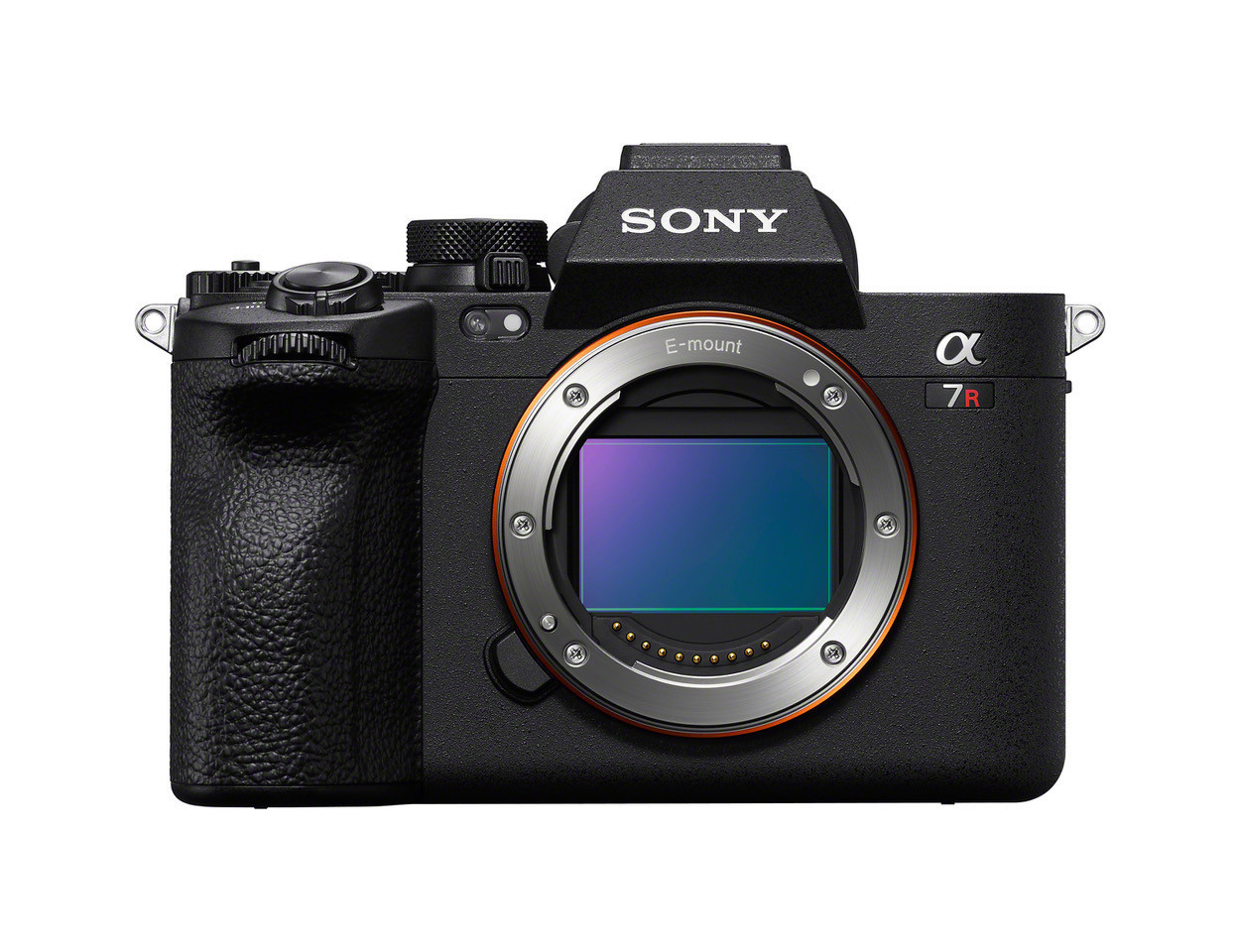
| Sony A7R V | High-resolution stills, macro and large prints | Required | $$$$ | Read Review | View Product |
| Sony A1 II | Flagship speed, resolution and hybrid performance | Required | $$$$ | Read Review | View Product |
| Sony A9 III | Global shutter and fast action shooting | Required | $$$$ | Read Review | View Product |
| Pro Video & Cinema-Style Cameras | |||||
| Sony FX3 | Cinema-style underwater video | Required | $$$$ | Read Review | View Product |
| Nikon ZR | Cinema-style Nikon video setup | Required | $$$$ | Read Review | View Product |

- Best Beginner Cameras -
OM System (Olympus) TG-7
Best Beginner Underwater Camera / Best Compact Macro Camera
Best for:
Beginners, travelers, snorkelers, and divers who want a simple, rugged compact camera with excellent macro capability. One of the easiest cameras to travel with, also light and nimble so can be considered as possibly the best underwater camera for snorkeling.
Why we like it underwater:
The Olympus TG-7 is small, tough, waterproof without a housing, and very easy to shoot. Its Microscope Mode makes it one of the best compact cameras for nudibranchs, shrimp, blennies, coral detail, and other small subjects. Add a housing, tray, strobe, and wet lens, and it becomes a surprisingly capable underwater system.
Who should buy it:
New underwater photographers who want great results without learning a full mirrorless setup. It is also a strong choice for macro-focused divers and anyone who wants a compact travel camera that can grow with accessories.
Who should skip it:
TG-6 owners who do not need USB-C or vertical video. Also skip it if you want full manual control, a larger sensor, stronger wide-angle image quality, or a more advanced video platform.
Best housing options:
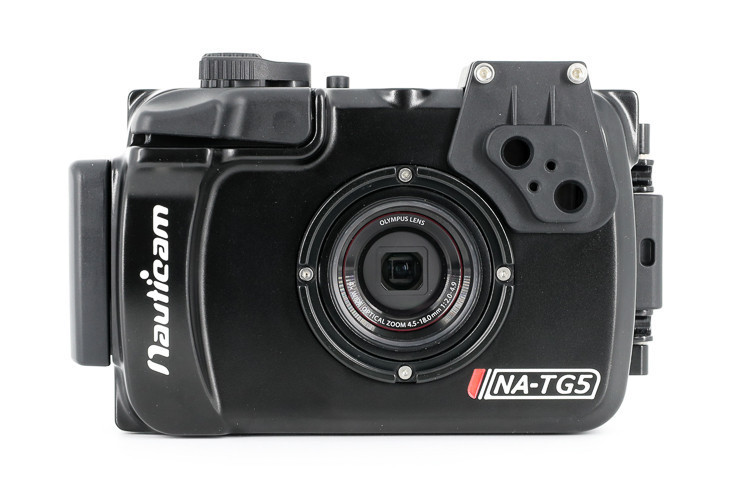
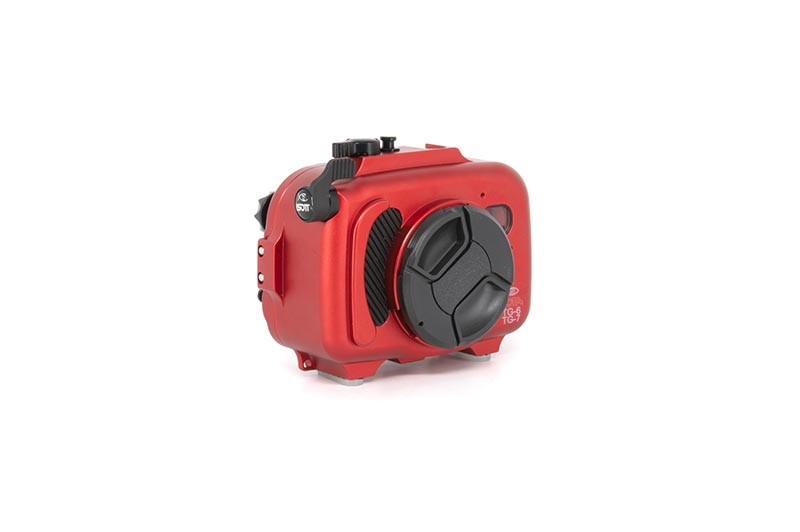
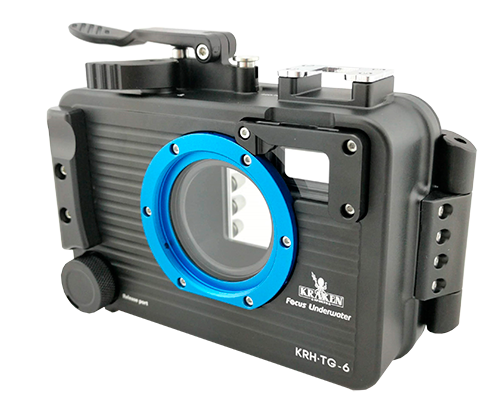
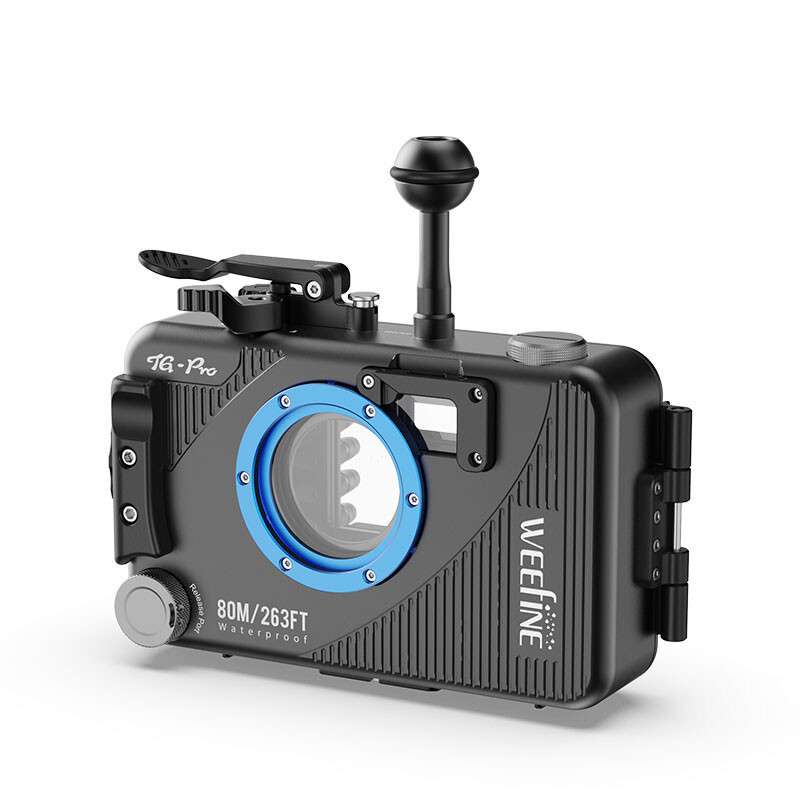
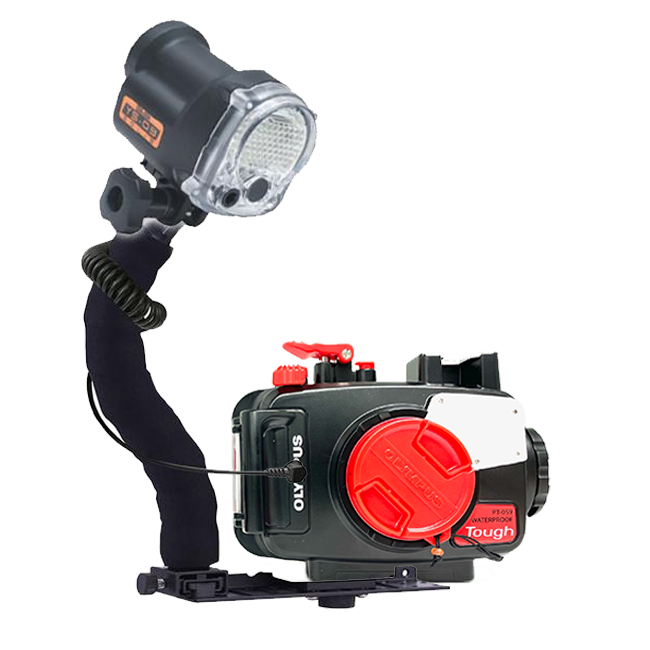
OM System PT-059 for most beginners and travelers. Ikelite TG-7 housing for deeper recreational diving and easy strobe expansion. Marelux, Isotta, or Nauticam for divers who want a premium aluminum housing with better ergonomics and more depth margin.
Recommended lenses / wet lenses:
Use the built-in Microscope Mode first for macro. Add a wet macro diopter only if you want supermacro. For wide angle, look at Kraken KRL-02, Kraken KRL-11, UWL-04, or the Olympus FCON-T02 with the correct housing and port setup.
Recommended lighting:
Start with one compact strobe for better color and sharper macro. Add a second strobe for wide angle. Choose a video light only if video is the priority.
Best package path:
Start with the TG-7 + PT-059 housing. Add a tray, arm, fiber-optic cable, and single strobe. Upgrade next with a wet wide-angle lens or macro diopter. For the most complete setup, move to dual strobes and a premium housing.
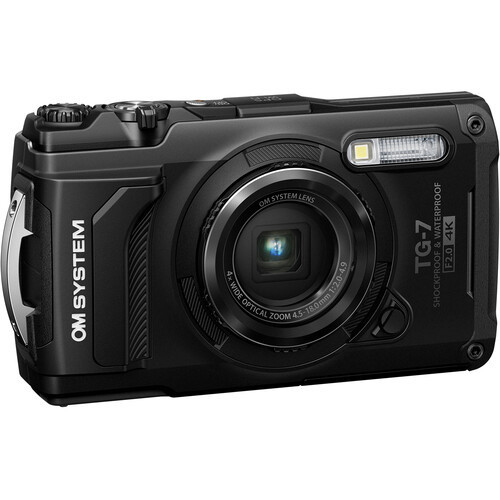
Key Features
- Bright f/2.0 Hi-Speed Lens
- Anti-reflective coating to glass around sensor (reduces flare and ghosting)
- 12MP Hi-Speed Image Sensor for Improved Low Light Performance and Noise Reduction
- Improved LCD: 1.04 million dots compared to 460 K dots on the TG-5
- Improved microscope mode
- Microscope mode available in program and aperture priority mode
- Dual Quad Core TruePic™ VIII Image Processor
- Image File Format: RAW, JPEG and RAW+JPEG
- 4K and High Speed Video
- Field Sensor System w/ GPS, Manometer, Compass & Temperature Sensor
- Waterproof, Shockproof, Freezeproof, Crushproof
- 3" LCD Screen
- Built-in WiFi
- Dimension: W: 4.43 in H: 2.6 in D: 1.23 in / W: 113 mm H: 66 mm D: 31.9 mm
- Weight: Approx. 250 g
- Waterproof to 50 feet
Camera Ratings for Olympus TG-6


Sample Images & Video taken with the Olympus TG-6





Canon G7X Mark III
Best Value Compact Camera with Full Manual Control
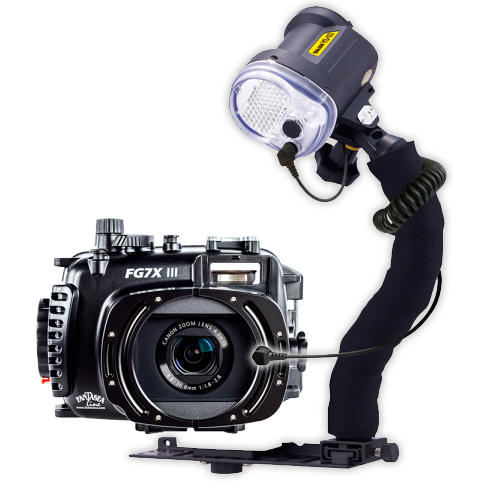
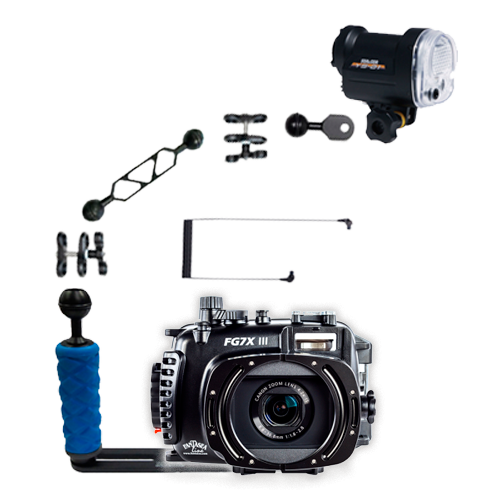
The Canon G7X III is a tiny camera with a large 1-inch, 20 MP sensor, directly competing with the higher-end Sony RX100 series cameras. It is an excellent, fast-focusing camera with excellent image quality. The camera also boasts 4K video, slow motion video, a bigger image buffer, a new stacked sensor, a better image processor, and quicker burst shooting over the G7X II.
**PLEASE NOTE: these camera bodies are getting increasingly difficult to source

Key Features
- 20.1 megapixel 1.0” stacked CMOS sensor
- DIGIC 8 image processor
- 4.2x optical zoom lens (24-100m f/1.8-2.8) with optical image stabilization
- 3.0 inch touch panel LCD screen with tilt option of 180 degrees for selfies and vloggers
- Compatible with USB charge/power supply
- Contrast-detection autofocus (no dual pixel autofocus)
- 20 fps burst mode (upgraded from 8fps)
- 70 shot RAW buffer (upgraded from 21 shots)
- Slow motion video (120 fps in 1080p)
Camera Ratings for Canon G7X Mark III


Sample Images & Video taken with the Canon G7X Mark III


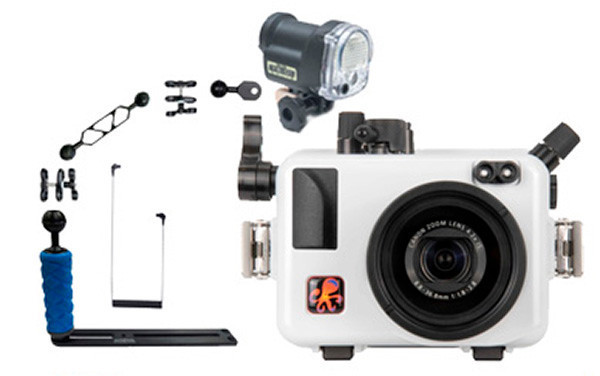

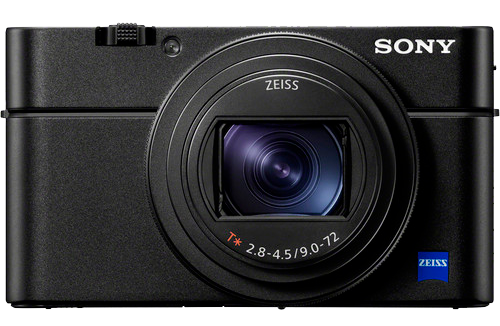
Sony RX100 VII
Best High-End Compact Camera
Best for:
Experienced compact shooters, travelers, macro photographers, and divers who want the best image quality possible from a small camera system. Another perfect option to be considered as the best underwater camera for snorkeling.
Why we like it underwater:
The RX100 VII delivers excellent compact-camera image quality, fast autofocus, 20 fps burst shooting, strong 4K video, and a versatile 24–200mm zoom lens. Underwater, its biggest strengths are fish portraits, fast-moving subjects, video autofocus, and supermacro when paired with a wet macro lens.
Who should buy it:
Divers who want a premium compact system without moving to mirrorless. It is a great fit for macro and supermacro shooters, travel photographers, and users who want better autofocus and image quality than a beginner compact.
Who should skip it:
Beginners who want the simplest system. Also skip it if you want to shoot wide angle and macro on the same dive without changing ports or planning the setup in advance.
Best housing options:
Fantasea RX100 VII for the best value. Ikelite RX100 VII for a durable polycarbonate housing with interchangeable port options. Nauticam RX100 VII for the best ergonomics, aluminum build, and N50 port system. Isotta is another strong aluminum option for divers who want a premium housing.
Recommended lenses / wet lenses:
For macro, start with the Bluewater +7. For supermacro, use the Nauticam CMC-1, Nauticam CMC-2, or Kraken KRL-03 +12. For wide angle, use the Fantasea UWL-09 or Kraken KRL-01 with the correct port setup.
Recommended lighting:
Use one strobe for macro and fish portraits. Add a second strobe for wide angle and reef scenes. Add a focus light for macro and supermacro to help the camera lock focus.
Best package path:
Start with the RX100 VII, housing, tray, arms, fiber-optic cable, and one strobe. Add a Bluewater +7 or Nauticam CMC lens for macro. For wide angle, choose the correct short port or wide-angle port setup before adding a wet wide lens. Upgrade to dual strobes when shooting more reefscapes, wrecks, or big animals.
Camera Ratings for Both Cameras


Key Features
- 1-inch 20.1 MP stacked CMOS sensor
- BIONZ X processor
- Built-in 24-200mm (equivalent) f/2.8-4.5 zoom lens – same as the RX100 VI
- Electronic shutter up to 1/32000s
- 4K video with full pixel readout (no pixel binning)
- S-LOG2, S-Log3, and HLG picture profiles
- Pop-up EVF (2.36 million dots)
- No more built-in ND filter
- Tilting touch screen LCD
- Wifi and Bluetooth capability


Sony RX100 VA Underwater Housings


Sony RX100 VII Underwater Housings


Canon R100 Mirrorless Camera
Best Entry-Level Mirrorless Camera / Best Value APS-C Underwater Camera
Best for:
Divers moving up from a compact camera who want better image quality, interchangeable lenses, and a small mirrorless system at the lowest possible price.
Why we like it underwater:
The Canon R100 delivers strong APS-C image quality in a very affordable, travel-friendly body. It is simple to use, works well for macro, fish portraits, and wide angle, and gives new mirrorless shooters room to grow with better lenses, ports, strobes, and housings.
Who should buy it:
Budget-conscious photographers who want a real mirrorless underwater system without jumping straight to a Canon R7, R10, or full-frame setup. It is especially good for stills shooters who care more about image quality than advanced camera features.
Who should skip it:
Video-first shooters, fast-action shooters, and anyone who wants Canon’s best autofocus, 4K/60p, in-body image stabilization, or more advanced controls. Compact-camera beginners may also prefer the TG-7 if they want the simplest possible setup.
Best housing options:
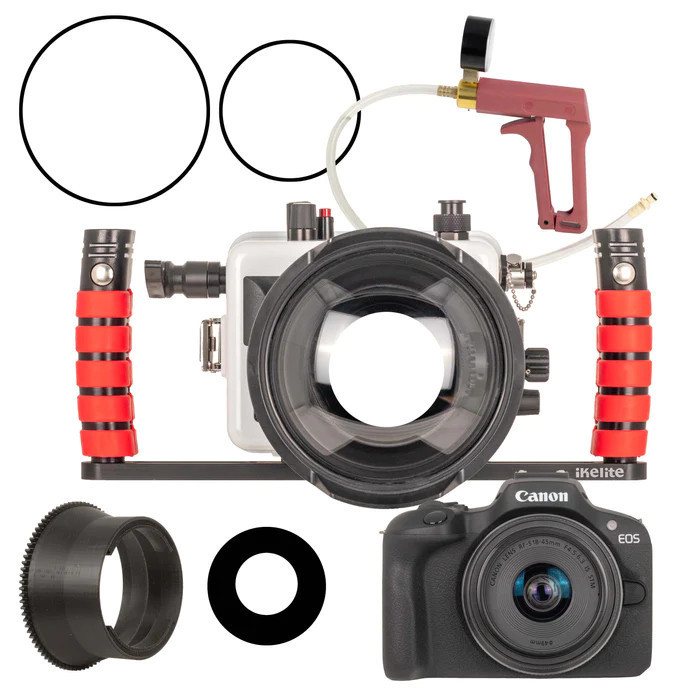
Ikelite 200DLM/D for the best value, durability, TTL compatibility, and travel-friendly size.
Recommended lenses / wet lenses:
Start with the Canon RF-S 18-45mm kit lens for fish portraits and basic wide angle. Use the Canon RF 100mm f/2.8 Macro for serious macro and supermacro. For wide angle, use the Tokina 10-17mm fisheye with the Canon EF-EOS R adapter and the correct dome port setup.
Recommended lighting:
Start with one strobe for macro, portraits, and color restoration. Choose a stronger strobe if you plan to grow into wide angle. Add a second strobe for reef scenes, wrecks, large animals, and more even lighting.
Best package path:
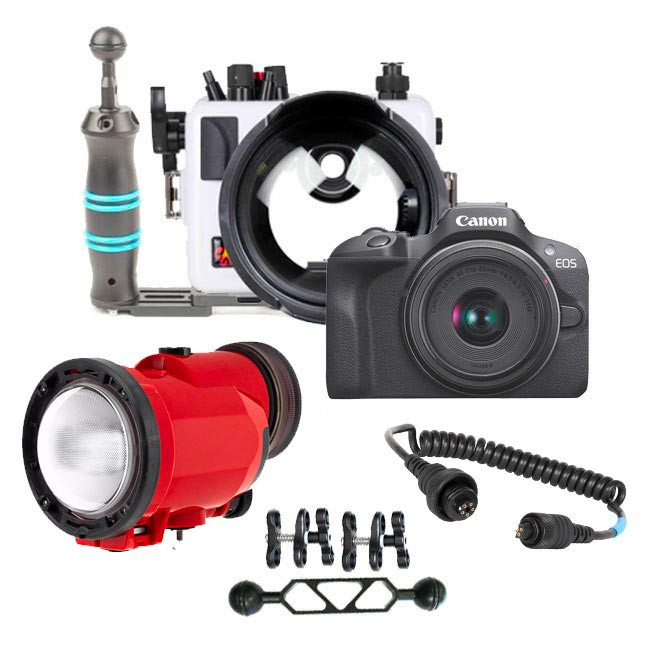
Start with the R100, RF-S 18-45mm lens, Ikelite housing, port, zoom gear, tray, arms, fiber-optic sync, and one strobe. Upgrade next with the RF 100mm macro lens or Tokina 10-17mm fisheye. Build the final system around dual strobes and the ports needed for your main lens choice.

Key Features
- 24.1MP APS-C CMOS Sensor
- DIGIC 8 Image Processor
- 4K 24p Video with Crop, Full HD 60p
- Dual Pixel CMOS AF with 143 AF Zones
- 6.5 fps Electronic Shutter
- 2.36m-Dot OLED EVF
- 3" 1.04m-Dot LCD Screen
- Creative Assist Mode
- Silent Mode for Quiet Operation
- Wi-Fi and Bluetooth with SD Card Slot
Camera Ratings for Canon R100


Canon R100 Packages

Canon R8 Mirrorless Camera
Best Value Full-Frame Underwater Camera / Best Full-Frame Step-Up for Scuba Diving
Best for:
Divers looking for the best underwater camera for scuba diving when they want full-frame image quality without the size, cost, or complexity of a professional underwater camera system.
Why we like Canon R8 underwater:
The Canon R8 gives underwater photographers a lightweight full-frame body, excellent image quality, fast autofocus, and strong 4K video performance. It is one of the best underwater photography camera options for divers stepping up from APS-C or compact systems and wanting better low-light performance, dynamic range, and background separation.
Who should buy the Canon R8:
Stills-focused divers, travel photographers, and hybrid shooters who want a serious full-frame dive camera at a lower price. It is a strong choice for reef scenes, big animals, portraits, ambient-light shooting, and wide-angle underwater photography.
Who should skip it:
Beginners who want the simplest best waterproof camera for snorkeling should look at the TG-7 instead. Also skip it if you need in-body image stabilization, dual card slots, the longest battery life, or a more rugged professional underwater camera body for heavy commercial use.
Best housing options:
Ikelite Canon R8 housing for the best value, lightweight travel build, TTL options, and broad port support.
Recommended lenses / wet lenses:
For wide angle, use the Canon RF 14-35mm, RF 15-30mm, or adapted Canon 8-15mm fisheye with the correct dome port. For macro, use the Canon RF 100mm f/2.8L Macro. For a lighter starter setup, the RF 24-50mm or RF 24-105mm can work for general shooting, but they are not the strongest dedicated underwater lenses.
Recommended lighting:
Use dual strobes for wide angle, reefs, wrecks, and big animals. Use one strobe for macro or portraits if budget is limited. Add a focus/video light for night dives, macro work, and hybrid photo-video shooting.
Best package path:
Start with the Canon R8 body, Ikelite housing, dome or flat port for your main lens, tray, arms, sync system, and one or two strobes. Build around a wide-angle lens first if you shoot scuba diving, reefs, and large subjects. Add the RF 100mm macro later if you want a more complete best underwater camera system.

Key Features
- 24.2 Megapixel Full-Frame CMOS Sensor
- Dual pixel autofocus with animal eye autofocus tracking
- Canon RF Mount
- No 5-Axis Image Stablilization
- HDR PQ and Canon Log 3
- Uncropped 4K/60p video with 10-bit 4:2:2 internal recording
- Flexible Connectivity - Wired, Wireless, UVC/UAC, Bluetooth, WiFi
- Pop-Up Flash
- Max. Approx. 6 FPS with mechanical shutter
- 1/200 flah sync speed
- ISO range - 100-102400
- Articulating 3" Touchscreen LCD
- Weight: 461 grams
Camera Ratings for Canon R8


Canon R8 Underwater Housing


- Best Semi-Pro Underwater Cameras -
Sony a6700 Camera
Best APS-C Hybrid Underwater Camera / Best Travel Mirrorless Dive Camera
Best for:
Divers who want one of the best underwater camera systems for scuba diving in a compact, travel-friendly mirrorless body.
Why we like the Sony a6700 underwater:
The Sony a6700 combines excellent APS-C image quality, strong autofocus, 4K video, and a compact body that works well for both wide angle and macro. It is a strong best underwater photography camera choice for divers who want better performance than a compact camera without moving to a larger full-frame system.
Who should buy the a6700:
Hybrid photo-video shooters, travel divers, macro photographers, and anyone building a serious but compact dive camera system. It is especially appealing if you want a smaller alternative to a professional underwater camera while still getting advanced autofocus, strong video, and interchangeable lenses.
Who should skip it:
Beginners who want the simplest best waterproof camera for snorkeling should choose the TG-7 instead. Also skip it if you want full-frame image quality, the easiest possible controls, or the lowest-cost complete underwater setup.
Best housing options:
Ikelite Sony a6700 housing for the best value, travel weight, vacuum option, and easy strobe integration. Nauticam NA-a6700 for the premium aluminum housing path with the best ergonomics and pro-level accessory support. Marelux a6700 is another strong aluminum option for shooters who want a compact, durable housing.
Recommended lenses / wet lenses:
For a flexible wet-lens setup, start with the Sony 16-50mm power zoom and add compatible wet wide-angle and macro lenses (the best option). For dedicated wide angle, use the Sony 16mm f/2.8 with fisheye converter. For macro, the Sony 90mm macro is the top choice and benefits from the APS-C crop factor.
Recommended lighting:
Use one strobe for macro and fish portraits. Use dual strobes for reef scenes, wrecks, wide angle, and larger animals. Add a focus/video light if you plan to shoot macro, night dives, or hybrid video.
Best package path:
Start with the Sony a6700, Ikelite housing, Sony 16-50mm lens, tray, arms, sync system, and one strobe. Add wet wide-angle and macro lenses if you want to shoot both subject types on the same dive. Upgrade later to dual strobes, the Sony 90mm macro, or a Nauticam housing for a more professional underwater camera system.

Key Features
- 26.0MP APS-C format Exmor R back-illuminated CMOS sensor
- BIONZ XR processing power for exceptional image quality
- Dedicated AI Processor and Real-time Recognition for accurate subject tracking
- 4K/60p 6K oversampled 4:2:2 10-bit recording with Long GOP or All Intra formats
- High frame rate 4K 120p recording
Camera Ratings for Sony a6700


Canon EOS R6 Mark II
Best Canon Hybrid Full-Frame Camera Best Canon Hybrid Full-Frame Camera / Best Full-Frame Dive Camera for Photo and Video
Best for:
Divers who want one of the best underwater camera systems for scuba diving, especially if they shoot both stills and video.
Why we like the Canon R6 II underwater:
The Canon R6 Mark II is a true hybrid full-frame camera with excellent image quality, strong autofocus, in-body image stabilization, and clean 4K video. It is one of the best underwater photography camera options for Canon shooters who want a serious dive camera without jumping to the size and cost of a flagship professional underwater camera system.
Who should buy the Canon R6 II:
Experienced divers, hybrid shooters, wide-angle photographers, macro shooters, and Canon users who want a high-performance full-frame underwater setup. It is a strong choice for reefs, wrecks, sharks, big animals, fish portraits, ambient-light scenes, and macro with the RF 100mm lens.
Who should skip it:
Beginners looking for the best underwater camera for snorkeling or the best waterproof camera should choose a compact option like the TG-7 instead. Also skip it if you want the lowest-cost full-frame setup, the smallest travel kit, or the highest-resolution Canon body for heavy cropping.
Best housing options:
Ikelite 200DL for the best value, lighter travel build, vacuum system, and TTL strobe support. Nauticam NA-R6II for the premium aluminum housing path with excellent ergonomics and pro-level port support. Marelux and Isotta are also strong aluminum options for divers building a more advanced system.
Recommended lenses / wet lenses:
For wide angle, use the Canon RF 14-35mm, RF 15-35mm, or adapted Canon 8-15mm fisheye with the correct dome port. For macro, use the Canon RF 100mm f/2.8L Macro. For general-purpose shooting, the RF 24-105mm can work, but dedicated wide-angle and macro lenses will deliver better underwater results.
Recommended lighting:
Use dual strobes for wide angle, reefs, wrecks, and big animals. Use one strobe for macro or fish portraits if budget is limited. Add a focus/video light for night dives, macro autofocus, and hybrid photo-video shooting.
Best package path:
Start with the R6 Mark II, Ikelite 200DL or Nauticam housing, a dome or flat port for your main lens, tray, arms, sync system, and dual strobes. Build the first package around either the Canon 8-15mm fisheye for wide angle or the RF 100mm Macro for macro. Add the second lens path later to create a complete best underwater camera system.

Key Features
- 24.2 Megapixel full-frame CMOS sensor
- RF mount lens system (EF mount lenses work with an EF-EOS R Adapter)
- DIGIC X processor
- 1/200 shutter sync speed (with strobes)
- Dual-pixel CMOS autofocus, covering 100% of sensor
- Subject tracking AF (humans, dogs, cats, birds, horses, racing cars, motorbikes, aircraft, and trains)
- Autofocus in lowlight down to -6.5 EV
- ISO 100-102400 (50 - 204,801 expandable)
- 4k/60p recording (no crop), C-Log3 available
Camera Ratings for the Canon R6 II


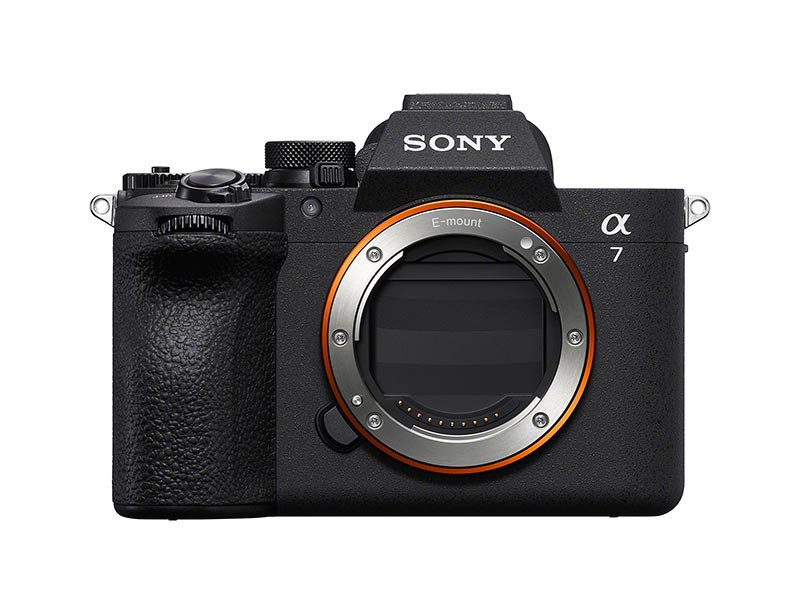
Sony A7 V
Best Full-Frame Hybrid Underwater Camera / Best Sony Dive Camera for Photo and Video
Best for:
Divers who want one of the best underwater camera systems for scuba diving, with full-frame image quality, advanced autofocus, strong video, and a manageable body size.
Why we like the Sony A7 V underwater:
Nirupam Nigam suggests that the Sony a7 V is one of the best underwater photography camera options for hybrid shooters because it improves the key things divers actually notice underwater: autofocus, stabilization, battery life, and video. The partially stacked 33MP sensor gives faster readout, better tracking, reduced rolling shutter, and manageable file sizes. Underwater, the autofocus can lock onto fish eyes and moving subjects, while the stronger image stabilization helps with slow-shutter wide angle and handheld macro video. Full-frame 4K/60p, cropped 4K/120p, S-Log3, and S-Cinetone also make it a serious dive camera for cinematic underwater video. For more in dpeth opinos for shooting this camera underwater, please read his full Sony A7 V review.
Who should buy the Sony A7 V:
Hybrid photo-video shooters, travel divers, wide-angle photographers, macro shooters, and anyone building a long-term Sony underwater system. It is a strong choice for reefs, wrecks, sharks, big animals, fish portraits, ambient-light scenes, and macro.
Who should skip it:
Beginners looking for the best underwater camera for snorkeling or the best waterproof camera should choose a compact option like the TG-7 instead. Also skip it if you want the lowest-cost full-frame setup, the smallest possible travel kit, or a simpler beginner camera.
Best housing options:
Nauticam NA-A7V for the best overall system, strongest port ecosystem, premium ergonomics, and best long-term upgrade path. Ikelite 200DL for the best value, lighter travel build, vacuum option, and broad port support. Marelux is a strong aluminum alternative for divers who want a 100m-rated housing at a lower cost than Nauticam.
Recommended lenses / wet lenses:
For wide angle, use the Sony FE PZ 16-35mm f/4 G, Sony 16-35mm options, or the Sony 28-60mm with compatible Nauticam water-contact optics. For macro, use the Sony 90mm macro or Sony 100mm macro. For advanced Nauticam builds, consider WWL, WACP, FCP, CMC, or SMC optics depending on the lens and port configuration.
Recommended lighting:
Use dual strobes for wide angle, reefs, wrecks, sharks, and big animals. Use one strobe for macro or fish portraits if budget is limited. Add a focus/video light for night dives, macro autofocus, and hybrid video shooting.
Best package path:
Start with the Sony a7 V, Nauticam or Ikelite housing, a port matched to your main lens, tray, arms, sync system, and dual strobes. Build the first package around either a wide-angle lens for scuba diving and big subjects or a dedicated macro lens for small subjects. Add the second lens path later to create a complete best underwater camera system.
Key Features
- Lens mount: Sony E (full-frame)
- 34.1MP total / 33MP effective (7008 × 4672)
- 35.9 × 23.9 mm full-frame partially stacked CMOS sensor
- 5-axis in-body sensor-shift IBIS, up to 7.5 stops of shake reduction (center)
- Mechanical shutter 1/8000–30 sec; Electronic 1/16000–30 sec
- ISO 100–51,200 (expandable to ISO 50–204,800)
- Continuous shooting: Up to 30 fps (approx. 95 RAW / 185 JPEG); up to 10 fps (up to 10,000 frames)
- Video recording (internal): UHD 4K up to 60p (full-width); UHD 4K 100/120p (crop); Full HD up to 200/240p
- HDMI output: Full-size HDMI with 8- or 10-bit 4:2:2 / 4:2:0 output
- Rear LCD: 3.2" 4-axis tilting touchscreen, approx. 2.1M dots
- Card slots: Slot 1 – CFexpress Type A / SD UHS-II; Slot 2 – SD UHS-II
Camera Ratings for Sony a7 IV


Canon EOS R7
Best APS-C Underwater Camera / Best Crop-Sensor Dive Camera for Macro and Video
Best for:
Divers who want one of the best underwater camera systems for scuba diving in a smaller, travel-friendly APS-C mirrorless body.
Why we like the Canon R7 underwater:
The Canon R7 feels like a “mini” professional underwater camera system. Its 32.5MP APS-C sensor is excellent for macro shooters who want extra reach and cropping flexibility, while the in-body image stabilization helps with slow-shutter wide angle and handheld underwater video. During our in water testing, we found the autofocus especially strong underwater, including reliable fish-eye tracking, good low-light focusing, and subject tracking that works well through a housing. Add uncropped 4K/60p, C-Log3, accurate Canon color, and excellent battery life, and the R7 becomes one of the best underwater photography camera options in the APS-C category.
Who should buy the Canon R7:
Macro shooters, video shooters, travel divers, and Canon users who want a high-performance dive camera without moving to full frame. It is especially strong for small subjects, fish portraits, reef scenes, and handheld underwater video.
Who should skip it:
Beginners looking for the best underwater camera for snorkeling or the best waterproof camera should choose a compact option like the TG-7 instead. Also skip it if you want full-frame image quality, the lowest-cost mirrorless setup, or the smallest possible camera system.
Best housing options:
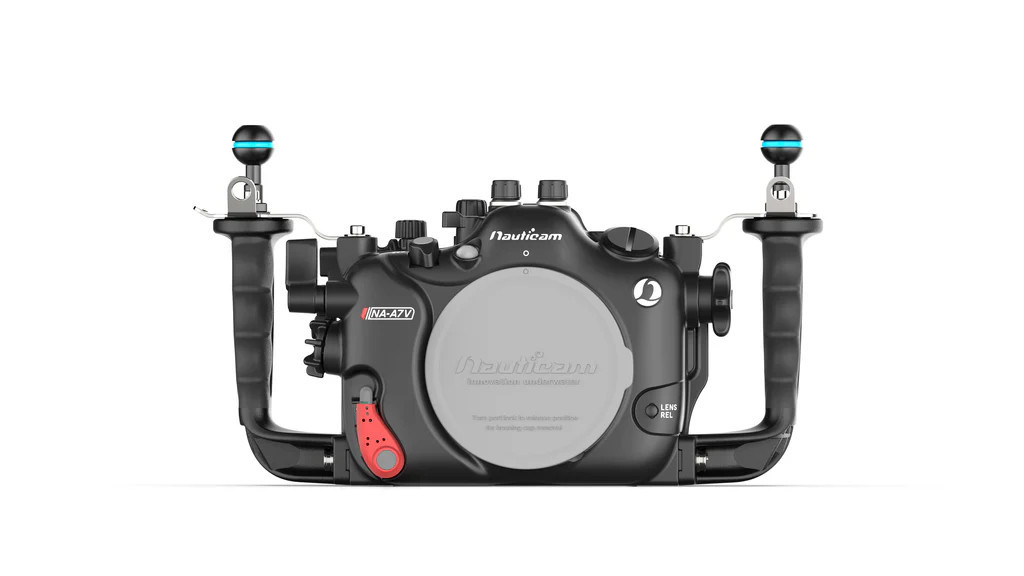
Ikelite 200DL for the best value, TTL compatibility, vacuum system, and strong port support. Nauticam NA-R7 for the premium aluminum housing path with excellent ergonomics and a 100m depth rating. Marelux is another strong aluminum option for divers who want a compact, travel-friendly housing with a 100m depth rating.
Recommended lenses / wet lenses:
For macro, use the Canon RF 100mm f/2.8L Macro. For wide angle, use the Tokina 10-17mm fisheye with the Canon EF-EOS R adapter and the correct dome port. For a flexible Nauticam wet-lens setup, pair the Canon RF-S 18-45mm kit lens with the Nauticam WWL-1B.
Recommended lighting:
Use one strobe for macro and fish portraits. Use dual strobes for wide angle, reef scenes, wrecks, and larger animals. Add a focus/video light for macro, night dives, and handheld video.
Best package path:
Start with the Canon R7, Ikelite 200DL or Nauticam housing, tray, arms, sync system, and one or two strobes. Build the first package around the RF 100mm Macro if small subjects are the priority, or the Caoon 8-15mm fisheye if wide angle is the main goal. Add the second lens path later to create a complete best underwater camera system.

Key Features
- 32.5 Megapixel Full-Frame CMOS Sensor and Digic X processor
- Canon's In-Body 5 Axis Image-Stabilization (IBIS)
- Improved Dual Pixel Phase Detect Autofocus
- ISO 100-51,200
- 15fps burst shooting with mechanical shutter
- 30 fps burst shooting with silent (electronic shutter)
- Dual card slots
- Internal C-Log recording
- 4K video up to 60 fps
- 3.69 million dot EVF
- Dimensions: 132 mm X 90 mm X 92 mm
- Weight: 612grams (including battery & memory card)
Camera Ratings for Canon EOS R7




Olympus (OM System) OM-1 Mark II
Best Micro Four Thirds Underwater Camera / Best Compact Professional Dive Camera for Macro
Best for:
Divers who want one of the best underwater camera systems for scuba diving in a smaller, lighter, pro-level Micro Four Thirds setup.
Why we like it underwater:
The OM-1 Mark II is one of the best underwater photography camera options for macro shooters, travel divers, and fast-moving subjects. During our underwater testig we found this camera to have sharp results with lenses like the 8mm fisheye and 90mm macro, plus autofocus tracking that stays locked on moving subjects. The 90mm macro is a major advantage for small and skittish critters, offering extra working distance and 2:1 supermacro without needing an external wet diopter. Add excellent stabilization, fast shooting, strong battery life, and a compact lens system, and the OM-1 Mark II becomes a serious professional underwater camera in a travel-friendly package.
Who should buy it:
Macro photographers, supermacro shooters, travel divers, and OM System or Olympus users who want the best dive camera upgrade without moving to full frame. It is especially strong for small subjects, fish portraits, reef detail, blackwater, and handheld underwater shooting.
Who should skip it:
Beginners looking for the best underwater camera for snorkeling or the best waterproof camera should choose the TG-7 instead. Also skip it if you want full-frame image quality, the shallowest depth of field, or the highest-resolution files for heavy cropping and large prints.
Best housing options:
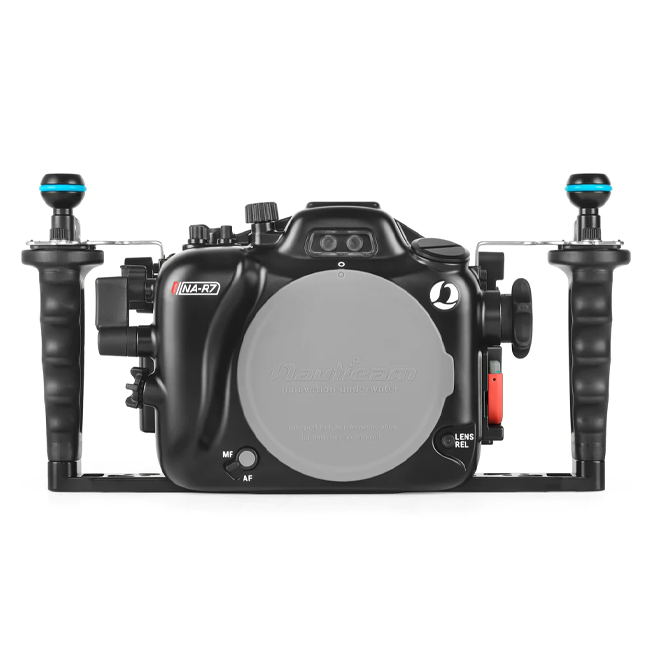
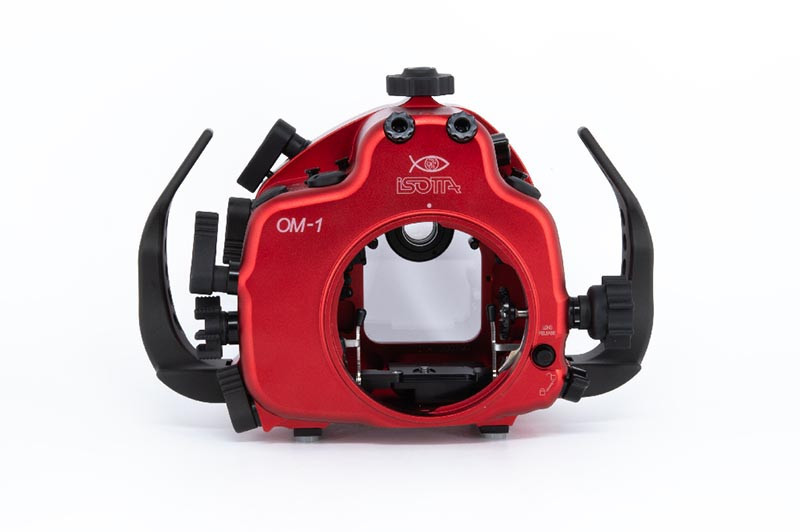
Nauticam NA-OM1/OM-1 II for the best ergonomics, aluminum build, integrated vacuum monitoring, and long-term system path. Ikelite 200DLM/B for the best value, lighter polycarbonate build, vacuum option, and broad port support. Marelux is another strong aluminum option with a premium feel and competitive price.
Recommended lenses / wet lenses:
For macro, use the OM System 90mm f/3.5 Macro IS PRO or Olympus 60mm macro. For wide angle, use the Olympus 8mm fisheye, Panasonic 8mm fisheye, or Olympus 7-14mm PRO with the correct dome port. For supermacro, start with the 90mm macro before adding a diopter.
Recommended lighting:
Use one strobe for macro and fish portraits. Use dual strobes for reef scenes, wide angle, wrecks, and larger animals. Add a focus light for macro, blackwater, night dives, and faster autofocus in low light.
Best package path:
Start with the OM-1 Mark II, Nauticam or Ikelite housing, tray, arms, sync system, and one or two strobes. Build the first package around the 90mm macro if small subjects are the priority, or the 8mm fisheye if wide angle is the main goal. Add the second lens path later to create a complete best underwater camera system.

Key Features
- Sensor: 20.4 MP stacked BSI Live MOS (Micro Four Thirds)
- Processor: TruePic X
- Autofocus: 1,053-point cross-type phase detection + contrast AF
- ISO range: 80 – 102,400 (expandable)
- In-body image stabilization (IBIS): 5-axis, up to 8.5 EV stops
- Continuous / burst shooting: up to 120 fps (with locked AF/AE)
- 4K video (UHD / DCI) up to 60p
- Weather sealing / ruggedness: IP53 rating
- Display: 3.0″ vari-angle touch LCD, ~1.62 million dots
- EVF: OLED, approx. 5.76 million dots, ~100% coverage
- Dual card slots: SD / UHS-II (dual slots)
- Body material / durability: magnesium alloy, rugged build
- Dimensions & weight: 138.8 × 72.7 × 91.6 mm; weight ~599 g with battery & card; ~511 g body only
Camera Ratings for Olympus OM-1 Mk II




Nikon Z50 II
Best Budget APS-C Underwater Camera / Best Nikon Crop-Sensor Dive Camera
Best for:
Divers who want one of the best underwater camera systems for scuba diving at an entry-level mirrorless price.
Why we like the Nikon Z50 II underwater:
The Nikon Z50 II is a strong value pick for underwater photographers who want APS-C image quality, reliable autofocus, and 4K video without the cost of a full-frame professional underwater camera. We highlight its 20.9MP APS-C sensor, compact body, fast autofocus, 4K UHD video, and weather-sealed design. Underwater testing also praised the Z50 II as a macro powerhouse, with subject-detection autofocus that works on fish, 11 fps burst shooting, 4K/60p log video, and excellent image quality for the price.
Who should buy the Nikon Z50 II:
Nikon shooters, macro photographers, travel divers, and budget-conscious users moving up from a compact camera. It is a smart choice for anyone who wants a real best dive camera system with interchangeable lenses, better image quality, and room to grow.
Who should skip it:
Beginners looking for the best underwater camera for snorkeling or the best waterproof camera should choose a compact option like the TG-7 instead. Also skip it if you want full-frame image quality, in-body image stabilization, dual card slots, or a more rugged pro body for heavy professional use.
Best housing options:
Ikelite 200DL for the best value, 60m depth rating, travel-friendly polycarbonate build, vacuum system, and broad lens support. Nauticam NA-Z50II for the premium aluminum route, 100m depth rating, excellent ergonomics, integrated vacuum/leak detection, and a compact wet-lens travel system.
Recommended lenses / wet lenses:
For a compact wet-lens setup, use the Nikon Z DX 16-50mm with Nauticam WWL-C and CMC-1. For macro, consider the Nikon Z MC 105mm or adapted Nikon F-mount macro lenses with the correct port setup. For wide angle, use the Tokina 10-17mm fisheye with the FTZ adapter and the correct dome port, especially with the Ikelite DL port system.
Recommended lighting:
Use one strobe for macro, fish portraits, and better color. Use dual strobes for wide angle, reefs, wrecks, and larger animals. Add a focus light for macro, low-light autofocus, and night dives.
Best package path:
Start with the Nikon Z50 II, Ikelite 200DL or Nauticam housing, tray, arms, sync system, and one strobe. Choose the Nauticam 16-50mm wet-lens path if you want the most compact travel system. Choose the Ikelite DL port path if you want broader lens flexibility, including adapted F-mount glass. Add dual strobes and a dedicated macro or fisheye lens later to build a complete best underwater camera system.
Key Features
- 20.9MP APS-C sensor
- Twin control dials
- Full-width 4K video up to 30p (60p with crop)
- 3D-tracking autofocus and subject recognition for nine subject types
- Up to 11fps mechanical, with up to 1 second pre-release capture
- Fully articulated 3.2" touchscreen
- Single UHS-II SD card slot in battery compartment
- 2.36M dot EVF with brightness up to 1000nits
Camera Ratings for Nikon Z50 II


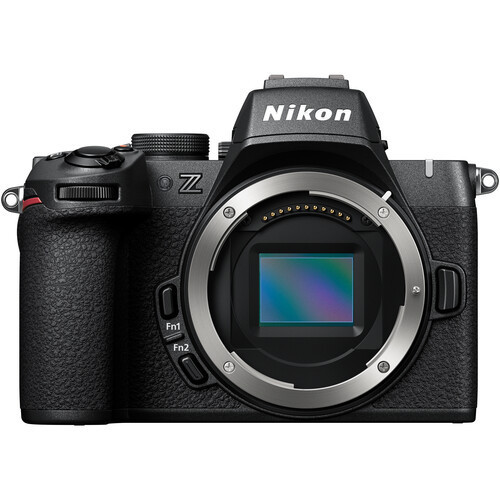
Sample Images taken with the Nikon Z50 II


Nikon Z5 II
Best Value Full-Frame Nikon Underwater Camera / Best Nikon Full-Frame Dive Camera
Best for:
Divers who want one of the best underwater camera systems for scuba diving with full-frame image quality, strong autofocus, and a lower price than higher-end Nikon bodies.
Why we like the Nikon Z5 II underwater:
The Nikon Z5 II is a standout value because it brings a 24.5MP full-frame sensor, Nikon’s EXPEED 7 processor, 3D autofocus tracking, 5-axis IBIS, dual card slots, and excellent battery life into a compact, affordable body. Our testing in the Sea of Cortez found it especially strong for stills, from sea lions and whale sharks to small macro subjects. Its 3D tracking helps keep moving subjects in focus, while the full-frame sensor delivers crisp detail, rich color, and strong dynamic range underwater.
Who should buy the Nikon Z5 II:
Nikon shooters, travel divers, macro photographers, and stills-focused users who want the best underwater photography camera value in a full-frame system. It is also a smart option for divers who want a serious dive camera without paying for a flagship professional underwater camera.
Who should skip it:
Video-first shooters who need uncropped 4K/60p, faster sensor readout, or the lowest rolling shutter should consider the Nikon Z6 III or Z8 instead. Beginners looking for the best underwater camera for snorkeling or the best waterproof camera should choose a compact option like the TG-7.
Best housing options:
Ikelite Z5 II housing for the best value, full camera control, updated ergonomics, and a strong travel-friendly system. Nauticam Z5 II housing for the premium aluminum route, full control, excellent ergonomics, and compatibility with Nauticam optics.
Recommended lenses / wet lenses:
For macro, use the Nikon Z 105mm macro or Nikon F 105mm macro with FTZ adapter. For blackwater and close-focus macro, the Nikon F 60mm macro with FTZ adapter is a strong option. For wide angle, use the Nikon F 8-15mm fisheye with FTZ adapter or the Nikon Z 14-30mm rectilinear wide-angle lens. Pair the Z 105mm macro with Kraken or Weefine +13 wet macro lenses for supermacro.
Recommended lighting:
Use dual strobes for wide angle, reefs, sea lions, whale sharks, and big subjects. Use one strobe for macro and portraits if budget is limited. Add a focus light for macro, low-light autofocus, night dives, and supermacro.
Best package path:
Start with the Nikon Z5 II, Ikelite or Nauticam housing, tray, arms, sync system, and dual strobes. Build the first package around the Nikon Z 105mm macro if small subjects are the priority, or the Nikon F 8-15mm fisheye if wide angle is the main goal. Add the second lens path later to create a complete best underwater camera system.

Key Features
- 24.5MP FX-format BSI CMOS sensor
- EXPEED 7 image processor
- Wide ISO range: 100–64000 (expandable to 50–204800)
- AI-powered autofocus with 9 subject detection types including Bird Detection
- UHD 4K video up to 60 fps, Full HD up to 120 fps
- Up to two hours of continuous video recording
- 5-axis in-body vibration reduction for up to 5 stops of shake compensation
- 3.2-inch vari-angle touchscreen and 3.69M-dot OLED electronic viewfinder
- Dual SD UHS-II card slots for flexible storage options
- Bluetooth, Wi-Fi, and USB-C connectivity
- Picture Control button with 31 built-in presets and cloud integration
- Compatible with Nikon Z-mount lenses and FTZ-adapted F-mount lenses
Camera Ratings for Nikon Z5 II


Sony A7C R
Best Compact High-Resolution Full-Frame Underwater Camera
Best for:
Divers who want one of the best underwater camera systems for scuba diving with maximum resolution in the smallest possible full-frame Sony body.
Why we like thr Sony A7C R underwater:
The Sony a7CR gives underwater photographers a 61MP full-frame sensor in a compact 430g body, making it one of the best underwater photography camera options for travel, cropping, macro detail, and large prints. During our in-water testing we found the camera to have excellent dynamic range in high-contrast kelp forest scenes, strong image quality at higher ISO, and reliable autofocus tracking for wide-angle subjects. It feels like a smaller Sony a7R V underwater, but with smaller housings and ports that can save meaningful travel weight.
Who should buy the Sony A7C R:
Travel divers, macro shooters, fine-art photographers, and Sony users who want the image quality of a professional underwater camera in a smaller system. It is especially strong for reef detail, kelp forests, big animals, macro, and any situation where cropping flexibility matters.
Who should skip it:
Beginners looking for the best underwater camera for snorkeling or the best waterproof camera should choose a compact option like the TG-7 instead. Also skip it if you need dual card slots, a large viewfinder underwater, faster flash sync, 8K video, or the best dedicated video performance.
Best housing options:
Ikelite a7CR housing for the best value, compact DLM port system, and a lighter travel setup. Nauticam NA-a7CR for the premium aluminum route, best ergonomics, and the strongest wet-lens system path. Nauticam is the better choice if you want to use the Sony 28-60mm with WWL-style wet optics.
Recommended lenses / wet lenses:
For wide angle, use the Sony 16-35mm f/4 with a large dome, the Canon 8-15mm fisheye with adapter, or the Laowa 10mm f/2.8 rectilinear wide-angle lens. For the most versatile wet-lens setup, use the Sony 28-60mm with the Nauticam WWL-1B. For macro, use the Sony 90mm macro or Sigma 105mm macro.
Recommended lighting:
Use dual strobes for wide angle, kelp forests, reefs, wrecks, and large subjects. Use one strobe for macro or fish portraits if budget is limited. Add a focus/video light for macro, night dives, and close-focus work.
Best package path:
Start with the Sony a7CR, Ikelite or Nauticam housing, a port matched to your main lens, tray, arms, sync system, and dual strobes. Choose Nauticam if you want the most compact wet-lens travel system. Choose Ikelite if value, lighter weight, and DLM ports are the priority. Build around either the Sony 28-60mm wet-lens setup for versatility or the Sony 90mm macro for maximum detail.
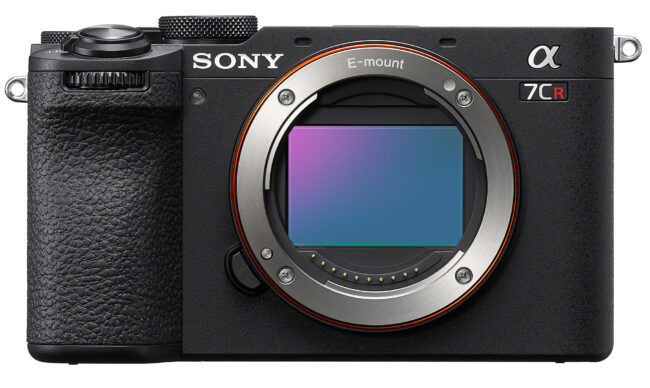
Key Features
- Image Processor: BIONZ XR
- Resolution 61.0 MP
- Sensor Size: Full Frame
- Low Pass Filter: No
- IBIS (In-Body Image Stabilization): Yes
- ISO range: 100-32,000
- Extended ISOs: 50-102,400
- Focus Stack Bracketing: Yes
- Shutter Speed Range: 1/8000 to 30 seconds
- Continuous Shooting: 8 FPS
- Buffer Size (Raw): 36 frames at 8 FPS
- Autofocus System: Hybrid PDAF with deep learning subject recognition
- Autofocus Points: 693
- Standard Flash Sync Speed: 1/160 second
- Card Slots: 1x (SD, UHS-II compatible)
- Maximum Video Resolution/framerate: 4K60p
Camera Ratings for Sony A7C R


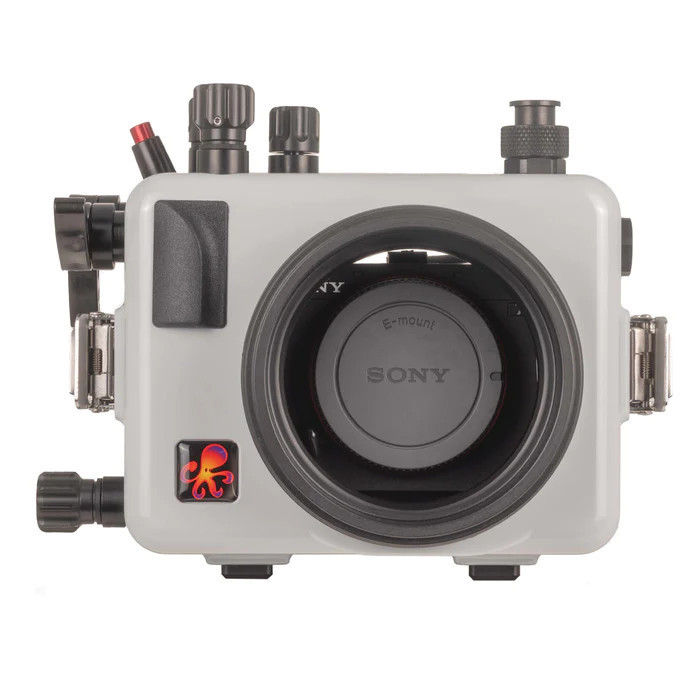


- Best Professional Underwater Cameras -
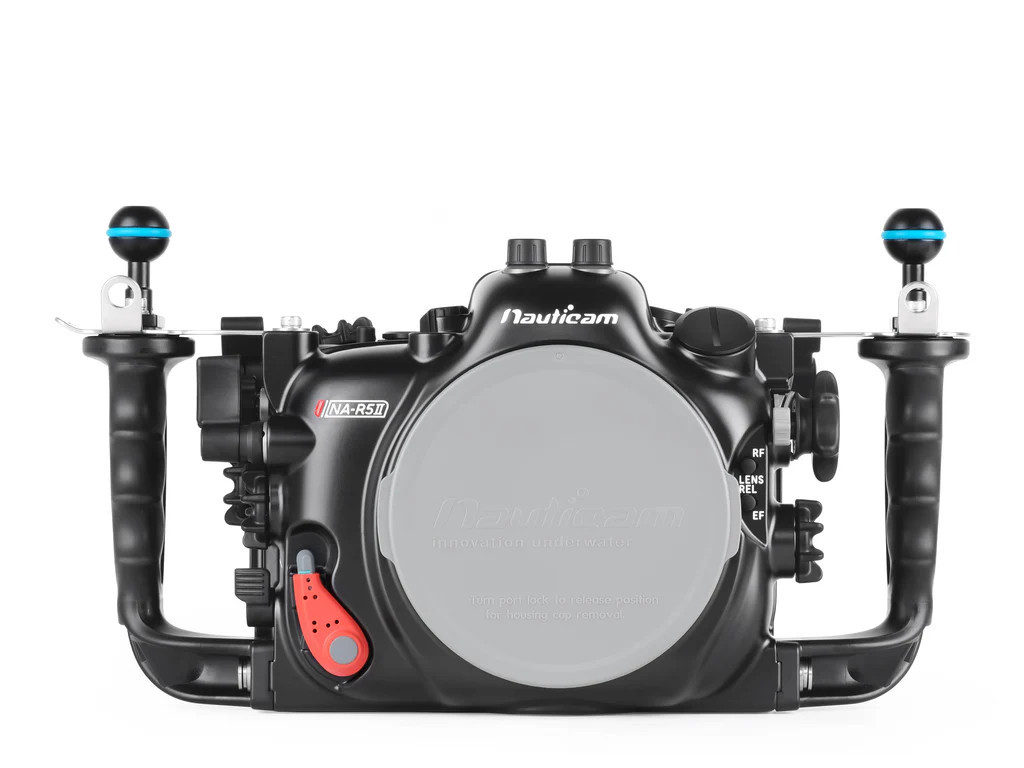
Canon EOS R5 Mark II
Best Professional Hybrid Underwater Camera / Best Canon Camera for Underwater Photo and Video
Best for:
Advanced divers, working shooters, and hybrid creators who want one of the best underwater camera systems for scuba diving with flagship-level stills, autofocus, and video.
Why we like the Canon R5 II underwater:
The Canon R5 Mark II is a professional underwater camera built for almost any shooting situation. Its 45MP stacked full-frame sensor gives excellent detail, strong dynamic range, faster readout, and reduced rolling shutter for fast marine life. From our experience while using the camera in Port Hardy, we found the new autofocus especially impressive, with tracking that can stay on the intended subject even when sea lions, fish, or backscatter pass through the frame. Add 30 fps RAW burst shooting, strobe-compatible electronic shutter, 8K/60p RAW video, 4K/120p, C-Log2, and strong Canon color, and it becomes one of the best underwater photography camera choices for serious photo and video work.
Who should buy the Canon R5 II:
Canon shooters, professional underwater photographers, video creators, big-animal shooters, and divers who want the best dive camera for fast action, high-resolution stills, and advanced video. It is especially strong for reefs, wrecks, sea lions, sharks, whales, macro, close-focus wide angle, and demanding hybrid assignments.
Who should skip it:
Beginners looking for the best underwater camera for snorkeling or the best waterproof camera should choose a compact option like the TG-7 instead. Also skip it if you want a smaller travel kit, a lower-cost full-frame setup, or if you do not need 45MP files, 8K video, or flagship autofocus.
Best housing options:
Nauticam R5 Mark II for the premium aluminum system, best ergonomics, and compatibility with Nauticam specialty optics. Ikelite R5 Mark II for the best value, complete control, TTL support, light underwater trim, and excellent compatibility with Ikelite DS strobes. Marelux, Aquatica and Seacam are strong premium aluminum options, while Aquatech is the best fit for snorkeling, surf, and shallow-water work.
Recommended lenses / wet lenses:
For macro, use the Canon RF 100mm f/2.8L Macro, with the Nauticam SMC-3, Kraken +13, Weefine +13, or Bluewater +7 for added magnification. For fisheye wide angle, use the Canon EF 8-15mm with the EF-EOS R adapter. For rectilinear wide angle, use the Canon RF 14-35mm f/4L or Canon EF 16-35mm options with the correct dome port.
Recommended lighting:
Use dual strobes for wide angle, reefs, sea lions, sharks, wrecks, and high-resolution stills. Pair it with fast-recycling strobes if you want to take advantage of the camera’s burst-shooting potential. Add a focus/video light for macro, night dives, low-light autofocus, and serious hybrid video work.
Best package path:
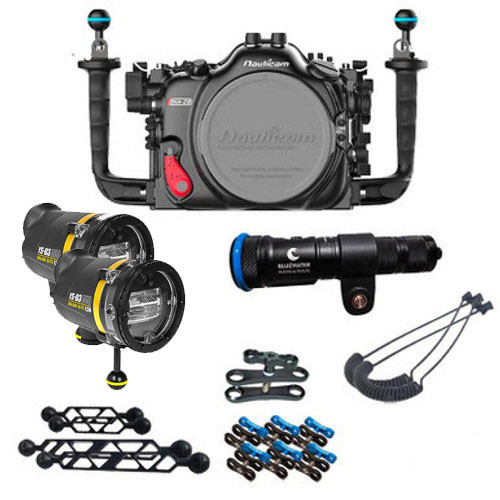
Start with the Canon R5 Mark II, Nauticam or Ikelite housing, tray, arms, sync system, and dual strobes. Build first around the Canon EF 8-15mm fisheye if wide angle and big animals are the priority, or the Canon RF 100mm Macro if macro and supermacro are the goal. Add the second lens path later to create a complete best underwater camera system.

Key Features
- 45-megapixel stacked, back-illuminated sensor
- DIGIC Accelerator image processor
- 30 fps burst shooting (electronic shutter)
- 8K60p raw video recording
- Improved Dual Pixel Intelligence AF with deep learning
- Enhanced Eye Control Focus
- Fully articulating 2.1-million-dot touchscreen LCD
- 5.76-million-dot OLED electronic viewfinder
- CFexpress Type-B and UHS-II SD card slots
- LP-E6P battery with improved power output
- Accessory grips for cooling, vertical control, and Ethernet connectivity
Camera Ratings for Canon EOS R5 Mark II


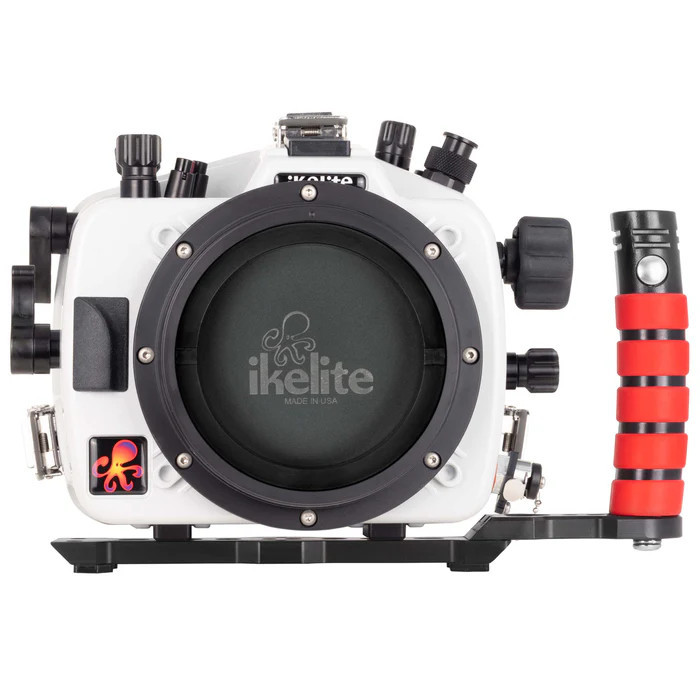

Nikon Z8
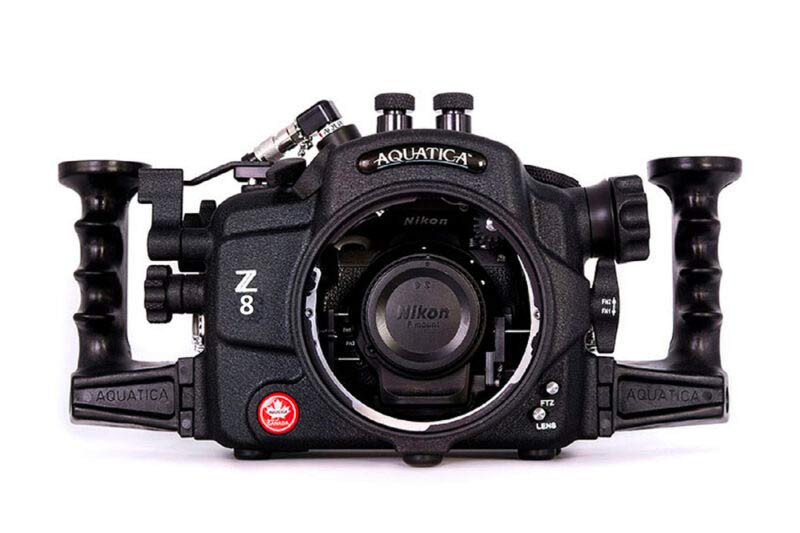
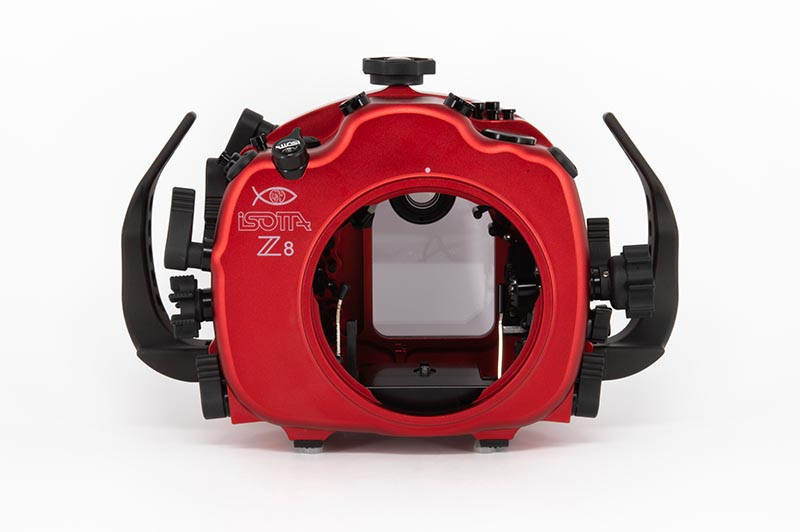
Best Professional Nikon Underwater Camera / Best Nikon Hybrid Dive Camera
Best for:
Advanced Nikon shooters, professionals, and hybrid creators who want one of the best underwater camera systems for scuba diving with flagship-level photo and video performance.
Why we like the Nikon Z8 underwater:
The Nikon Z8 brings Z9-level performance into a smaller, less expensive body, making it one of the best underwater photography camera choices for serious Nikon shooters. Its 45.7MP stacked full-frame sensor delivers excellent detail for macro, blackwater, and cropping, while the fast readout reduces rolling shutter for video and action. During our testing in Mexico, we found the autofocus to be a major leap over older Nikon bodies, with 3D tracking improving keeper rates by 30–40% over the Z7 II. Add 20 fps RAW shooting, strong low-light autofocus, 8K/60p, 4K/120p, N-RAW, ProRes RAW, and strong Nikon glass, and the Z8 becomes a true professional underwater camera for both stills and video.
Who should buy the Nikon Z8:
Nikon DSLR upgraders, Z-series shooters, professional underwater photographers, macro shooters, blackwater divers, big-animal shooters, and video creators who want the best dive camera in Nikon’s lineup without the size and cost of the Z9.
Who should skip it:
Beginners looking for the best underwater camera for snorkeling or the best waterproof camera should choose a compact option like the TG-7 instead. Also skip it if you want the smallest travel setup, the lowest-cost full-frame Nikon body, or if you do not need 45MP files, 8K video, fast burst shooting, or flagship-level features.
Best housing options:
Ikelite 200DL for the best value, polycarbonate build, built-in vacuum option, TTL compatibility, full camera control, and a 200 ft depth rating. Nauticam NA-Z8 for the premium aluminum route, excellent ergonomics, finger-reach controls, moisture alarm, and compatibility with Nauticam optics like WACP-1 and EMWL. Aquatica, Marelux, and Isotta are also strong options for advanced Nikon systems.
Recommended lenses / wet lenses:
For macro, use the Nikon Z 105mm macro, Nikon F 105mm macro with FTZ adapter, or Nikon 60mm macro for blackwater and larger macro subjects. For wide angle, use the Nikon 8-15mm fisheye with FTZ adapter, Nikon Z 14-30mm f/4, Nikon F 16-35mm f/4, or Nikon 20mm f/1.8G with the correct dome port.
Recommended lighting:
Use dual strobes for wide angle, reefs, wrecks, sharks, dolphins, whales, and high-resolution stills. Choose fast-recycling strobes if you want to take advantage of the Z8’s burst shooting. Add a focus/video light for macro, blackwater, night dives, low-light autofocus, and serious video work.
Best package path:
Start with the Nikon Z8, Ikelite or Nauticam housing, tray, arms, sync system, and dual strobes. Build first around the Nikon 8-15mm fisheye if wide angle and big animals are the priority, or the Nikon Z 105mm macro if macro and blackwater are the main goals. Add the second lens path later to create a complete best underwater camera system.

Key Features
- 12 MP BSI CMOS Full Frame Sensor
- Bioz XR Image Processor
- ISO 80-102,400
- "Low Base" and "High Base" (effectively dual gain) ISO capability for better low light shooting
- 4K video up to 120 fps
- No recording time limits. Could be limited by heat (4K @ 60p for at least an hour)
- 10-bit 4:2:2 internal recording
- S-LOG, HLG, Cine logarithmic picture profiles available
- 4K @ 60p, 16-bit RAW recording with an external recorder
- 5 axis in-body image-stabilization (IBIS)
- Dual card slots (either SD or CFexpress Type A)
- 9.44 M dot Electronic Viewfinder (EVF) - the best resolution on the market!
- Movie File Formats: XAVC S (Long GOP, H.264 MP4); XAVC HS (Long GOP, H.265 HEVC); XAVC S-1 (All-Intra, H.264 MP4)
- AF tracking with human and animal eye AF capability
- 759 point hybrid AF system with 425 contrast detection points
Camera Ratings for Nikon Z8




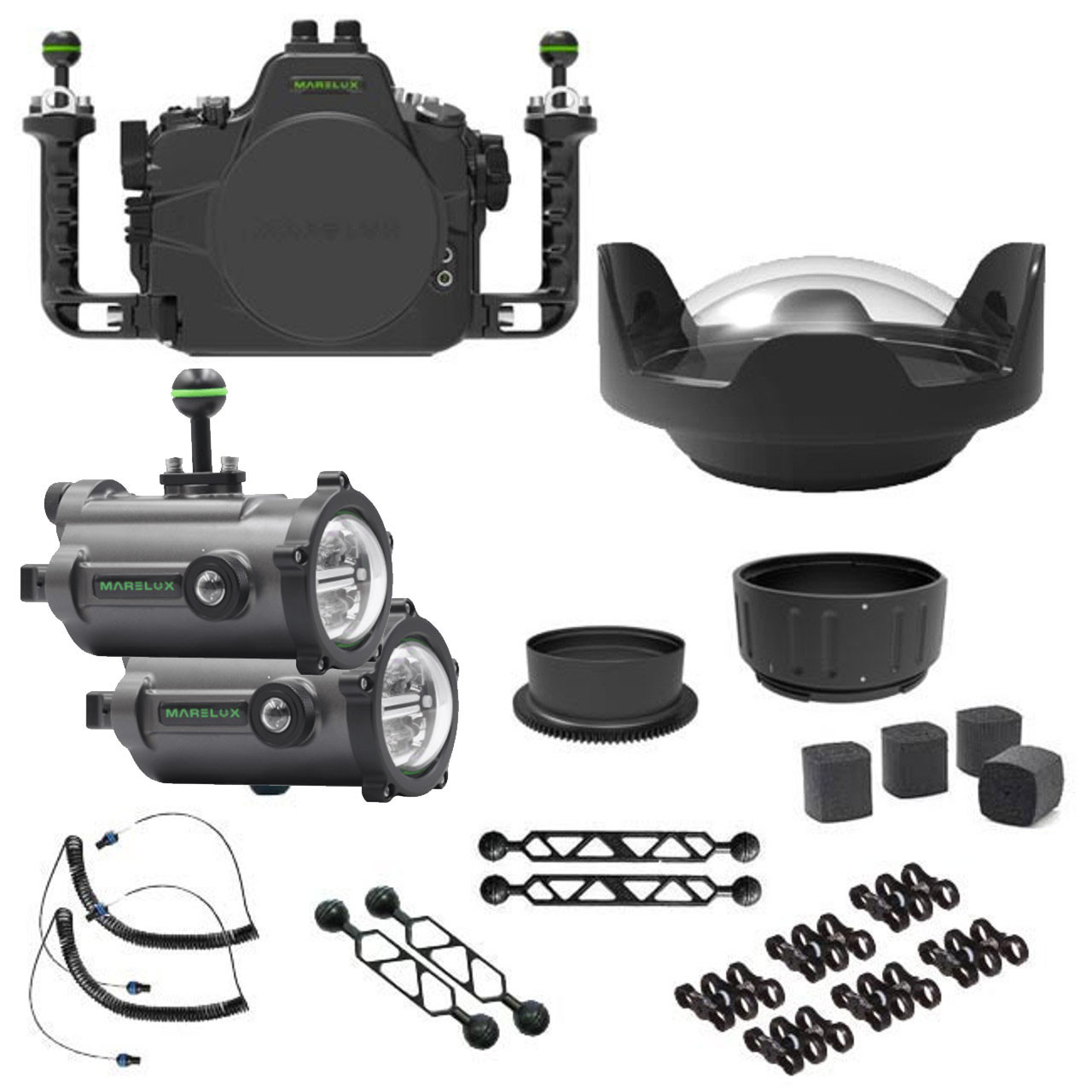
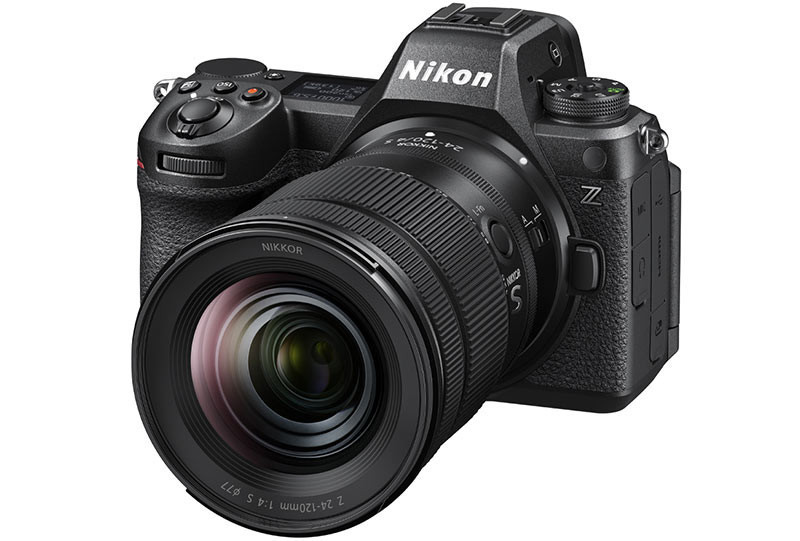
Nikon Z6 III
Best Mid-Range Full-Frame Underwater Camera / Best Nikon Hybrid Dive Camera
Best for:
Divers who want one of the best underwater camera systems for scuba diving with full-frame image quality, fast autofocus, excellent stabilization, and serious video features at a mid-range price.
Why we like the Nikon Z6 III underwater:
The Nikon Z6 III is one of the best underwater photography camera options in the mid-range full-frame category. Its partially stacked 24.5MP sensor gives faster readout, reduced rolling shutter, and 20 fps RAW shooting with the electronic shutter, which helps with fast subjects like sharks, dolphins, and sea lions. During our underwater testing at Catalina Island we found the autofocus to be a major upgrade, especially with 3D tracking and the Nikon Z 105mm macro. Add 8-stop IBIS, strong battery life, uncropped 4K/60p, 4K/120p crop, 6K RAW, N-RAW, ProRes RAW, and improved underwater manual white balance, and the Z6 III becomes one of the best dive camera choices for hybrid photo and video shooters.
Who should buy thr Nikon Z6 III:
Nikon shooters, DSLR upgraders, hybrid photo-video creators, macro photographers, and divers who want a serious full-frame underwater system without moving up to the Z8. It is especially strong for macro, wide angle, reef scenes, kelp forests, big animals, and handheld underwater video.
Who should skip it:
Beginners looking for the best underwater camera for snorkeling or the best waterproof camera should choose a compact option like the TG-7 instead. Also skip it if you need 45MP files, 8K video, the highest dynamic range at low ISO, or the most advanced professional underwater camera body in Nikon’s lineup.
Best housing options:
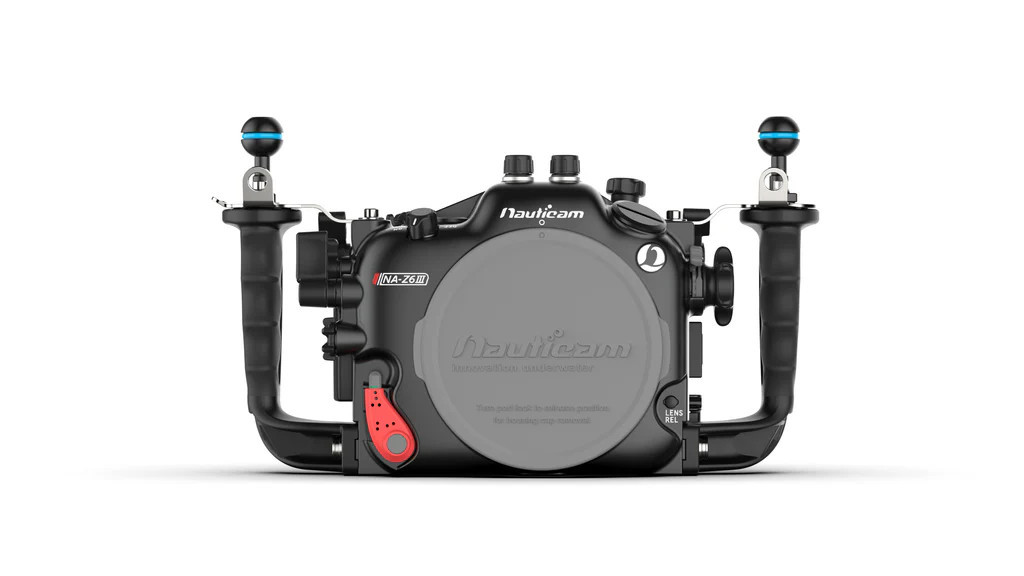
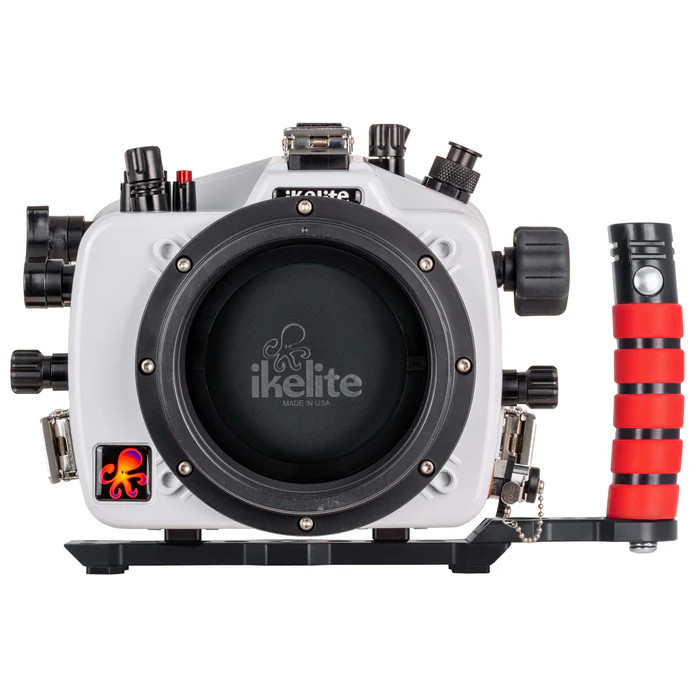
Ikelite Z6 III housing for the best value, full camera control, TTL strobe compatibility, updated cold-water-friendly controls, and an optional charging/data-transfer bulkhead. Nauticam Z6 III housing for the premium aluminum route, best ergonomics, vacuum system, and compatibility with advanced Nauticam optics. Marelux, and Isotta are also strong options for advanced Nikon systems.
Recommended lenses / wet lenses:
For macro, use the Nikon Z 105mm macro, Nikon F 105mm macro with FTZ adapter, or Nikon F 60mm macro with FTZ adapter for blackwater and close-focus work. For supermacro, pair the Z 105mm with Kraken or Weefine +13 wet macro lenses. For wide angle, use the Nikon F 8-15mm fisheye with FTZ adapter, Nikon Z 14-30mm, or Nikon F 16-35mm with the correct dome port.
Recommended lighting:
Use dual strobes for wide angle, reefs, kelp forests, wrecks, sharks, dolphins, and large subjects. Use one strobe for macro or fish portraits if budget is limited. Add a focus/video light for macro, night dives, low-light autofocus, and serious video work.
Best package path:
Start with the Nikon Z6 III, Ikelite or Nauticam housing, tray, arms, sync system, and dual strobes. Build first around the Nikon Z 105mm macro if small subjects are the priority, or the Nikon F 8-15mm fisheye if wide angle and big animals are the main goal. Add the second lens path later to create a complete best underwater camera system.
Key Features
- 24MP "Partially Stacked" CMOS sensor
- EXPEED 7 Image Processor
- Mechanical Shutter: Up to 14 fps at 24.5 MP (Raw)
- Electronic Shutter: Up to 20 fps Raw, 60 fps JPEG Shooting
- In-body image stabilization rated at up to 8.0 stops
- 493-Point AF, AI-Based Subject Detection
- 5.76M dot EVF with high brightness and wide color gamut
- Fully articulated 3.2" 2.1M dot rear screen
- 6K/60p N-Raw video, 6K/30p ProRes Raw
- 5.8K/60p H.265 video
- Pre-burst capture, pixel-shift high-res mode
- CFx Type B & SD Memory Card Slots
Camera Ratings for Nikon Z6iii


Sony A7R V
Best High-Resolution Full-Frame Underwater Camera
Best for:
Divers who want one of the best underwater camera systems for scuba diving with maximum full-frame resolution, excellent autofocus, and strong hybrid photo-video performance.
Why we like Sony A7R V underwater:
The Sony a7R V is one of the best underwater photography camera options for macro shooters, croppers, printers, and detail-focused professionals. Its 61MP full-frame sensor gives huge flexibility for cropping small subjects and printing large images, while the improved 8-stop IBIS helps keep high-resolution files sharp underwater. We tested this camera on an excursion to Raja Ampat, wehre we found the autofocus to be faster than the a7R IV, strong tracking on quick schools of fish, excellent results with the Sony 90mm macro, and no overheating issues when shooting 4K/60p video. It is not the fastest action body, but for high-resolution stills and serious hybrid shooting, it is a professional underwater camera with exceptional image quality.
Who should buy the Sony A7R V:
Macro photographers, fine-art shooters, print-focused photographers, Sony users, and divers who want the best dive camera for resolution and cropping flexibility. It is especially strong for macro, reef detail, large prints, fish portraits, wide-angle reefscapes, and travel photographers who want maximum file quality.
Who should skip it:
Beginners looking for the best underwater camera for snorkeling or the best waterproof camera should choose a compact option like the TG-7 instead. Also skip it if you mainly shoot fast pelagic action, need the best dedicated video body, or do not want to manage very large RAW files.
Best housing options:
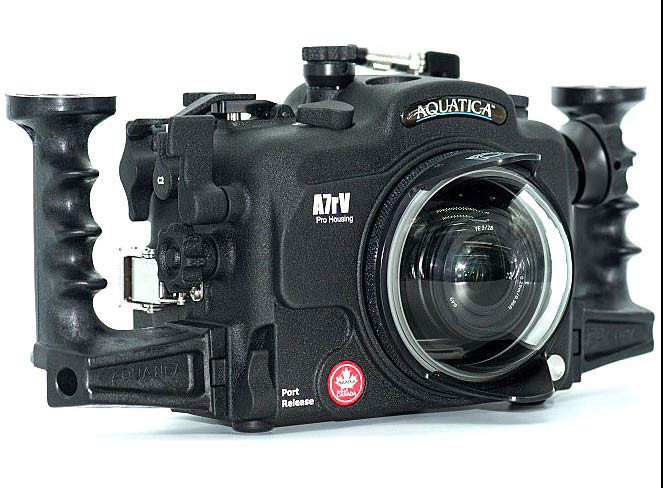
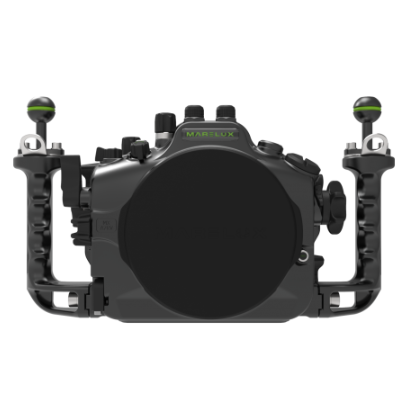
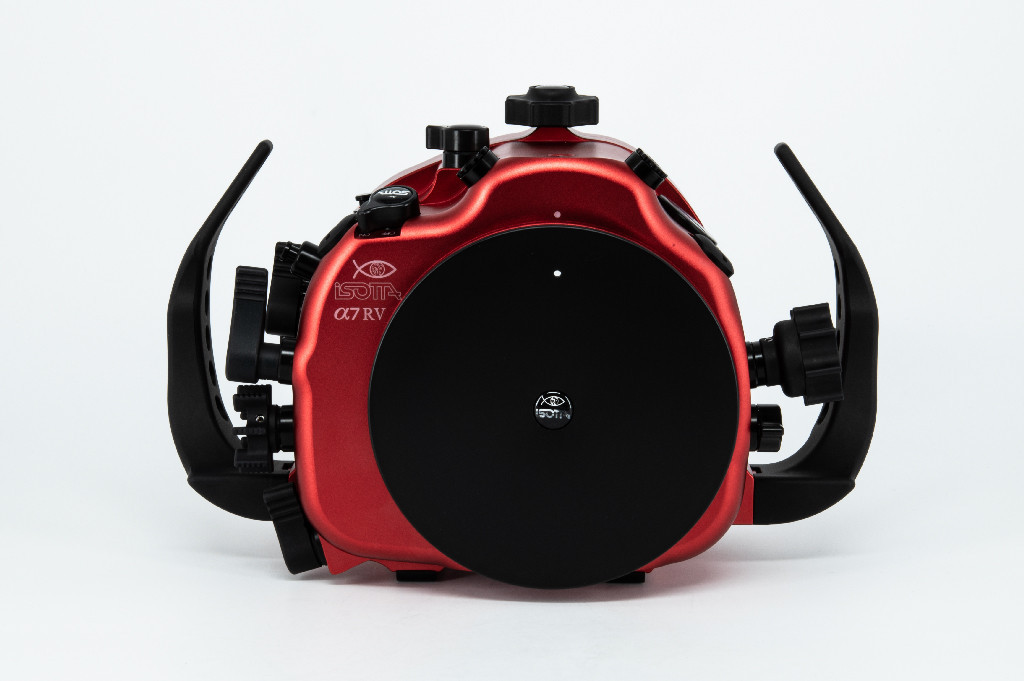
Ikelite 200DL for the best value, lighter polycarbonate build, vacuum system, and strong strobe compatibility. Nauticam NA-A7RV for the premium aluminum route, best ergonomics, N120 port system, vacuum/leak detection, and compatibility with Nauticam wet optics. Marelux, Isotta, Sea & Sea's Sony Universal housing, and Aquatica Sony A7rV are also strong aluminum options. Aquatech is best for snorkeling, surf, and shallow-water work, not deep scuba diving.
Recommended lenses / wet lenses:
For macro, use the Sony 90mm macro, Sony 50mm macro, or Sigma 105mm macro. For wide angle, use the Canon 8-15mm fisheye with Sigma MC-11 adapter, Sony 16-35mm f/4 with an 8-inch dome or larger, or Sony 28mm with a compatible wet wide-angle lens. For the most versatile Nauticam or Marelux setup, use the Sony 28-60mm with the Nauticam WWL-1B.
Recommended lighting:
Use dual strobes for wide angle, reefs, wrecks, and high-resolution stills. Use one strobe for macro or portraits if budget is limited. Add a focus/video light for macro, night dives, low-light autofocus, and handheld video.
Best package path:
Start with the Sony a7R V, Ikelite or Nauticam housing, a port matched to your main lens, tray, arms, sync system, and dual strobes. Build first around the Sony 90mm macro if detail and cropping are the priority, or the Canon 8-15mm fisheye / Sony 16-35mm if wide angle is the main goal. Choose Nauticam or Marelux if the Sony 28-60mm + WWL-1B wet-lens path is important.
Key Features
- 61 MP full-frame Exmor R BSI CMOS Sensor
- Dual Bionz XR processors
- AI based real-time tracking AF system with a dedicated AI processor
- 8K/24p and 4K/60p video (10-bit)
- 4K 16-bit RAW video
- S-LOG3 and S-Cinetone picture profiles
- 10 fps burst shooting
- 8 stops of 5-axis in-body image-stabilization
- 3.2" 4-axis multi-angle touchscreen
- 9.44 million dot EVF with 120 fps refresh rate
- Dual CFexpress Type A/SD card slots
Camera Ratings for Sony A7R V





Sony A1 II
Best Professional Sony Underwater Camera
Best for:
Advanced shooters, professionals, big-animal photographers, and hybrid creators who want one of the best underwater camera systems for scuba diving with Sony’s top stills, video, autofocus, and speed.
Why we like Sony A1 II underwater:
The Sony a1 II is a true professional underwater camera for shooters who need speed, resolution, and video in one body. Its 50.1MP full-frame sensor gives excellent detail and cropping flexibility, while 30 fps burst shooting, 120 autofocus calculations per second, and improved AI autofocus make it a serious choice for fast marine life. During our testing in Socorro we found the autofocus stickier and more accurate than the original a1, with reliable tracking on sharks, dolphins, and quick wide-angle action. Add 8.5-stop IBIS, 1/400 mechanical flash sync, 8K/30p, 4K/120p, and improved handheld video stability, and it becomes one of the best underwater photography camera options for demanding photo and video work.
Who should buy the Sony A1 II:
Sony professionals, working underwater photographers, video creators, big-animal shooters, and divers who want the best dive camera Sony makes. It is especially strong for sharks, dolphins, manta rays, reefs, wrecks, fast action, wide angle, macro, and hybrid assignments where missed focus is not an option.
Who should skip it:
Beginners looking for the best underwater camera for snorkeling or the best waterproof camera should choose a compact option like the TG-7 instead. Also skip it if you want better value, smaller files, longer battery life, or if the Sony a7 V, a7R V, Canon R5 Mark II, or Nikon Z8 already meets your needs for less money.
Best housing options:
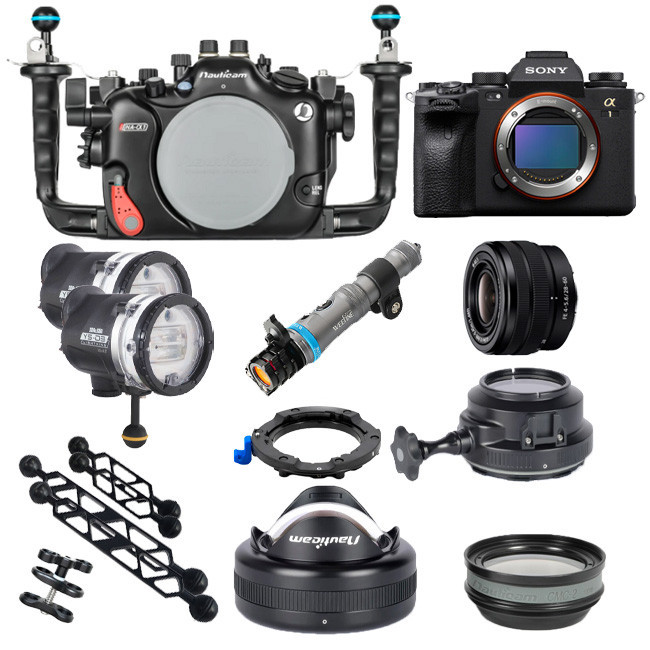
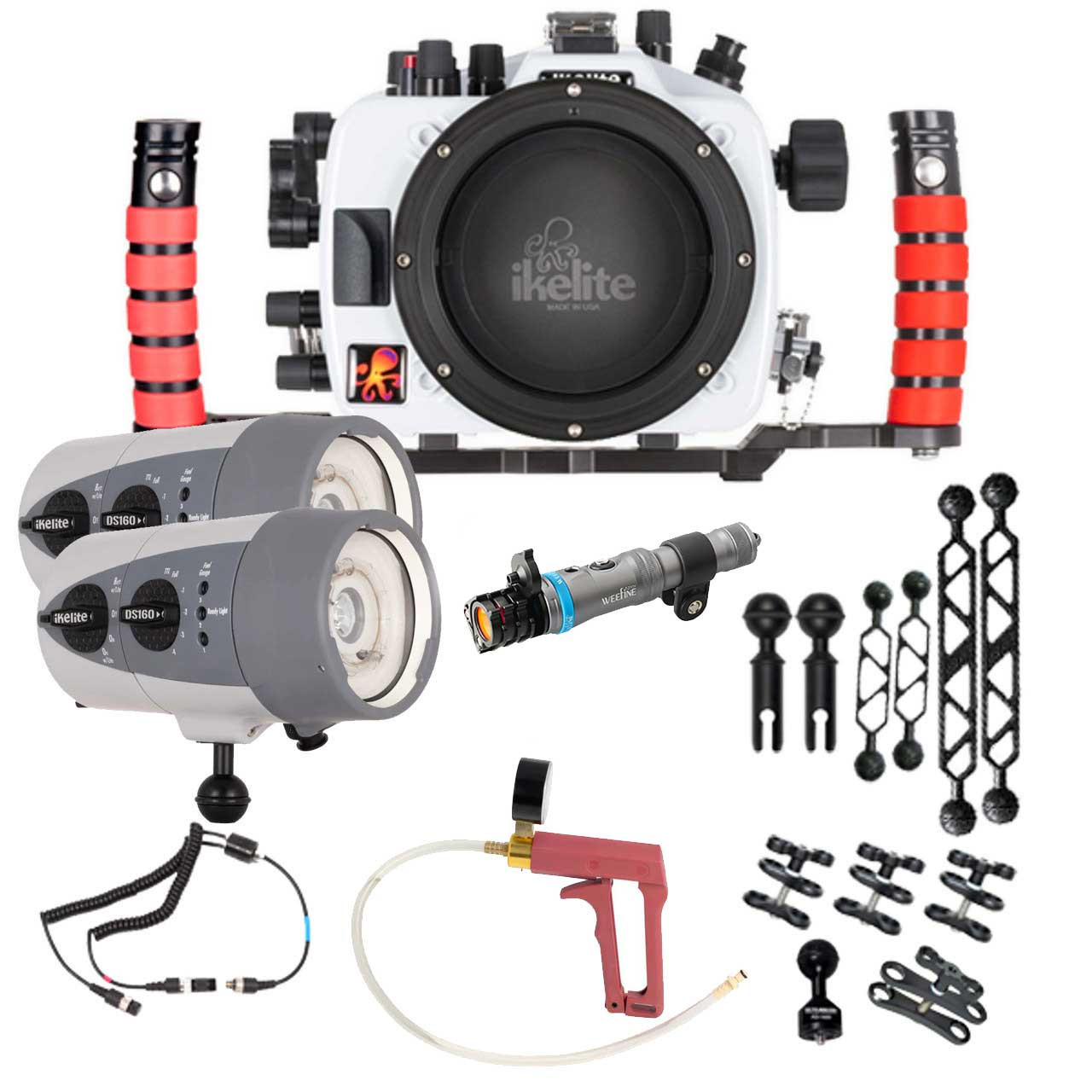
Ikelite a1 II housing for the best value, lightweight polycarbonate build, improved controls, and compatibility with Ikelite’s data transfer and charging cable. Marelux Sony A1 II is another strong aluminum option for advanced Sony shooters. Nauticam a1 II / a9 III housing for the premium aluminum route, best ergonomics, and compatibility with both Sony’s a1 II and a9 III bodies.
Recommended lenses / wet lenses:
For wide angle, use the Canon 8-15mm fisheye with Sigma MC-11 adapter, Sony 16-35mm f/4 PZ with a large dome, or Sony 28-60mm with Nauticam WWL-1B for the most versatile wet-lens setup. For macro, use the Sony 90mm macro or Sigma 105mm macro. For a compact wet-lens macro path, pair the Sony 28-60mm with Nauticam CMC-2.
Recommended lighting:
Use dual strobes for wide angle, sharks, dolphins, manta rays, reefs, wrecks, and high-resolution stills. Choose fast-recycling strobes if you want to shoot action sequences. Add a strong focus/video light for macro, night dives, low-light autofocus, and serious hybrid video work.
Best package path:
Start with the Sony a1 II, Ikelite or Nauticam housing, a port matched to your main lens, tray, arms, sync system, and dual strobes. Build first around the Sony 16-35mm or Canon 8-15mm fisheye if big animals and wide angle are the priority. Choose Nauticam or Marelux if the Sony 28-60mm + WWL-1B wet-lens path is important. Add the Sony 90mm macro later to create a complete best underwater camera system.
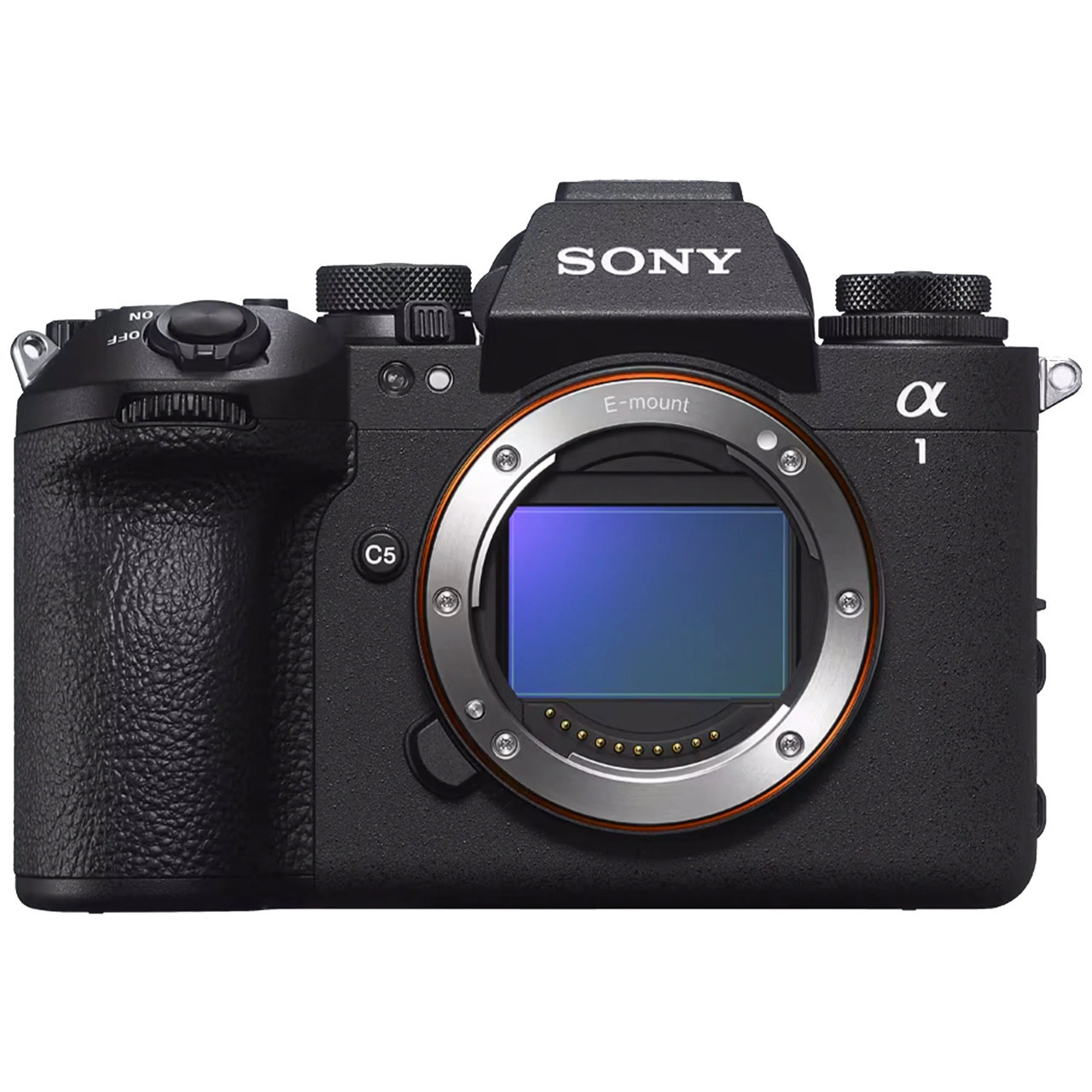
Key Features
50.1-megapixel full-frame Exmor RS stacked CMOS sensor
BIONZ XR image processor + dedicated AI processing unit
Continuous shooting up to 30 frames per second (full resolution, with AF/AE)
120 autofocus / autoexposure calculations per second
In-body image stabilization: up to 8.5 stops (center) / ~7 stops (edge)
Viewfinder: 0.64" OLED Quad-XGA, ~9.44 million dots, 240 Hz, blackout-free
Rear LCD: 3.2″ tilting / 4-axis multi-angle, ~2.1 million dots
Video: 8K/30p, 4K up to 120p (1.1× crop), plus high-margin S-Log, LUT embedding, auto subject tracking in video modes
ISO range: 100–32,000 (expandable to ISO 50–102,400)
Shutter: Mechanical up to 1/8,000 s; electronic up to 1/32,000 s
Flash sync: 1/400 s (mechanical), 1/500 s APS-C
Storage: Dual slots (CFexpress Type A + UHS-II SD)
Connectivity: USB-C (10 Gbps), HDMI A, RJ-45 2.5 G Ethernet, Wi-Fi 5, Bluetooth 5.0
Body size & weight: ~136.1 × 96.9 × 82.9 mm, ~743 g (with battery + card)
Environmental sealing: Weather and dust resistant (operational down to ~0 °C)
Camera Ratings for Sony A1 II




Sony A9 III
The Best Global Shutter Underwater Camera
Best for:
Advanced shooters, action photographers, blackwater divers, and big-animal specialists who want one of the best underwater camera systems for scuba diving when speed matters most.
Why we like the Sony A9 III underwater:
The Sony a9 III is a specialty professional underwater camera built around one game-changing feature: global shutter. Bluewater’s testing found that its 1/80,000 flash sync speed gives underwater shooters far more control over ambient light, making it easier to shoot into the sun, create black backgrounds in bright water, and freeze fast-moving subjects. It also eliminates rolling shutter, which helps with quick pelagics, blackwater critters, and smoother underwater video. Add 120 fps RAW burst shooting, 120 autofocus calculations per second, full-width 4K/120p, and strong tracking performance, and the a9 III becomes one of the best underwater photography camera options for action-focused Sony shooters.
Who should buy the Sony A9 III:
Pelagic shooters, blackwater photographers, action specialists, wide-angle photographers, and Sony users who want the best dive camera for speed, flash sync, and fast subject tracking. It is especially strong for baitballs, dolphins, sharks, sea lions, jellyfish, blackwater subjects, shallow-water sunballs, and bright tropical wide angle.
Who should skip it:
Beginners looking for the best underwater camera for snorkeling or the best waterproof camera should choose a compact option like the TG-7 instead. Also skip it if you want maximum resolution, the best dynamic range, the best value, or a more general-purpose Sony body; the a1 II, a7 V, or a7R V will be better for many divers.
Best housing options:
Ikelite a9 III housing for the best value, 200 ft depth rating, updated cold-water-friendly controls, charging/data-transfer cable compatibility, and Dry Lock port support. Nauticam a9 III housing for the premium aluminum route, best ergonomics, easy port locking, and compatibility with Nauticam optics like FCP-1, WACP-C, and WWL-1B.
Recommended lenses / wet lenses:
For wide angle, use the Canon 8-15mm fisheye with Sigma MC-11 adapter, Sony 16-35mm f/4 with an 8-inch dome or larger, or Sony 28mm with a compatible wet wide-angle lens. For the most versatile wet-lens setup, use the Sony 28-60mm with Nauticam WWL-1B. For macro, use the Sony 90mm macro or Sigma 105mm macro.
Recommended lighting:
Use dual strobes for wide angle, sunballs, black backgrounds, reefs, baitballs, sharks, dolphins, and fast action. Choose fast-recycling strobes if you want to push the camera’s burst-shooting potential. Use a manual flash trigger or manual sync connection if you want to take full advantage of the highest flash sync speeds.
Best package path:
Start with the Sony a9 III, Ikelite or Nauticam housing, a port matched to your main lens, tray, arms, manual sync or trigger, and dual strobes. Build first around a wide-angle lens if pelagics, sunballs, and fast action are the priority. Choose Nauticam if you want the Sony 28-60mm + WWL-1B wet-lens path. Add the Sony 90mm macro later for blackwater and close-up action.

Key Features
- 24.6MP Full-Frame Global Shutter Sensor
- Up to 120 fps Cont. Shooting with AF/AE
- Pre-Capture Function; Speed Boost Button
- Flash Sync at up to 1/80,000 Sec.
- 4K 120p 10-bit Video; S-Log3 & S-Cinetone
- 759-Point Phase-Detect AF with Tracking
- 8-Stop 5-Axis In-Body Image Stabilization
- 9.44m-Dot EVF with 240 fps Refresh Rate
- 3.2" 2.1m-Dot 4-Axis Touchscreen LCD
- Dual CFexpress Type A/SD Card Slots
Camera Ratings for Sony A9III


- Best Professional Underwater Cinema Cameras -
Sony FX3
The Best Sony Cinema Camera for Underwater Video
Best for:
Video-first divers, filmmakers, content creators, and production shooters who want one of the best underwater camera systems for scuba diving when cinematic video is the priority.
Why we like the Sony FX3 underwater:
The Sony FX3 is a compact full-frame cinema camera built for clean, professional underwater video. Our underwater review, where we tested the camera while diving the Olympuc Peninsula, highlights its ability to shoot 4K/120p and produce very clean footage at high ISOs, which is a major advantage for deep dives, ambient-light scenes, caves, wrecks, and low-light reef footage. It gives serious underwater filmmakers the video quality of the Sony a7S III platform in a more cinema-focused body, making it one of the best underwater photography camera options for hybrid creators who care most about motion, color, and low-light performance.
Who should buy the Sony FX3:
Underwater videographers, filmmakers, dive travel creators, and professionals who want a compact full-frame cinema setup. It is a strong choice for reefs, wrecks, caves, big animals, ambient-light video, low-light scenes, and professional underwater camera productions.
Who should skip it:
Stills-first shooters should choose the Sony a1 II, a7 V, or a7R V instead. Beginners looking for the best underwater camera for snorkeling or the best waterproof camera should choose a compact option like the TG-7. Also skip it if you want a small, simple, low-cost dive camera or rely heavily on strobes for still photography.
Best housing options:
The Marelux FX3/FX30 is a durable aluminum housing with strong ergonomics and a 100m depth rating. Ikelite FX3/FX30 offers the best value, lighter polycarbonate build, and practical travel-friendly setup. The Nauticam FX3/FX30 for the premium cinema housing path, best ergonomics, leak detection, monitor support, and Nauticam optics compatibility.
Recommended lenses / wet lenses:
For wide-angle video, use the Sony 16-35mm f/4 PZ, Sony 16-35mm f/2.8, or Sony 28-60mm with compatible Nauticam WWL or WACP-style wet optics. For fisheye-style wide angle, use the Canon 8-15mm fisheye with the correct adapter and dome port. For close-up video, use the Sony 90mm macro or Sony 28-60mm with a compatible wet macro lens.
Recommended lighting:
Use powerful dual video lights for close-focus wide angle, macro video, night dives, caves, and wrecks. For ambient-light wide angle, prioritize custom white balance, filters when appropriate, and stable camera movement. Add an external monitor if framing, focus, and exposure control are priorities.
Best package path:
Start with the Sony FX3, Nauticam or Marelux housing, vacuum/leak system, tray, arms, dual video lights, and an external monitor housing. Build first around a wide-angle video lens or wet optic. Add a macro lens, focus light, and monitor/recorder path later to create a complete professional underwater camera system.

Key Features
- Full-frame 12.1MP Exmor R BSI CMOS sensor
- BIONZ XR processor
- S-cinetone color
- S-Log3/2 gamut support
- 10-bit HLG for simple HDR productions
- In-camera image stabilization
- Fast hybrid AF with 627 focus points
- Real-time eye AF, eye and face detection, and subject touch tracking
- Variable angle 3.0" touchscreen LCD
- Dual CFexpress type A/SD slots
- Wifi: 2.4Ghz & 6Ghz
- Included Charger: BC-ZD1
Camera Ratings for Sony FX3


Nikon ZR Cinema Camera
Best Value Underwater Cinema Camera
Best for:
Video-first divers, filmmakers, and content creators who want one of the best underwater camera systems for scuba diving when professional video quality is the priority.
Why we like the Nikon ZR underwater:
The Nikon ZR is one of the strongest value picks for underwater video because it offers 6K/60p, internal RED RAW, 10-bit N-Log, ProRes recording, strong in-body stabilization, and a full-frame Nikon Z-mount system at a relatively accessible price. The 6K files give macro shooters room to crop and reframe in post, while RED RAW and N-Log provide major flexibility for underwater color correction. The review also found the autofocus smooth and reliable for video, even in dark kelp forest conditions, and the 8.5-stop stabilization helps keep footage steady in surge and current.
Who should buy the Nikon ZR:
Underwater videographers, macro video shooters, filmmakers, and Nikon users who want a compact professional underwater camera without paying flagship cinema prices. It is especially strong for cinematic reef footage, macro video, kelp forests, cold water, travel video, and color-grading workflows.
Who should skip it:
Stills-first shooters should choose the Nikon Z6 III, Z5 II, or Z8 instead. The ZR’s 1/60 flash sync makes it a poor choice for most serious underwater still photography. Beginners looking for the best underwater camera for snorkeling or the best waterproof camera should choose a compact option like the TG-7.
Best housing options:
Ikelite Nikon ZR for the best value, polycarbonate build, practical controls, and between-dive charging support. Nauticam Nikon ZR for the premium aluminum video rig, best ergonomics, vacuum system, and Nauticam water-contact optics. Aquatica Nikon ZR for a rugged aluminum housing with glove-friendly controls and a strong cold-water/technical-diving feel.
Recommended lenses / wet lenses:
For macro video, use the Nikon Z 105mm macro or Nikon F 60mm macro with FTZ adapter. For wide angle, use the Nikon F 8-15mm fisheye with FTZ adapter, Nikon F 16mm fisheye, Nikon Z 14-30mm, or Nikon F 20mm f/1.8G with the correct dome port. For Nauticam builds, consider compatible water-contact optics if compact video versatility is the goal.
Recommended lighting:
Use powerful dual video lights for macro video, reef scenes, kelp forests, caves, wrecks, and night dives. Add a focus light for close-up work and low-light autofocus. Strobes can be used for occasional stills, but the 1/60 flash sync limits action photography.
Best package path:
Start with the Nikon ZR, Ikelite or Nauticam housing, tray, arms, dual video lights, and a wide-angle or macro lens path. Build around the Nikon Z 105mm macro if close-up video is the priority, or the Nikon F 8-15mm fisheye if wide-angle scuba diving footage is the main goal. Add an external monitor and RAW/N-Log workflow later to create a complete professional underwater camera system.

Key Features
Sensor: 24.5 MP full-frame partially stacked BSI CMOS
Processor: EXPEED 7
Mount: Nikon Z mount
Stabilization: 5-axis IBIS (≈ 7.5 stops)
ISO range: 100 – 64 000 (native), up to 204 800 (expanded)
Dual base ISO: 800 / 6400
Dynamic range: ≈ 15+ stops
Shutter: Electronic only, 1/8000 s max
Video: 6K 60p (RED R3D NE RAW / N-RAW / ProRes RAW), 4K 120p, 1080 240p
Storage: 1 × CFexpress Type B + 1 × microSD
Display: 4.0″ vari-angle LCD (3.07 M dots)
Audio: 32-bit float internal, mic & headphone jacks
Connectivity: Wi-Fi, Bluetooth 5.0, USB-C (PD), micro HDMI
Weight: ≈ 540 g (body only)
Build: Compact weather-sealed design for cinema use
Camera Ratings for Nikon ZR


Frequently Asked Questions About Underwater Cameras
Choosing the best underwater camera depends on how you dive, what you shoot, and how much control you want over your images. These answers are based on Bluewater Photo’s experience testing, selling, and supporting complete underwater camera systems for real divers and underwater photographers.
What is the best underwater camera overall?
There is no single best underwater camera for every diver, but for most scuba divers who want excellent image quality in a travel-friendly system, a high-end compact like the Sony RX100 VII is one of the strongest all-around choices. It offers excellent autofocus, RAW image quality, strong video capability, and a wide range of housing, wet lens, strobe, and video light options. Beginners may be happier with the OM System TG-7, while professionals may prefer full-frame mirrorless systems like the Canon EOS R5 Mark II or Nikon Z8.
What is the best underwater camera for beginners?
The OM System TG-7 is one of the best underwater cameras for beginners because it is rugged, compact, easy to use, and excellent for macro and close-up subjects. It does not require the same learning curve as a full mirrorless system, but it still gives new underwater photographers room to grow with a housing, tray, lights, strobes, wet lenses, and accessories. For divers who mainly want simple wide-angle video, a GoPro is also a good beginner option, but the TG-7 is usually more flexible for still photography.
What is the best underwater camera for scuba diving?
The best underwater camera for scuba diving depends on your budget and how serious you are about photo or video. For beginners, the OM System TG-7 is simple and reliable. For divers who want better image quality in a compact system, the Sony RX100 VII and Canon G7X Mark III are strong choices. For photographers who want interchangeable lenses, a mirrorless system such as the Canon R100, Sony a6700, Canon EOS R5 Mark II, or Nikon Z8 provides better autofocus, lens options, and long-term upgrade potential.
What is the best underwater camera for snorkeling?
For snorkeling, the best underwater camera is usually small, simple, and easy to handle at the surface. A GoPro is a great choice for wide-angle video, family travel, and casual snorkeling footage. The OM System TG-7 is better if you want higher-quality still photos, close-up shots, and more control. Smartphone housings can also work well for snorkelers who want to use the phone they already own, but they require careful handling and a good vacuum or leak-check system for peace of mind.
Is a GoPro good enough for underwater photography?
A GoPro is excellent for underwater video, action footage, snorkeling, freediving, and wide-angle scuba clips, but it is not always the best choice for serious underwater still photography. Its small sensor, fixed wide lens, limited close-focus ability, and reduced manual control make it harder to capture detailed macro images or professional-quality still photos. A GoPro becomes much more useful underwater when paired with a dive housing, tray, handles, and video lights. For casual users it may be enough; for dedicated underwater photographers, a compact or mirrorless camera is usually better.
Is the OM System TG-7 better than a GoPro underwater?
The OM System TG-7 is usually better than a GoPro for underwater still photography, macro, fish portraits, and close-up subjects because it offers more useful photo controls and stronger close-focusing performance. A GoPro is usually better for simple wide-angle video, action footage, and hands-free shooting. The right choice depends on what you want to create. Choose the TG-7 if you care more about photos and macro. Choose a GoPro if you mainly want easy video clips of dives, snorkeling, freediving, or travel.
Do I need an underwater housing for scuba diving?
Yes. For scuba diving, you need a proper underwater housing unless your camera is specifically designed and rated for the depth you plan to dive. Even waterproof cameras have depth limits, and those limits are often shallower than normal scuba depths. A good housing protects the camera, gives you access to important controls, and allows you to build a complete system with trays, strobes, video lights, wet lenses, ports, and vacuum leak detection. For serious scuba use, the housing is just as important as the camera body.
What is the best professional underwater camera?
The best professional underwater camera is usually a full-frame mirrorless system such as the Canon EOS R5 Mark II, Nikon Z8, or Sony A1 II, depending on the photographer’s lens preferences, video needs, autofocus priorities, and existing camera system. Professional underwater photographers usually choose a camera body together with an aluminum housing, dome and macro ports, high-quality lenses, dual strobes, focus lights, arms, floats, and vacuum leak detection. At this level, the best system is not just the camera body; it is the complete underwater imaging setup.
What is the best underwater camera for video?
The best underwater camera for video depends on whether you want simple travel footage or professional production quality. A GoPro is excellent for easy wide-angle video and travel. The Sony RX100 VII is a strong compact option for divers who want better image quality in a small rig. For serious video shooters, cameras like the Sony FX3, Canon EOS R5 Mark II, Nikon Z8, or Nikon ZR offer stronger video tools, better low-light performance, lens flexibility, and more professional housing and monitor options.
Should I buy a compact camera, mirrorless camera, or smartphone housing?
Buy a compact camera if you want a smaller travel system with good image quality and room to add wet lenses, strobes, and video lights. Buy a mirrorless camera if you want the best image quality, faster autofocus, interchangeable lenses, and a long-term upgrade path. Choose a smartphone housing if you want the simplest way to use a device you already own, especially for snorkeling or casual shallow-water shooting. For scuba diving and serious underwater photography, compact and mirrorless systems usually offer more control and better long-term results.
How much does a good underwater camera setup cost?
A good underwater camera setup can cost anywhere from a few hundred dollars to well over $10,000 depending on the camera, housing, lenses, lighting, and accessories. A simple GoPro or smartphone housing setup is the most affordable. A TG-7 system with housing, tray, and light is a strong beginner option. High-end compact systems usually cost more once you add a housing and wet lenses. Mirrorless and professional systems are the most expensive because they require dedicated housings, ports, lenses, strobes, arms, floats, and other accessories.
What matters more underwater: the camera, housing, lens, or lighting?
Underwater, the best results come from the complete system, not just the camera body. The camera controls image quality and autofocus, but the housing determines how well you can operate it underwater. Lenses and wet lenses control your field of view, macro capability, and close-focus performance. Lighting is often the biggest difference-maker because water absorbs color and contrast quickly. For many divers, a modest camera with the right housing, lens choice, and lighting will produce better underwater images than an expensive camera used without the right accessories.
Why Trust Bluewater Photo?
Bluewater Photo, recognized as the #1 online retailer specializing in underwater photography and scuba diving equipment, with real-world experience supporting, selling, and configuring underwater camera systems. Our team includes professional underwater photographers and videographers with over 15 years of experience testing and photographing underwater to ensure you get thorough first hand experience and trusted reviews.
Expertise in Underwater Photography: Run by passionate divers and photographers who truly understand the gear and how it performs in real-world conditions.
Competitive Pricing: Offers competitive prices with added value like expert advice and top-tier customer support. We will match and beat any price!
Established Reputation: Trusted by thousands of divers, photographers, and professionals worldwide.
Exceptional Customer Support: Personalized service from knowledgeable staff who care about getting you the right gear.
Transparent and Honest Advice: Recommendations are based on what’s best for your needs—not just what’s in stock.
Need help? Ask our experts.
Not sure which size, model, or setup is right for you? Our Dive Team team can help.
Low-Price Guarantee
Find it for less? Contact us.
+1-310-633-5052
We are happy to help confirm pricing, availability, and the right gear for your dive setup.


Nirupam Nigam
Nirupam Nigam, the President of Bluewater Photo & Scuba, is an accomplished underwater photographer and fisheries scientist with a deep-rooted passion for marine life. He began his journey in underwater photography at 15 and, by age 22, became the Editor-in-Chief of uwphotographyguide.com, the leading online resource for underwater photographers. As a North Pacific and West Coast Fisheries Observer, Nirupam spends months aboard fishing vessels in remote areas such as the Bering Sea and Gulf of Alaska, collecting critical fisheries data for the U.S. government. He hails from the West Coast, considering both Southern California and Western Washington home.