

The Bluewater Standard: Tested Under Pressure
At Bluewater Photo, we believe that gear reviews are only as valuable as the depths to which they are tested. We don't just evaluate equipment in store, we take it into the world’s most demanding underwater environments, be it from the surge-heavy kelp forests of Anacapa Island to the high-visibility tropical reefs of the Sea of Cortez or Fiji. This allows us not only to test how it functions underwater, but also how well the strobe travels, which is often a factor when choosing new strobes.
What We Test & How We Test It:
Real-World Integration: We pair strobes with a wide array of camera systems, from compacts like the OM System TG-7 to full-frame mirrorless rigs like the Canon R100 or Nikon Z8, testing all features that are important to underwater photographers. Features like strobe output, recycle times, battery flash cycles, TTL outputs are all put to the test to see how they perform under different conditions, be it clear waters with bright sun vs green waters with low visibility. This allows us to give an overall review based not only on easy but also the most challenging conditons underwater phtograpehrs will encounter.
Technical Benchmarking: We push the limits of manufacturer claims. For the YS-D3 Duo and YS-D130R, this meant shooting continuous bursts to verify recycle times and "burst mode" reliability under pressure. Other strobes it will be testing TTL and TTL reliability.
Versatility & Ergonomics: We test gear with a full suite of accessories, including snoots and dome diffusers, to evaluate light quality, beam angle, and how easily controls can be manipulated with gloved hands.
Pros & Cons: Through our vigouros testing we often determine what the best settings are, what are the limitations of the strobes are, where they fall short and where they exceed expectations. Thes are all shared in our reviews, with tips on best settings and best accessories.
Our goal is to ensure that by the time a piece of gear reaches your hands, it has already survived the most rigorous professional use cases possible.
Best Underwater Strobes for All Levels of Underwater Photography
Choosing the best underwater strobe is essential if you want vivid, colorful, high-contrast images in underwater environments. Without artificial light, even the best cameras struggle with lighting underwater—producing photos that appear blue, dull, and lacking in definition. This is due to how water absorbs light, a process called light attenuation. Even at depths as shallow as 15 ft, you can begin to lose longer wavelengths of light like your reds and oranges. A quality underwater flash or strobe brings back natural color and texture, transforming your underwater shots from flat to fantastic.
Over the past decade, staff at Bluewater Photo have field-tested nearly every type of underwater strobe — from mini flashes to compact travel units to high-end wireless strobes for underwater photography. Some of our most reliable tools have included the Sea & Sea YS-D3 II, Marelux Apollo III, Kraken KR-S40, and the hybrid Weefine WFS07 (now replaced by the Weefine WFS09 strobe), which functions as both a video light and white strobe. Whether photographing macro nudibranchs or sweeping reef scenes, using the right underwater lighting makes a dramatic difference.
In the Sea of Cortez, we put a pair of YS-D3s to the test, lighting a huge coral head evenly from edge to edge. Meanwhile, in Fiji, we tested a slightly more compact and feature-rich underwater flash setup using the Apollo S and an underwater fibre optic cable connection to freeze a fast-swimming reef shark with tack-sharp precision.
When comparing models, consider power output (measured as guide number or watt-seconds), beam angle, recycle speed, HSS (high speed sync, MTL (multi flash), and TTL support. TTL, or Through-The-Lens metering, allows for automated flash exposure—ideal for fast action or when manual adjustments are impractical. Look for RC TTL which is an even more accurate version of TTL if you are shooting an Olympus camera. If you're shooting wide-angle scenes, go for the brightest or most powerful strobe with wide beam coverage. Macro shooters may prefer a more affordable and compact strobe with a narrower focus beam, like the Weefine WFS07, Inon S220, or Kraken KR-S40. If you're shooting quick action, like bait balls, sharks, and dolphins, you'll want to consider a strobe that has the quickest recycle time at the highest output. Don't be fooled by digingenous marketing claiming a strobe can fire "30 fps" if it's not the full power recycle time rating. All strobes can fire quicker at lower powers.
This guide will help you choose the best underwater lights tailored to your dive style—whether that’s macro, wide angle, or hybrid photo and video. And if you're still working out your rig, check out our reviews of the best dive lights 2024, best underwater cameras, or the best camera for snorkeling.
- Jump to Section -
- Comparison Tables -
Our Top Picks for the Best Underwater Strobe in 2026
- BEST UNDERWATER STROBES FOR PROFESSIONAL AND WIDE ANGLE PHOTOGRAPHY -
Sea & Sea YS-D3 Duo Underwater Strobe
*Best Sub-$800 Pro Strobe for Fast Action and Wide Angle Shooting - The World's Most Popular Underwater Strobe*
Sea & Sea's upgrade from the YS-D3 II 'lightening', the YS-D3 Duo's feature a re-engineered and more sensitive optical sensor for more effective TTL as well as a dual RC circuit for accurate exposures with OM System branded cameras. Nirupam Nigam got hold of a pair of Sea & Sea YS-D3 Duo strobes and took them out to Anacapa Island and put them through some rigorous testing. He found these updated strobes to be a significant refinement of the YS-D3 line, suggesting that Sea & Sea may have "perfected their TTL engineering" with this release.
Together with improved recycle times and cooler colors, he was particularly excited about the introduction of a dedicated RC mode, which provides highly accurate automatic exposures for OM System/Olympus users. He tested the RC mode specifically with the Olympus TG-6 and paired the strobes with the Canon R100 to evaluate their performance across different camera systems.
For photographers looking for new strobes, Nirupam emphasizes the following specs that set the YS-D3 Duo apart:
Performance & Power
Guide Number: 33 (Land), providing enough power for both wide-angle and macro shots.
Recycle Time: Exceptionally fast at 0.6 seconds at half power, with virtually no recycle time at quarter power or below.
Beam Quality: Features an aspherical toroidal lens for even light distribution and a color temperature of 5800K (5500K with diffuser).
Technical Capabilities
RC Mode: Specifically engineered for OM System (TG-7, etc.) cameras for accurate auto-exposures.
Improved Optical Sensor: Increased sensitivity for better TTL accuracy and compatibility with low-powered LED triggers (like those from Nauticam).
Versatile Modes: Includes DS-TTL II, Slave TTL, RC mode, and Manual modes.
Build & Ergonomics
Buoyancy: Nearly neutral (-20g), making it highly maneuverable underwater and ideal for travel.
User Interface: Large, tactile dials designed for use with thick gloves and audible "ready" beeps that are louder than previous versions.
Battery Power: Uses 4x AA batteries (Eneloop Pro recommended), offering roughly 220 flashes per charge.
Key Features of the Sea & Sea YS-D3 Duo Strobe
- Maximum Guide Number 33 (on land)
- Newly developed aspherical troidal lens on the flash tubes provides even light dispersion, no hotspots are produced
- Native beam angle of 105 X 80 degrees with no diffuser
- Wide beam angle of 120° (with included diffuser) or can even wider (150°) with the optional diffuser
- Battery life: 220 flashes with Ni-MH batteries (4X AA)
- Recycle time: 1.7 seconds at full power, 0.6 seconds at GN 22, no recycle time below GN 16!
- Color temperature: 5800K. 5500K with a diffuser
- Large capacity condensers
- Firing the strobes at Guide Number 16 the strobe can continuously fire without any interval time
- Two-stage signal - Visual and Audible notification that the strobe is ready to fire
- Has a pre-flash cancel mode
- Improved power of target light which can be used as a dive light also. It is also adjustable in 2 steps
- Auto power off when the strobe is left turned on for a long time
- Over pressure relieve valve
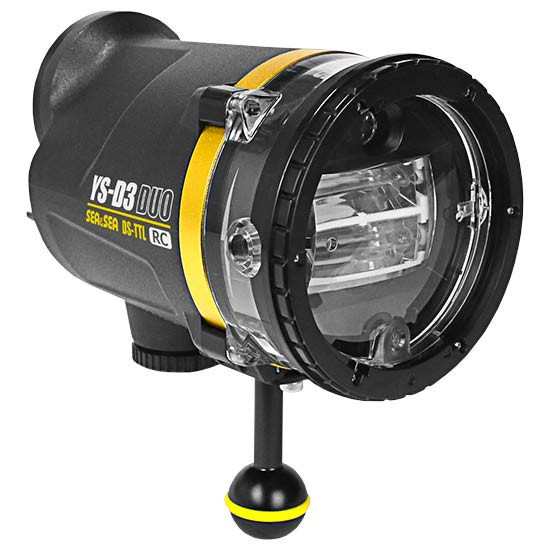
Watch Our Full Underwater Strobe Review
Underwater Review of the YS-D3 Duo Strobe
Underwater Strobe Ratings


Sample images taken using the Sea & Sea YS-D3 Duo Underwater Strobes


Sea & Sea YS-D130R Underwater Strobe
*Delivering 130 Ws of beautifully even, circular light with lightning-fast Li-ion recycling*
Nuripam, one of the leading experts at Bluewater Photo, had the unique opportunity to to beone of the first people to test the YS-D130R underwater. He took them to the Pacific Northwest, diving in deep, dark, and cold conditions. Using a Nikon Z8 in a Marelux housing, he pushed the strobe's limits with wide-angle subjects like wolf eels, as well as some incredible macro, and cold-water reefs to see how the circular flash tube handled coverage and color. Initially he was apprenhensive, based on spec's but after through testing he was sold on these new strobes.
Basic Specs: The Sea & Sea YS-D130R strobe moves to a circular flash tube rated at 130 Ws, aiming for smoother, more even edge-to-edge illumination than twin-tube designs. Sea & Sea lists four shooting modes and compatibility with OM SYSTEM’s Wireless RC Flash System alongside DS-TTL and full manual—good coverage whether you’re running fiber-optic TTL, RC control on OM bodies, or classic manual power steps. Headline specs include a native beam of ~80×82° (about 102×102° with the diffuser), daylight-balanced ~5600 K color, ~0.8 s full-power recycle with the Li-ion pack, a 100 m depth rating, and dimensions of 98 × 110 × 157 mm at 715 g on land. In the box you can expect a diffuser, red filter, AA battery holder, and a strobe ball base; the “Pro” package adds Sea & Sea’s SB-L02 Li-ion battery and dual USB charger. Weight in water is listed around 30–50 g (slightly negative), depending on battery type.
From his testing underwater, he highlighted the following improves features:
Circular Flash Tube: It produces a beautiful, even 102-degree beam (with diffuser) that minimizes hotspots, reminding him of the quality seen in the Ikelite DS230.
"Lightning" Recycle Speed: With the Li-ion battery, the 0.8-second recycle time is incredibly consistent, even during 10 fps bursts at half power.
Tactile Controls: The redesigned power knobs are a dream for cold-water diving; they are much easier to manipulate with thick gloves than previous models.
LED Screen: He was overly excited about the new LED screen and the info supplied on it, especially knowing exact battery levels before diving.
Dual Power Versatility: While the Li-ion battery offers peak performance, the ability to swap in AA batteries as a backup is a lifesaver for remote travel.
From his testing he picked up on some downsides:
Overheating Issues: At full power, the strobe will trigger an overheating warning and lock out for 10–15 seconds after about four consecutive shots. This can be overcome by powering down the strobe by half a stop, which prevents the overheating issue.
No Sync Cord Support: Sea & Sea, like many other strobe manufacturers, has moved away from electrical sync cords; this strobe is strictly Fiber Optic only.
Size: It is slightly larger than the previous YS-D3 Duo, though the performance trade-off is generally worth it
Bottom line: The YS-D130R is a professional-grade tool designed for wide-angle shooters who prioritize beam quality and rapid-fire consistency (can also be used by macro shooters with great effect). While the overheating at full power requires some tactical shooting (dropping power by half a stop), its performance in demanding conditions makes it a worthy successor to the Sea & Sea legacy. Are you looking to upgrade from a specific strobe model, or is this your first high-end underwater lighting setup?
Key Features of the Sea & Sea YS-D130R Strobe
- Flash Output: 130 Ws
- Flash Modes: Manual / DS-TTL / RC (OM Digital Solutions Certified) / HSS Manual
- Beam Angle: 80 x 82 Degrees (w/o Diffuser) / 102 x 102 Degrees (w/Diffuser)
- Usable Batteries: Li-ion (SB-L02) / AA Ni-MH / AA Alkaline
- Recycle Time (FULL): Li-ion : 0.8 sec / Ni-MH : 2.5 sec / Alkaline : 4.0 sec
- Color Temperature: 5600K (w/ or w/o Diffuser)
- Depth Rating: 100m
- Body Color: Black
- Dimensions: W98 x H110 x D157 mm
- Weight on Land: 715g
- Weight in Water: w/ Li-ion : 30g / w/ Ni-HM : 50g (incl. strobe ball base)
- Accessories (Standard): AA Battery Holder, Diffuser, Red Filter, Strobe Ball Base, Silicon grease, Base Block
- Accessories (PRO Package): Li-ion Battery (SB-L02), Dual USB Charger (SC-L01D)
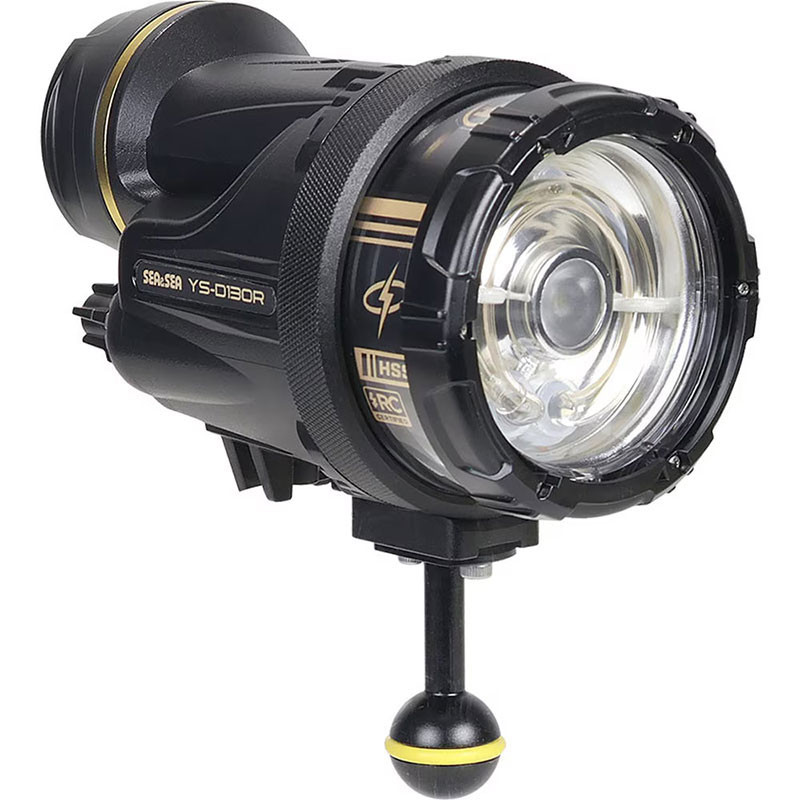
Underwater Strobe Ratings


Sample images taken using the Sea & Sea YS-D130r Underwater Strobes


Marelux Apollo III 2.0 Underwater Strobe
*World's Highest Performing Strobe - TTL, RC, HSS, MTL, GN of 40!*
One of our most recommended strobes for 2025, the Marelux Apollo III 2.0 Underwater Strobe, offers a guide number of 44 (ISO 100, on land) and supports TTL, Olympus RC, HSS, and MTL modes. The Apollo III 2.0 features a beam angle of 110°, which can be expanded to 140° with the included dome diffuser. Its color temperature is 6200K, adjustable to 5500K when using the diffuser.
This strobe supports both fiber optic and wireless triggering. The wireless system, known as Marelux Lumilink 2.0, utilizes two fisheye sensors with a 160° coverage angle. In optimal conditions, wireless triggering is reliable up to 10 meters underwater. But make sure you don't have anything blocking the sensor - as we learned during our tests! The strobe operates on three 18650 lithium batteries, providing an incredible 800 full-power flashes per charge. The full-power recycle time is 0.6 seconds. This recycle time is the fastest on the market at full power which is why we consider the Apollo III to be the world's highest performing strobe.
Based on these exciting features, it was without doubt that Nirupam would get his hands on a pair and take them to test underwater. He describes the Marelux Apollo III (the "2.0" version is a refinement of the original powerhouse design rather than a total overhaul) as a high-performance tool that effectively removes many of the compromises traditionally found in underwater lighting. He found that the strobe's combination of raw power and rapid recovery makes it a top-tier choice for both fast-action wide-angle and detail-oriented macro photography.
From comprehensive testing he summarised the key features as being:
Exceptional Power & Speed: With a guide number of 44, the strobe provides enough output to counteract harsh ambient light in shallow water. More impressively, it maintains a 0.6-second recycle time at full power, allowing for consistent burst shooting that "almost felt like overkill" for typical subjects.
Innovative Flash Design: The unique triangular triple flash tube provides an even light distribution without hot spots, even when used without diffusers.
Battery Longevity: Powered by three 18650H batteries, the strobe lasted through two full days of intensive shooting (eight dives), totaling roughly 1,000 flashes.
Versatile Triggering: The unit supports a wide array of modes, including TTL, RC TTL (for Olympus), HSS (High-Speed Sync), and a unique wireless triggering option via the Lumilink 2.0 optical trigger.
Build Quality: The anodized aluminum body is durable, and the oversized control knobs are highly praised for being easy to manipulate while wearing thick gloves.
With an impressive list of positives, it was difficult to find an con's to these strobes, but below are some:
Bulk and Weight: Despite being relatively compact for its power class, it remains a large strobe (960g). While the included neoprene covers provide some buoyancy, Nigam still recommends using floats to manage the weight in-water.
Battery Specificity: The unit requires specific 18650H batteries, meaning users must ensure they purchase the correct high-discharge variant for the strobe to function as intended.
Conclusion: He concludes that the Apollo III is likely the highest-performing strobe currently on the market, packed with features, capabilites and power, offering "uncompromising" performance for photographers who need speed and power in a rugged package.
Key Features of the Marelux Apollo III 2.0 Strobe
- Guide Number of 44 (tested on land
- Beam angle of 110°
- TTL, HSS & RC compatible UW strobe
- Full power recycle time 0.6 second
- 2 aiming light colors,250 lumen on white, 300 lumen on red
- Special designed MTL mode, support continuous flashes

Underwater Review of the Apollo III 2.0 Strobe
Watch Our Full Underwater Strobe Review
Underwater Strobe Ratings


Sample images taken with the Marelux Apollo III 2.0 Underwater Strobes


Marelux Apollo S Underwater Strobe
*Compact Version of the Apollo III - Best for Travel and Features*
The Marelux Apollo S is an underwater strobe designed by Marelux and depth‑rated to 100 m. The Apollo S supports TTL, HSS, RC TTL, and a proprietary MTL mode for continuous multi‑flash exposure; triggering can occur via fiber optic port or Marelux’s encrypted wireless system (Lumilink 2.0) using two fisheye sensor ports with 160° coverage. It is our pick for the best all-around strobe for the every day photo shooter. The Apollo S achieves a full‑power recycle time of approximately 0.9 seconds, and provides about 800 full‑power flashes per charge using two 18650 lithium‑ion batteries housed in a waterproof compartment.
Nirupam conducted a multi-month field test along the Pacific Coast of the United States. His testing conditions varied greatly, pushing the strobes to see how far they could go under various conditons, and how they would perform when pushed to the limit.
Nirupam identified several standout features that set the Apollo S apart from its competitors:
Versatility in Modes: He determined HSS as a rare find in mid-range strobes, making it significantly easier to capture black backgrounds and freeze action.
Recycle Speed: The 0.9-second recycle time was a major highlight, allowing him to shoot high-speed bursts (10-30 fps) without losing exposure consistency, a rare commodity in such a compact strobe.
The Marelux "Ecosystem": The ability to use wireless triggering and specialized accessories like the SOFT Lite Snoot and Lumilink 2.0, makes it a "creative photographer's dream."
Ergonomics: With glow-in-the-dark back panel and large, tactile knobs that are easy to operate even while wearing thick cold-water gloves, this compact strobe was a winner even on cold water environments where gloves are a must, and water sare often dark and murky.
Despite being impressed with it's high performance, he did note a few minor drawbacks:
No Sleep Mode: The strobe lacks an automatic sleep function; if accidentally left on between dives, the battery will drain.
No Modeling Light: Unlike some competitors, it does not feature a built-in modeling light (though the reviewer prefers using a separate focus light to avoid backscatter).
Wide Angle Performance: despite advertising a GN36, these strobes are probably not powerful enough for wide angle work under bright conditions.
Key Features of the Marelux Apollo S Strobe
- Maximum Guide Number 36 (on land)
- 0.9 second recycle time at full power
- Beam angle of 110 degrees (120 degrees with normal diffusers, and 140 degrees with dome diffusers)
- Support for TTL, RC, HSS, MTL, wireless triggering (The TTL, HSS, and RC modes require compatible flash triggers)
- Strobe has 2 fisheye wireless signal sensor units - sensor coverage is 160 °
- Full power flash: around 800 times
- Wireless trigger supports M, MTL, HSS. (TTL, RC needs fiber)
- Temp 6200k
- With dome diffuser, scattering angle 120-140 °, Temp 5500k
- Fiber optic trigger port
- Batteries: 2x 18650H batteries
- Max diameter 70mm, length of main body 140mm, full length including knobs 160mm
- Weight on land: 720 grams (without battery, with ball mount), 813 grams with 2x18650 batteries (with ball mount)
- Weight in water: 150 grams (including 2x18650 batteries, including ball mount). The weight after putting on the buoyancy suit is 50 grams
- Waterproof Depth : 100m
Underwater Review of the Apollo S Strobe

Underwater Strobe Ratings
Sample images taken using the Marelux Apollo S Underwater Strobes


Ikelite DS230 Underwater Strobe
*Best Performing TTL in a Pro Wide Angle Strobe - A Warm Beam for Blue Water*
The Ikelite DS230 is 33% (213W) more powerful than its legacy siblings. The controls are larger and taller for easier power adjustment, even while wearing thick gloves. Click-stops at each power setting and a limited sweep allow you to quickly jump between TTL, full power and the lowest manual power setting without taking your eyes off your subject. The DS230 also uses new circuitry which makes the recycle time ultra fast! A new circular xenon flashtube produces a perfectly gradated beam pattern and warm color temperature. Warmer color temperatures help produce bluer backgrounds after post production white balance corrections. You can also use older batteries (for the DS 160 and 161) with the new DS 230 strobe as it's the same battery pack - making at an easy upgrade!
Both the Ikelite DS230 and the Ikelite DS232 have the same strobe capabilities, with the only difference being with the video light vs modelling lights options. The Ikelite DS230 has a 205 Lumen LED Spot light, while the Ikelite DS232 has a 2500 lumen video light in the center of the ring flash.
We recommend the Ikelite DS 230 and DS 232 to photographers who need the highest quality beam for wide ange photography, compatable with some the best TTL converts (automatic strobe power) from Ikelite on the market. Ikelite converters product particularly accurate exposures because they transmit a cleaner signal via electronic sync cord.
Key Features of the Ikelite DS230 Strobe
- Circular flash tube - output is 213 Watts
- Wide beam angle of 120°
- DS230 - 213Ws Strobe with 205 Lumen LED Spot light
- Fast Recycle Time - 1.2 sec or faster
- Smaller than the Ikelite DS 160 Mark II!
Underwater Review of the Ikelite DS230 Strobe
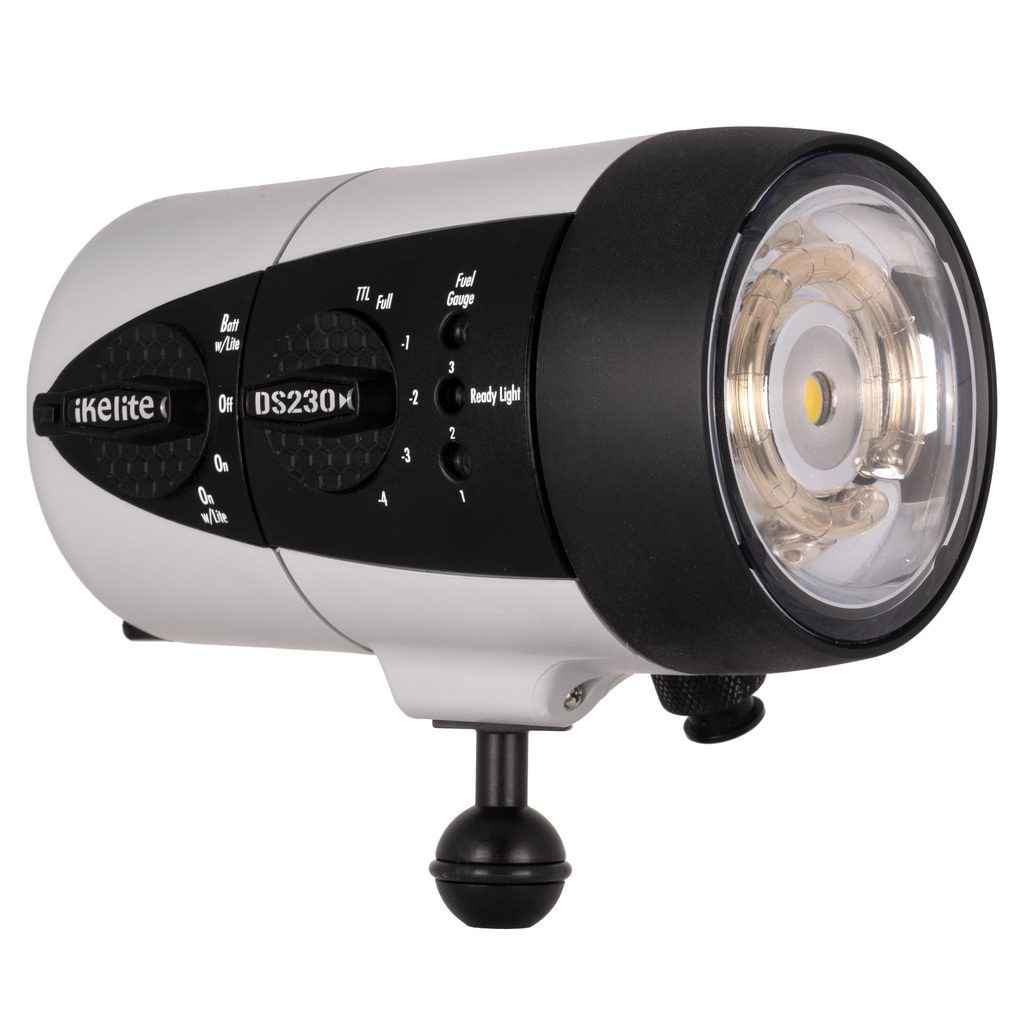
Underwater Strobe Ratings
Sample images taken using the Ikelite Underwater Strobes


Seacam Seaflash 160 Underwater Strobe
*The Rolls Royce of Underwater Strobes*
The Seacam Seaflash 160 Underwater Strobe is considered to be the "Rolls Royce" of underwater strobes with high end finishes and impressive specifications.
The strobe offers a power output of 160 Ws and a color temperature of 4500K. The Seaflash 160 supports multiple exposure modes, including Canon e-TTL, Nikon i-TTL, Dual TTL, Film TTL, and manual power adjustment in 14 steps from 1/1 to 1/64. One of the strobes standout features is the digital control system, whereby the power output of the strobe is controlled digitally and more accurately than TTL. The Seacam Seaflash 160 has a beam angle of 130°, providing wide coverage for underwater photography. It delivers approximately 250 flashes at maximum output on a single battery, with a recycle time ranging from 0.1 to 2.7 seconds, depending on power settings. The strobe can be triggered using fiber optics or electronic cable.
The unit includes a two-stage pilot light with 250 lumens and a 10° beam angle, adjustable automatically or manually. It also offers high-speed synchronization up to 1/8000 and a stroboscopic mode with 2–15 selectable flashes. Physically, the strobe measures 190mm in length and 100mm in diameter, weighing 1.3 kg on land and approximately 50 grams underwater. It operates at depths up to 80 meters.
Key Features of the Seacam Seaflash 160 Strobe
- Nikon i/TTL, Canon e/TTL, dual TTL, film TTL and manual power control
- Beam Angle: 130°
- Manual setting in 14 steps from 1/1 to 1/64
- High speed synchronization of up to 1/8000
- 250 flashes at maximum output
- Recycle time 0.1 -2.7 sec.
- Power 160 Ws / 4500 K°, Underwater guide number 15 at 100 ISO / 1m full power (Topside GN=45)
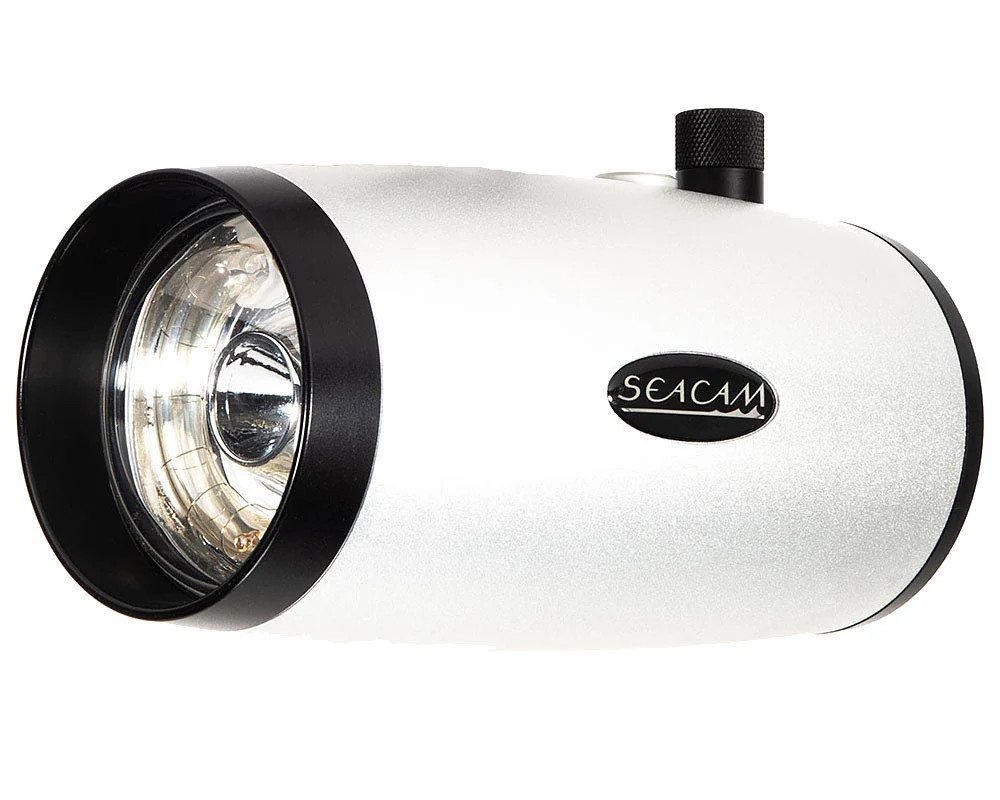
Underwater Strobe Ratings

Scubalamp D-Pro Underwater Strobe
*Best Value Pro Strobe*
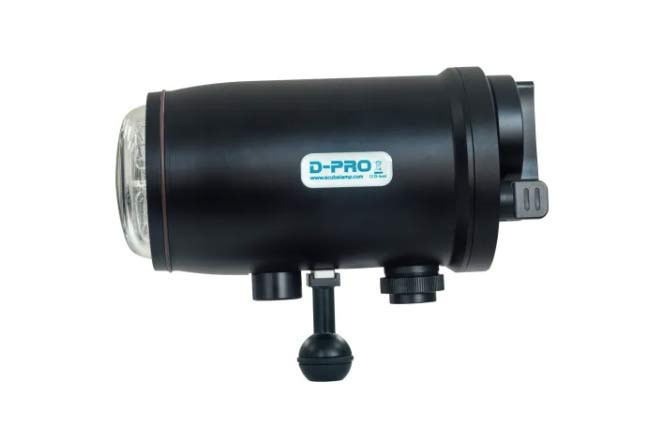
The Scubalamp D-Pro is SUPE's flagship underwater strobe, an affordable strobe that provides underwater photographers with a powerful output option (GN #30), ultra-fast recycle times (0.1-1.1s), and a more than sufficient wide beam angle of 150 degrees. The SUPE Scubalamp D33 battery pack includes 3 x 18650 Lithium batteries that offer 500 flashes at full power, and 3000 flashes on the lowest power setting, allowing for about 6 dives without having to change or charge the batteries. It also offers a focus light of 500 lumens to assist with your macro photography.
If you want value for money, there is no better strobe out there.
Key Features of the Scubalamp D-Pro Strobe
- Maximum Guide Number 30 (on land, IOS100)
- Circular flash tube - output is 160 Watts
- Wide beam angle of 150°
- Power output Capacity : 500 flashes at full power, 3000 flashes at 1st mode
- Recycle time: 0.1s -1.1s. seconds at full power
Underwater Review of the Scubalamp D-Pro Strobe
Underwater Strobe Ratings

Sample images taken using the Scubalamp D-Pro Underwater Strobes


Ikelite DS165 and RC165 Underwater Strobes
*Best Strobe for An Even, Warm Wide Angle Beam*
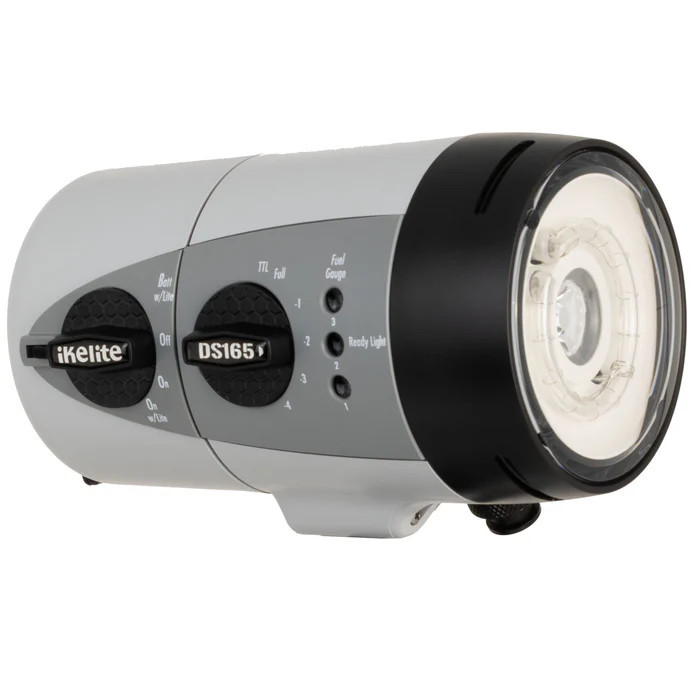
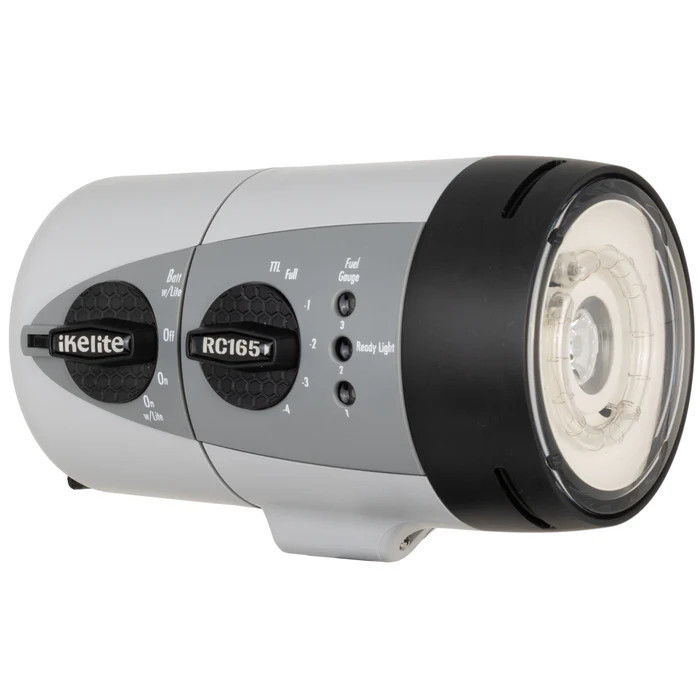
The newly released Ikelite RC165 and Ikelite DS165 strobes are professional-grade underwater strobes engineered to deliver consistent, daylight-balanced illumination for underwater photography. Both models offer 160 Ws of flash output, a 120° beam angle, and a color temperature of 5000 K to accurately render reef life, models, and wide-angle scenes.
RC165 Underwater Strobe
The RC165 features an integrated fiber-optic triggering port (for use with non-Ikelite housings), supporting TTL firing via optical transmitters and manual triggering via pre‑flash or slave signals. This eliminates the need for an electrical sync cord and reduces mechanical seals.
Included with the RC165 are the smart charger, NiMH battery pack, battery cover, a universal 1″ ball mount, and O-ring sealed electronics—identical to the DS165 except for trigger method.
DS165 Underwater Strobe
The DS165, in contrast, uses Ikelite’s electrical bulkhead (ICS‑5) for triggering. This enables direct connection to Ikelite TTL converters, sync cables, and a variety of electrical accessories compatible with legacy Ikelite systems (and other housing manufacturers with the right adapters).
It shares all other specifications with the RC165: 160 Ws output, 120° beam, 5000 K color, NiMH power, 205‑lumen aiming light, similar form factor, controls, and environmental ratings
Key Features of the Ikelite RC165 and DC165 Strobes
Power output: 160 watt‑seconds (160 Ws), with similar max‑burst performance
Beam coverage: Ultra‑wide ~120° without needing a diffuser
Color temperature: 5000 K (daylight-balanced)
Recycle time: Approximately 0.1–1.2 seconds depending on power setting
Battery: Rechargeable NiMH pack (~7.2 V, ~3300 mAh), airline-safe and long-lived
Depth rating: 100 meters (330 feet)
Weight & dimensions: ~1.2 kg (2.7 lb) with battery; ~91 mm diameter × 183 mm length (~3.6″ × 7.2″)
Modeling/aiming light: 205‑lumen spot LED to assist composition and focusing
Controls: Manual adjustment across 10 stops in ½‑stop increments; large tactile dials operable with gloves and slide lock to prevent accidental changes
Warranty & build: Made in USA from ABS‑PC blend, corrosion-resistant and backed by a two‑year warranty
Underwater Strobe Ratings
Kraken KS160 Underwater Strobe
*Best Strobe for Battery Life - and a Cooler Beam*
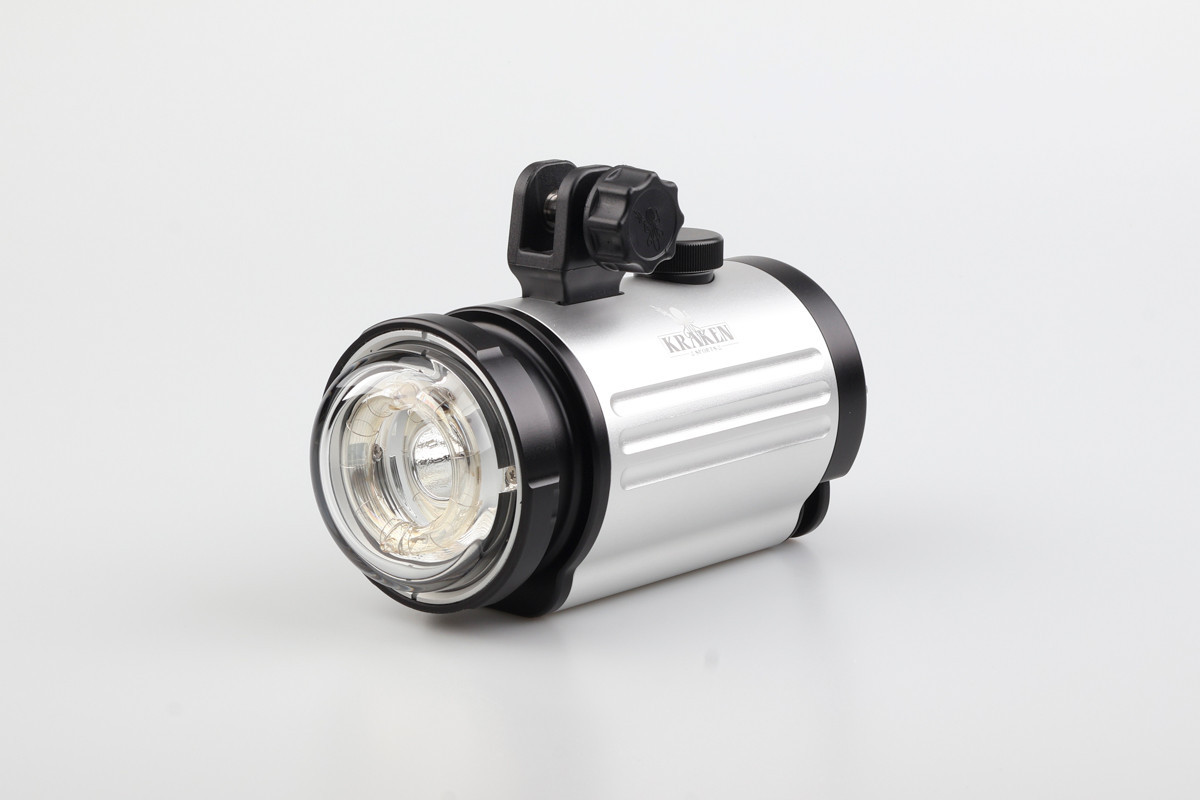
The Kraken KS160 is an underwater strobe light designed for professional and advanced-diver underwater photography. It delivers 160 Ws of power via a circular flash tube and produces a 120° beam angle without diffuser, with a 5500 K color temperature suitable for accurate color reproduction in most environments.
Powered by a rechargeable lithium‑ion battery pack with USB‑C charging, the KS160 supports approximately 400 full‑power flashes per charge, and substantially more in lower-power settings, with a full-power recycle time of ~1.6 seconds. The strobe is depth-rated to 100 m (330 ft) and weighs about 1210 g on land and 300 g underwater, making it reasonably compact for its output class.
The KS160 accommodates both fiber-optic triggering and electronic sync (Sea & Sea 5-pin), and offers manual and slave modes (no TTL) for triggering flexibility.
Ergonomic design elements include a rotating OLED screen that displays remaining flashes and mode, a 500-lumen LED focus light, diffusers for beam controland an optional float collars for neutral buoyancy.
Among underwater strobes, the Kraken KS160 is considered one of the best underwater strobes for users seeking a high-powered strobe with robust battery life and adaptability across wide-angle and macro situations. While it lacks TTL functionality, its high output, broad compatibility, and rugged design make it competitive with strobes such as sea & sea strobes, marelux strobe systems, and other units in the kraken underwater lighting lineup.
Key Features of the Kraken KS160 Strobe
- 160 Ws of output at highest power
- 400 shots per charge at full power
- 120 degree beam angle without diffusersA 5500K color temperature
- Circular flash tube
- 1.6 second recycle time at full power
- 500 lumen LED modeling light
- No TTL
- 5 pin sync and fiber optic strobe triggering
- Slave mode with a slave sensor
- Dedicated battery pack (2x 21700 with USB-C charger
- Anodized aluminum construction
- Depth rating: 300 ft (100 meters)
- Dimensions: 3.3" x 3.9" x 7.6"
- Weight: 1210g in air and 300 grams underwater
Underwater Review of the KS160 Strobe
Underwater Strobe Ratings

Sample images taken using the Kraken KS160 Underwater Strobes


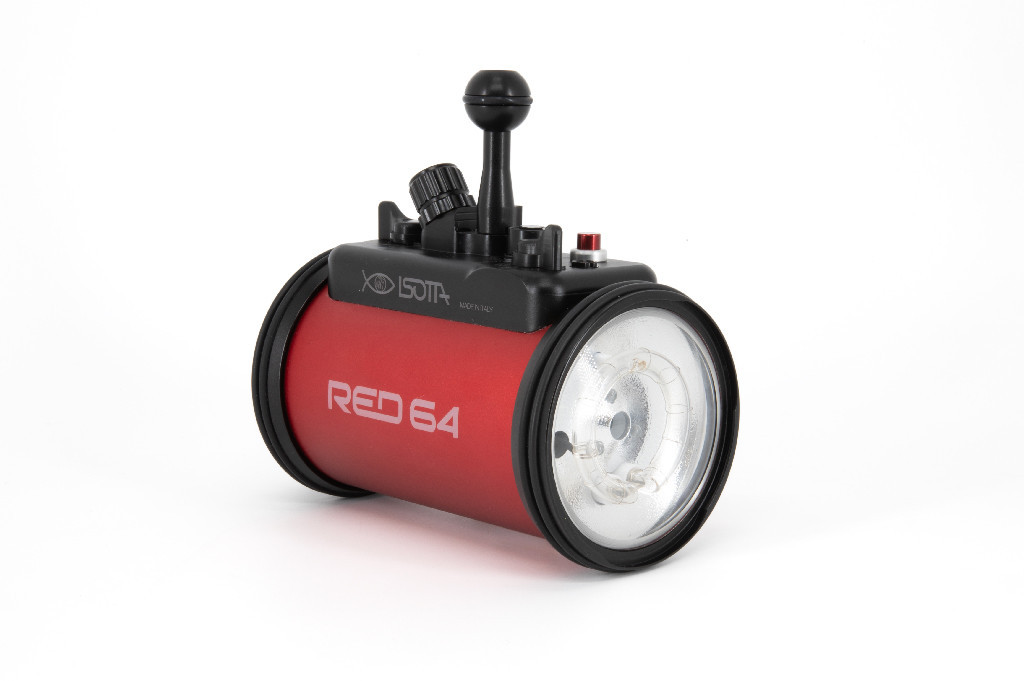
Isotta RED64 Underwater Strobe
*The Highest Guide Number Strobe and Neutral Buoyancy*
The Isotta RED64 Underwater Strobe is a high-quality lighting tool designed specifically for underwater photographers. With an incredible guide number of 64 and a powerful output of 230Ws, it ensures excellent illumination even in challenging underwater environments. The strobe features a 5300K color temperature that closely matches natural sunlight, providing accurate color reproduction for vivid and true-to-life photos.
This underwater strobe is built to integrate seamlessly with Isotta housings, offering a robust and reliable solution for divers and photographers. It supports multiple power settings, have a 10 step adjustment, which allows users to fine-tune their lighting to suit different shooting conditions, whether for wide-angle or macro photography. The user-friendly controls make it easy to adjust settings, even in complex underwater environments.
Based on in-field reports, the RED64 shines in both wide-angle and macro photography, making it a versatile tool. The ergonomic design and neutral buoyancy make it easy to handle, even during extended dives. Its integration with Isotta housings is seamless, and it provides reliable, high-quality lighting, no matter the underwater environment. Overall, it’s a strobe that combines performance, reliability, and ease of use, making it one of the best underwater strobes avilable for underwater photography.
Key Features of the Isotta RED64 Underwater Strobe
- Utilizes Xenon Toroidal Lamp which provides powerful output and even light dispersion
- Wide Beam Angle of 130°
- Color Temperature: 5300K
- Power 230 Watt
- Guide Number 22 underwater / ISO 100
- Manual Power Adjustment Non i-TTL / 10 Steps
- Red and White Pilot Light
- Shielded electronics and upgradeable software
- Double o-ring seal system
- Multi-color LED indicator for battery status and activity
- Uses 8 AA batteries for long utilization and minimizes battery replacement
- Neutral weight underwater
Underwater Strobe Ratings


Best Underwater Strobes for Professional Photography
| Model | Power / GN | Beam Angle (with diffuser) | Recycle Time (full) | Color Temp (°K) | Battery / Life | Depth Rating | Weight (underwater) |
|---|---|---|---|---|---|---|---|
| Sea & Sea YS‑D3 MK II | GN 33 (land) | ~110×100° (150° w/ dome) | 1.7 s (Ni‑MH); 0.6 s @½ power | 5800 K (5500 K w/ diffuser) | 4×AA Ni‑MH: ~220 flashes | 100 m / 330 ft | ~–20 g |
| Marelux Apollo III 2.0 | ~GN 44 (~160 Ws) | ~110° (140° w/ dome) | ~0.6 s full power | 6200 K (5500 K w/ diffuser) | 3×18650 Li‑ion: ~800 flashes | 100 m / 328 ft | ~125 g |
| Marelux Apollo S | ~GN 36 | ~110° (140° w/ dome) | ~0.9 s full power | 6200 K (5500 K w/ diffuser) | 2×18650 Li‑ion: ~800 flashes | 100 m / 328 ft | ~150 g |
| Ikelite DS230 | ~213 Ws | ~120° | ~1.2 s full power | 5000 K | NiMH Battery Packs | 100 m / 328 ft | n/a |
| Seacam Seaflash 160 | ~160 Ws | ~130° | ~0.1 - 2.7 s full power | 4500 K | NiMH Battery Packs | 80 m / 262 ft | n/a |
| Scubalamp D-Pro | ~160 Ws | ~150° | 0.1s -1.1s full power | 4800 K | 3 x 18650 Lithium batteries: ~500 flashes | 100 m / 328 ft | ~120 g |
| Ikelite DS165 | ~160 Ws | ~120° | 0.1s -1.2s full power | 5000 K | NiMH pack | 100 m / 328 ft | n/a |
| Ikelite RC165 | ~160 Ws | ~120° | 0.1s -1.2s full power | 5000 K | NiMH pack | 100 m / 328 ft | n/a |
| Kraken KS160 | 160 Ws ~ GN ~33 | ~120° (up to 140° w/ diffusers) | 1.6 s full power | 5500 K | 2×21700 Li‑ion: ~400–600 flashes | 100 m / 330 ft | ~300 g |
| Isotta RED64 | 230 Ws | ~130° | 3.5s full power | 5300 K | 8x AA NiMh batteries: ~300 flashes | 100 m / 330 ft | ~230 g |
- BEST UNDERWATER STROBES -
- FOR MACRO PHOTOGRAPHY AND PHOTOGRAPHERS ON A BUDGET -
There are a lot of great strobe options out there for photographers on a budget. However, this is a quick word of warning. Underwater lighting is the most important aspect of underwater photography. We recommend spending as much of your investment as possible in underwater lighting systems. It is better to budget a housing, lens, or camera rather than underwater lighting. If you purchase any of the "professional" grade strobes above, then you will be able to keep your kit "future-proof" and bring your strobes along to any upgrade. Budget strobes tend to be great for compact and macro shooters, but they can be more difficult to move to your next system if you choose to upgrade.
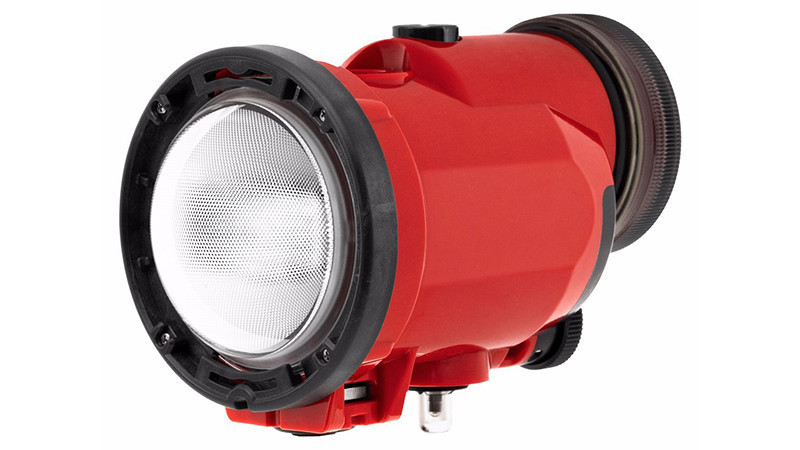
Inon S220 Underwater Strobe
*Best Compact TTL Strobe for Macro Shooters Under $500*
Inon has taken their renowned strobe series to a whole new level with the revolutionary Inon S-220, a worthy successor to the beloved S2000. This cutting-edge strobe boasts an innovative "fly-eye" diffusion surface within its dome port, ensuring unparalleled control over light distribution. The S220 features a wide light dispersion, complemented by an integrated focus light.
The S220 has a boosted Guide Number of 22, akin to the Inon S2000, but in a more compact and high-performance package. The strobe has a large wheel dial and a phosphorescent panel for easy adjustments at night. For protection, the S220 is designed with dual orings, which minimize flooding risks.
If you are looking for an extremely affordable strobe with quick recycle times and TTL capability, the S220 is currently the best option on the market. We loved shooting with it with the OM System TG-7 in the cold water of the Pacific Northwest. It's everything you need in a compact, travel-friendly system.
Key Features of the Inon S220 Strobe
- Guide Number of 22 (tested on land
- Beam angle of 140° horizontal and 100° vertical
- S-TTL Auto and Manual Flash modes
- 12 Step Manual Flash modes
- Up to 250 flashes on a single charge
Underwater Review of the Inon S220 Strobe
Underwater Strobe Ratings


Sample images taken using the Inon S220 Underwater Strobes


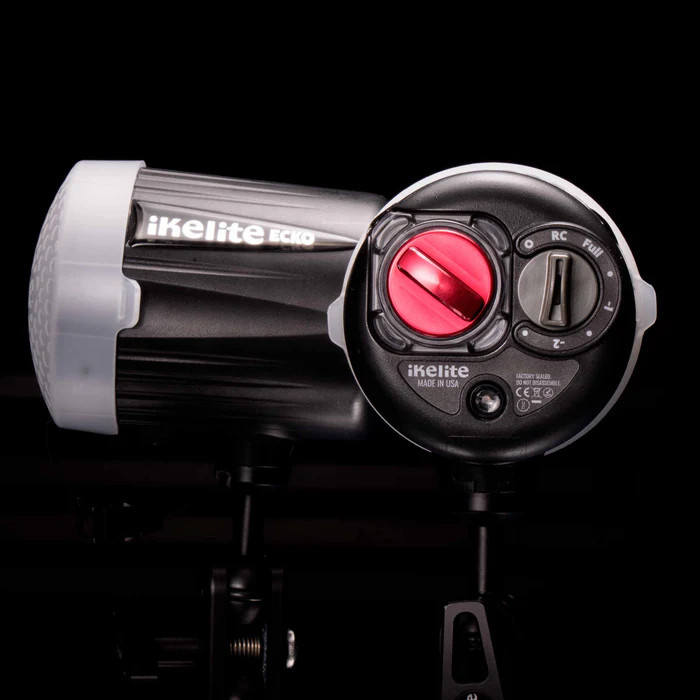
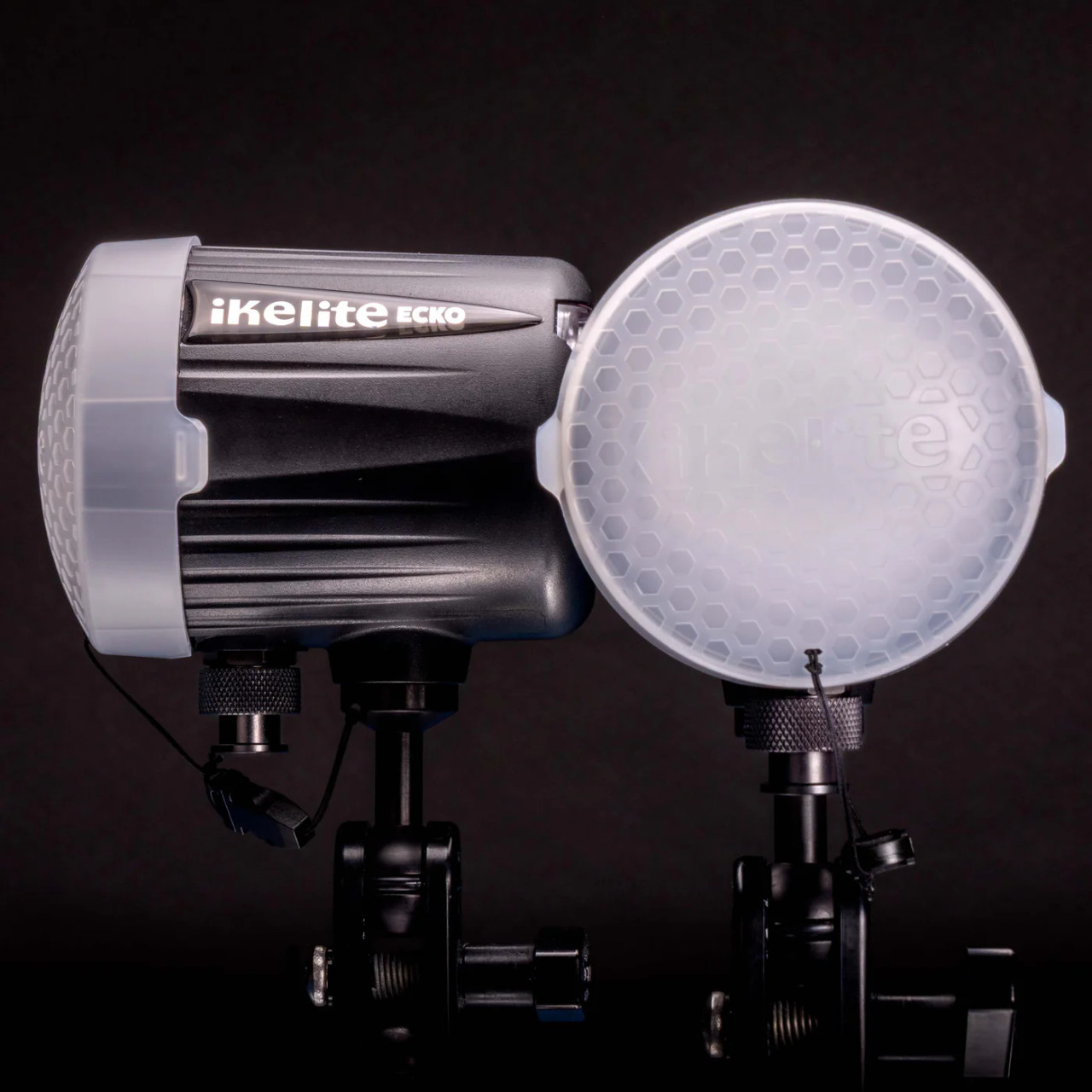
Ikelite Ecko Fiber & Ecko DS Underwater Strobes
*Best Budget Strobes with Full TTL Compatibility and Compact Size*
The Ikelite Ecko Fiber Strobe and Ikelite Ecko DS Strobe are both new releases from Ikelite, offering compatibility with both either fiber optic (Fiber Version) or electrical (DS Version) sync systems. Built to integrate seamlessly with all underwater housings, these underwater strobe light systems provide a flexible lighting solution for a range of underwater imaging configurations. They are equipped with a high-capacity flash tube, precise TTL (Through-The-Lens) exposure compatibility when paired with supported Ikelite underwater housings, and a user-replaceable battery pack.
The underwater strobe output power is adjustable in manual increments, and they feature a wide-angle light beam suitable for both macro and wide-angle underwater photography, although the compact size lends itself more for macro photography work than wide angle. The included fiber optic port (in the Fiber Version) allows for compatibility with non-electrical systems, while the electrical bulkhead (in the DS Version) ensures full TTL functionality with supported Ikelite housings. The Ecko Fiber is TTL compatible with Ikelites TT5 Canon TTL Transmitter as well as most OM System, Olympus, and Panasonic systems featuring an RC (Wireless) flash mode (TTL Transmitters are coming soon for Sony and Nikon camera systems). The strobe is depth-rated for underwater use, with controls designed for operation with gloves and in low-visibility conditions.
Constructed from corrosion-resistant ABS-PC materials, the Ikelite Ecko Fiber & DS strobe is intended for long-term use in saltwater and freshwater environments. It is part of the DS-series, meaning it can be paired with other DS-series Ikelite strobes in dual setups.
Key Features of the Ikelite Ecko Strobes
- Ultra-wide 120º beam angle.
- Fiber or Electronic triggers
- Fast Recycle Time
- Color Temp 5000K
- Travel-Safe Battery Pack
- Power 50Ws
- Depth Rating 330 feet (100 meters)
- 100% corrosion-proof ABS-PC housing
- TTL available for Canon
- RC-mode for OM System/Olympus & Pansasonic
Underwater Strobe Ratings


Seacam SeaFlash 60 Digital Underwater Strobe
*High-End Compact Strobe for Macro*
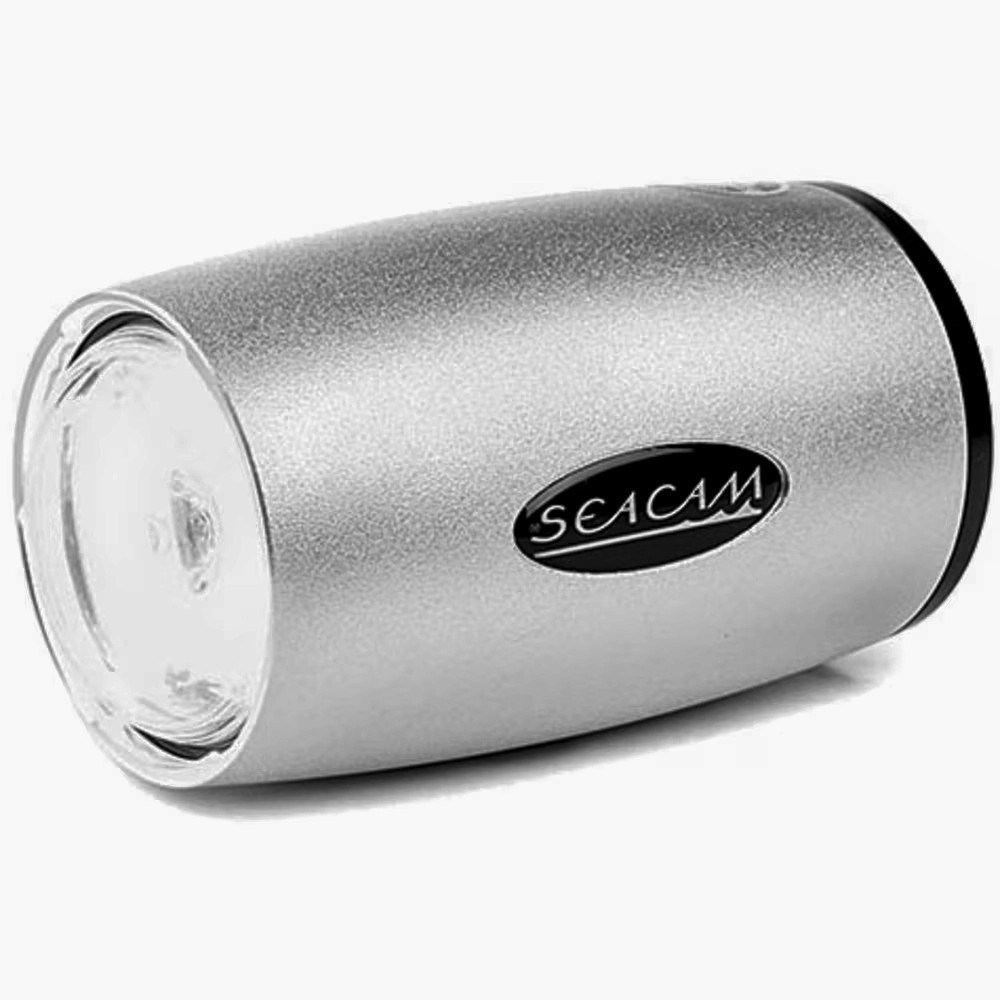
As one of the preferred higher-end strobes for the not-so-budget-conscious underwater photographer, the Seacam Seaflash 60 Digital Underwater Strobe, with it's silver high-end finishes, is a compact and lightweight underwater strobe designed to integrate seamlessly with Seacam housing and Seacam underwater housing systems (as well as other underwater housing systems). Being smaller than it's bigger brother, the Seacam Seaflash 160, this unit delivers 60 Ws of power with a color temperature of 4400K, providing a 130° beam angle. It supports Canon e-TTL, Nikon i-TTL, S-TTL, Dual-TTL, Film TTL, and manual power adjustment in 5 steps with ± flash correction.
The strobe delivers approximately 200 flashes at maximum output, with a recycle time ranging from 0.1 to 2 seconds, depending on power settings. The unit includes a 180-lumen LED pilot light with a 10° beam angle, adjustable automatically or manually. It also offers an underexposure warning and flash-ready light, visible externally and in the camera viewfinder.
Physically, the strobe measures 150mm in length and 75mm in diameter, weighing 550 grams on land and is neutrally buoyant underwater. It operates at depths up to 80 meters.
The Seaflash 60 is compatible with Seacam housing systems, allowing for integrated underwater photography setups.
Key Features of the Seacam SeaFlash 60 Digital Strobes
- CANON e-TTL / NIKON i-TTL / S-TTL, Dual-TTL, Film-TTL
- Power 60 Ws / 4400 K°
- Underwater guide number 8 at 100 ISO / 1 m at full power (Topside GN=24)
- Beam Angle: 130°
- 200 flashes at max power
- Recycle time 0.1 – 2 seconds
Underwater Strobe Ratings


Kraken KR-S40 & KR-S80 Underwater Strobes
*Best Mini Strobe On The Market - And the Size of a Soda Can!
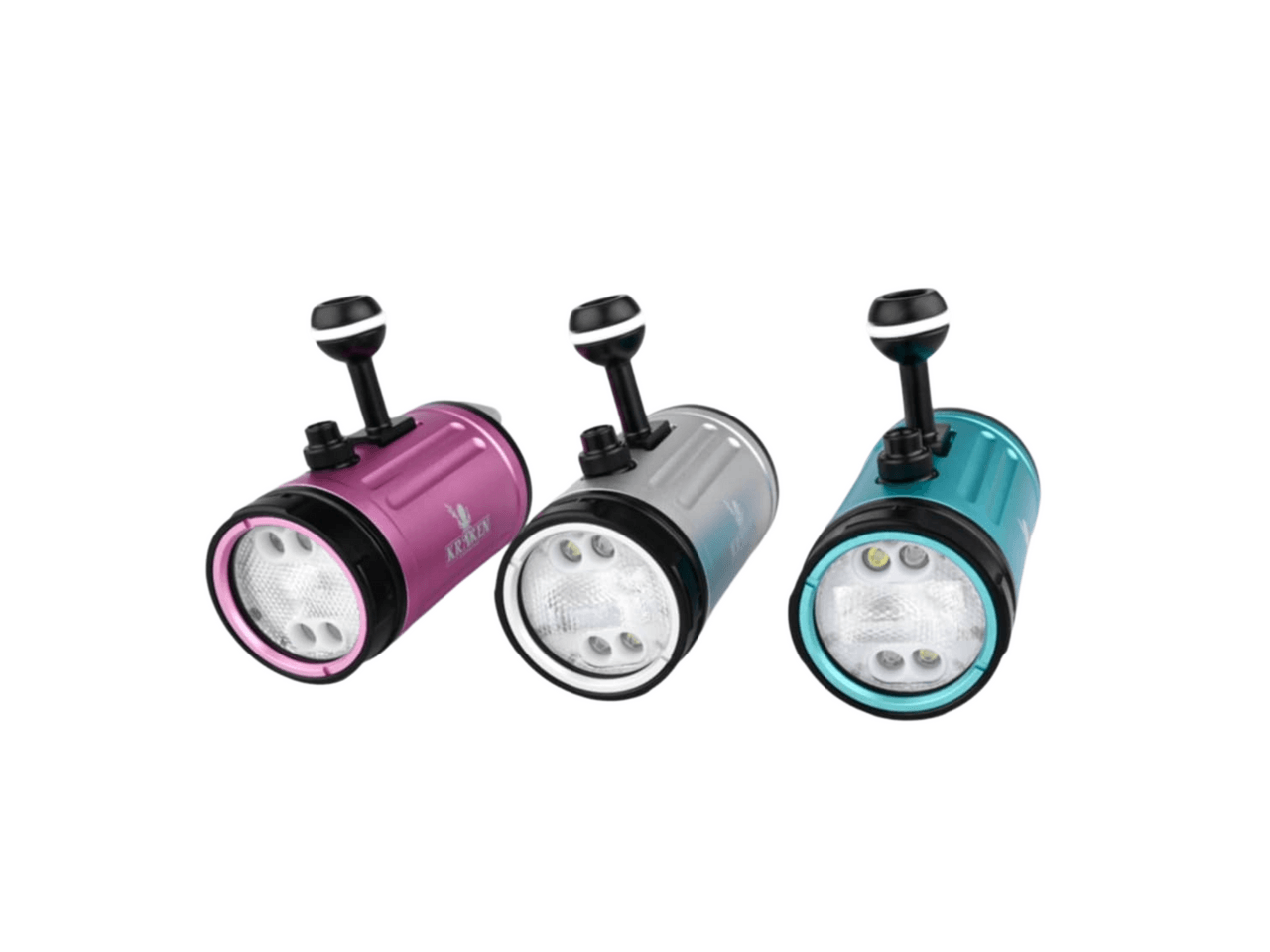
The Kraken KR‑S40 Underwater Strobe is a compact underwater strobe light manufactured by Kraken Sports and the best option for photographers looking for a macro "mini strobe". As part of the Kraken's strobe lineup, this underwater camera strobe delivers 40 Ws of output (guide number 16 at ISO 100) using a straight flash tube design. It is the smallest of the Kraken strobes, with the KR-S80 providing 80 Ws of power, and the KS160 being the most powerful in their line of strobes, offering a large 160 Ws of power.
It operates in manual, S1, and S2 modes (no TTL) with power adjustable across five levels. The unit offers a 60° beam angle and a color temperature of approximately 6000 K. Power is supplied by a single high-capacity 21700 rechargeable lithium‑ion battery (USB‑C charging) capable of delivering roughly 500–600 full‑power flashes, with a recycle time of about 1.5 seconds.
A 500‑lumen modeling light is included for framing and preview (as well as a red focus light for shy animals), although it should not be considered a video light alternative. The KR‑S40 is depth‑rated to 100 m (330 ft) and weighs approximately 530 g on land and about 200 g underwater.Its dimensions measure roughly 62 × 63 × 130 mm. Triggering is via fiber‑optic connection only (no direct electronic sync), compatible with standard Sea & Sea style cords.
Within the broader category of underwater strobes, the Kraken KR‑S40 represents one of the more compact, battery‑efficient options among the best underwater strobes for macro available. It is specifically designed for macro imaging or situations where portability and reliable spec performance in underwater conditions are required.
Key Features of the Kraken KR-S40 Strobes
- Power: 40 Ws
- Color temperature: 6000K
- Guide Number: 16
- Modes: S1, S2, no TTL
- Beam Angle: 60°
- Recycle Time: 1.5 Seconds to Full Power
- Power Levels: Five (40ws, 20ws, 10ws, 5ws, 2ws)
- Target Light: 500 lumens
- Depth rating: 100m
- Battery: 1x 21700 Battery
- Batterlife: 600 full power flashes
- Fiber optic triggering only with Sea & Sea style fiber optic port
Key Features of the Kraken KR-S80 Strobes
- 80Ws at the highest power
- 600 shots per charge
- No TTL
- Round flash tube
- 3 Modes: Manula, S1 & S2
- Fiber Optic trigger only
- RC-02 Remote Compatible
- Built to take on the toughest environments
- Depth Rating: 330ft/100m

Underwater Review of the Kraken KR-S40 Strobe
Underwater Strobe Ratings


Sample images taken using the Kraken KR-S40 Underwater Strobes


Sea & Sea YS-01 Solis
*Best Strobe for Beginners*
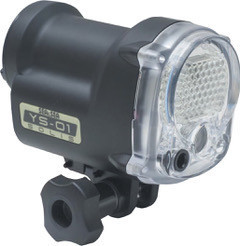
The Sea & Sea YS‑01 Solis Strobe is part of the Sea & Sea strobes family, engineered for beginners just starting underwater photography. It delivers a Guide Number of 20 (ISO 100, on land) with a beam angle of 100° × 100°, extendable to 110° × 110° with diffuser.
Power is supplied by four AA batteries (alkaline or Ni‑MH), providing approximately 230 flashes (alkaline) or 300 flashes (Ni‑MH), with recycle times of ~2.5 s (alkaline) or ~1.9 s (Ni‑MH) at full power. Exposure control options include DS‑TTL II automatic mode and a 10-step manual light‑level dial (GN 1 through 20), with pre‑flash cancel and auto power‑off features. Color temperature is rated at 5600 K, dropping to 5250 K with diffuser attached.
Designed for use to 75 m (250 ft) depth, the YS‑01 weighs approximately 441 g (14.7 oz) on land and is slightly positively buoyant (+60 g) underwater when loaded with batteries.
Triggering requires a fiber‑optic cord, and the strobe includes a bright LED target light on the front face for framing and alignment, plus an over‑pressure relief valve. Within the range of underwater strobe light options, the Sea & Sea YS‑01 Solis is positioned among models considered to be among one of the best underwater strobes in its compact, user-friendly class. It serves as a flexible underwater strobe solution for both point‑and‑shoot and mirrorless/DSLR systems – particularly for use as a main or secondary underwater strobe light.
The YS-01 is fairly similar to the YS-03. The main difference is that the YS-01 does have manual control and is a great tool for beginners that want to control their lighting. The YS-03 only has TTL (automatic) control.
Key Features of the Sea & Sea YS-01 Strobes
- Guide Number 20
- 100° x 100° Beam Angle
- Cutting-edge DS-TTL II circuitry
- Has a pre flash cancel mode
Underwater Strobe Ratings


Sea & Sea YS-03 Solis
*Best Strobe for Point and Shooter Shooters*
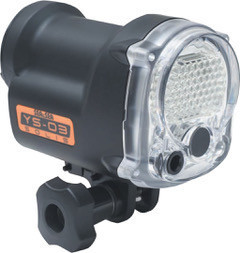
The Sea & Sea YS‑03 Solis is the best strobe available for beginner photographers who want automatic control without worrying about power settings. Designed for underwater use at depths up to 75 m (250 ft), it features slave TTL exposure control, compatible with any camera housing that supports TTL via a pre-flash signal.
Key specifications of the Soli YS-03 include:
Guide Number: 20 (ISO 100, on land)
Beam angle: 100 × 100° standard; expands to 110 × 110° with diffuser
Power source: Four AA batteries (alkaline = 6 V or Ni‑MH = 4.8 V); approximately 230 flashes with alkaline or 300 with Ni‑MH, and full-power recycle times of ~2.5 s (alkaline) or ~1.9 s (Ni‑MH)
Color temperature: 5600 K (5250 K with diffuser)
Dimensions: ~68 × 108 × 129 mm; weight: ~430 g without batteries; underwater buoyancy ~+10 g (slightly positive)
Other features: Rotary dial control (Off/TTL), auto power-off, over‑pressure relief valve, and fiber‑optic sync cable required (not included)
As a compact and straightforward underwater strobe light, the YS‑03 Solis is consistently listed among entry‑level yet reliable underwater strobes, suitable for both compact and mirrorless/DSLR camera systems.
Underwater Strobe Ratings
Best Underwater Strobes for Macro Photography
| Model | Power / GN | Beam Angle | Recycle Time | Color Temp (°K) | Trigger & TTL | Depth Rating | Weight (underwater) |
|---|---|---|---|---|---|---|---|
| Inon S‑220 | GN 22 | 140°×100° (150°×110° w/filter) | ~2.1 s (Ni‑MH) | ≈5500 K (5400 K w/filter) | Optical cable, S‑TTL Auto + 12‑step manual | 100 m / 328 ft | ~50 g (land: 348 g) |
| Ikelite Ecko Fiber | 50 Ws | ~120° | 0–2.5 s | 5000 K | Fiber‑optic only, TTL supported via fiber | 100 m / 330 ft | ~391 g |
| Ikelite Ecko DS | 50 Ws | ~120° | 0–2.5 s | 5000 K | Electrical sync / bulkhead, TTL/manual | 100 m / 330 ft | ~391 g |
| Ikelite DS230 | 213 Ws (GN ~32) | ~120° | 0.1–1.2 s | 5000 K | Bulkhead sync, TTL/manual | 100 m / 330 ft | ~1.4 lb (~635 g) |
| Seacam Seaflash 60 | 60 Ws | ~130° | 0.1–2 s full power: ~200 flashes | 4400 K | Electrical sync, Fiber Optic Cable | 80 m / 260 ft | neutral |
| Kraken KR‑S40 | 40 Ws | ~60° | ~1.5 s full power: ~600 flashes | 6000 K | Optical cable, no TTL | 100 m / 330 ft | ~200 g |
| Kraken KR‑S80 | 80 Ws | ~140° | ~1.0 s full power: ~800 flashes | 6000 K | Optical cable, no TTL | 80 m / 260 ft | n/a |
| Sea & Sea YS‑01 | GN 20 | 100°×100° (110°×110° w/filter) | ~1.9 s (Ni‑MH) | 5600 K | Fiber‑optic only, DS‑TTL II automatic mode | 75 m / 230 ft | ~60 g positive |
| Sea & Sea YS‑03 | GN 20 | 100°×100° (110°×110° w/filter) | ~1.9 s (Ni‑MH) | 5600 K | Fiber‑optic only, TTL supported via pre-flash | 75 m / 230 ft | ~10 g positive |
- BEST "ALL-IN-ONE" STROBE & VIDEO LIGHT COMBOS-
Ikelite DS232 Underwater Strobe & Video Light
*Best Pro Hybrid Strobe *
The Ikelite DS232 strobe boasts a potent power rating of 213 watt-seconds, making it one of the most powerful underwater strobes available on the market. This impressive power allows the strobe to cut through water effectively, delivering sharp, vibrant images even in challenging lighting conditions. Its quick recycle time ensures you can capture fast-paced underwater action without missing a beat. The Ikelite DS232 features intuitive controls, offering 10 steps in 1/2-stop increments, allowing for precise adjustments to get the desired lighting effect. The strobe connector is an Ikelite Bulkhead, ensuring compatibility with a wide range of underwater camera housings.
The Ikelite DS232 is not just a strobe, it also incorporates a 2500 Lumen video light. This powerful light can significantly enhance your underwater videos, delivering brighter, more vibrant footage.
Key Features of the Ikelite DS232 Strobes
- Guide Number 20
- 140 degree beam angle
- Battery life: 600 flashes
- Recycle time: 0.9 seconds at full power
- 3000 lumens focus light or video light
- Powerful ring flash - Color temp 5500K
![Ikelite DS232 TTL Underwater Strobe with Video Light [Electrical Bulkhead]](https://cdn11.bigcommerce.com/s-1nktaieb4v/products/36999/images/77408/ikelite-ds232-underwater-strobe-with-video-light__49218.1771597374.1280.1280.jpg?c=1)
Underwater Review of the Ikelite DS230 Strobe
Underwater Strobe Ratings


Sample images taken using the Ikelite DS230 (DS232) Underwater Strobes


WEEFINE WFS09 STROBE & VIDEO LIGHT
*Best Budget "All-in-One Strobe & Video Light Combo*
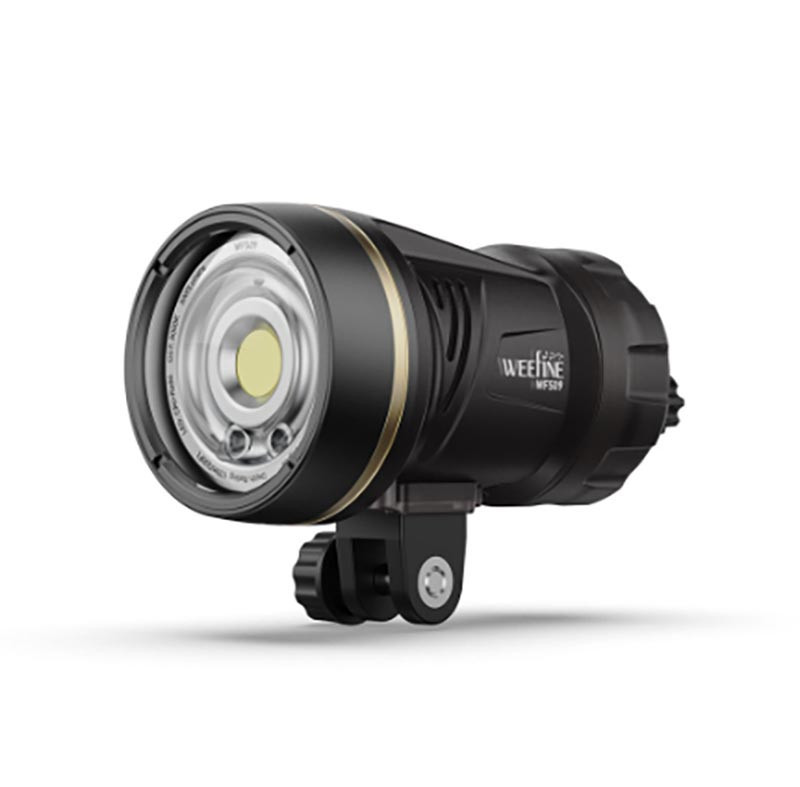
The Weefine WFS09 is an underwater strobe and video light designed for use in underwater photography and videography. This weefine strobe provides a flash output of 60 Ws with a guide number of 22 (ISO 200, 1 m), covering a wide 140°–150° angle. It also functions as a continuous LED light with 3000 lumens brightness, a color temperature of 5000 K, and a high color rendering index (CRI 90).
Powered by two 18650 lithium-ion batteries (in a state-of-the-art battery pack) the unit can deliver approximately 600 flashes per charge at full power, or about 50 minutes of continuous LED output. The recycle time is around 0.9 seconds at maximum strobe power. Built with an aluminum housing, the WFS09 is rated for depths up to 100 m.
This model fits into the category of compact underwater strobes, combining dual-mode operation (flash and video light) for versatility in a single unit.
Key Features of the Weefine WFS09 Strobes
- Dual-function underwater strobe with both flash and continuous light.
- Powerful 60 Ws, 140° ring strobe giving natural, wide-angle illumination.
- 3000-lumen COB LED video light with high CRI (Ra 90) ensures accurate color.
- 11 manual strobe power levels allowing fine adjustments.
- Long battery life—600+ flashes, 50 min video light runtime.
- Durable yet compact aluminum housing—dives down to 100 m.
- Strobe firing by fiber optics
- Lightweight with low underwater bulk for ease of handling.
Underwater Review of the Weefine WFS07 Strobe (previous version of this popular strobe)
Underwater Strobe Ratings


Sample images taken using the Weefine WFS07 Underwater Strobes (again, axamples from the previous version)


Backscatter HF-1 Hybrid Flash Underwater Strobe & Video Light
*Most Advanced Hybrid Strobe with TTL, HSS, & 5000 Lumen Video*
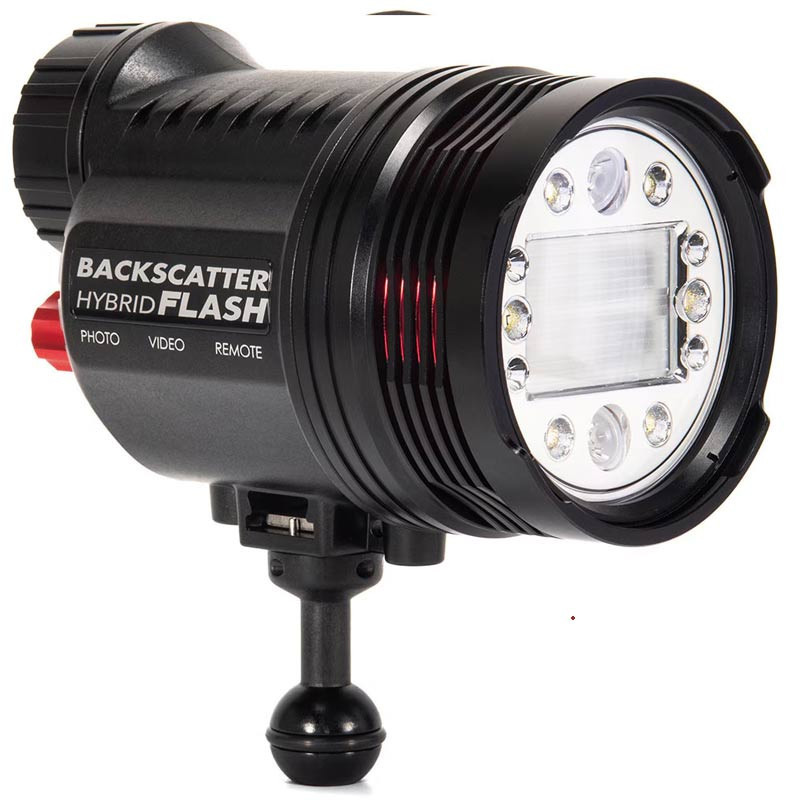
The Backscatter Hybrid Flash HF‑1 is an underwater strobe light that combines an underwater strobe with a high-power video light in a single unit. The HF‑1 delivers a guide number of ƒ40 (ISO 100 equivalent), enabling wide-angle illumination, and has selectable modes (spot, wide, and red light) and adjustable beam angles (120°, 140°, or 160° with diffusers). The Backscatter strobe also includes a built-in 5,000-lumen video light.
The Backscatter HF-1 supports Smart Control TTL flash for Sony, Olympus, and OM-System cameras, high-speed sync (HSS), and wireless off-camera remote control, including remote power adjustment of slave units. Exposure is adjustable across 12 manual flash power levels, offering a 5.5‑stop range down to very low output—sufficient for close-up macro shooting.
The Backscatter HF1 is built for underwater use up to 100 m (330 ft), with a rugged design featuring dual O-ring seals and a sand gasket in the battery compartment. It operates on two 21700 lithium‑ion batteries, providing over 375 full-power flashes per charge and an approximate full-power recycle time of 2 seconds.
Weighing about 1.14 kg in air (with batteries, diffuser, and ball mount) and only 227 g underwater, the unit is compact enough for travel but powerful enough for larger scenes. The housing includes easily operated control dials and LED battery indicators for intuitive handling underwater.
Within the category of underwater camera strobe systems, the Backscatter Hybrid Flash stands out as a model of hybrid functionality, combining a powerful still-photo strobe and continuous video lighting in one device. In comparison to other underwater strobes, the HF‑1 is frequently identified as among the best underwater strobes for hybrid shooters who require combined photo and video capability without carrying separate lights.
Key Features of the Backscatter HF-1 Strobe
- Guide Number: ƒ40
- Maximum LED Output: 5,000 Lumens
- Recycle time (full): 1.6 seconds
- Sync Cord: Fiber Optic
- Depth Rating: 330ft/100m
Underwater Strobe Ratings

Best Underwater Hybrid Strobes for Photography & Videography
| Model | Power / GN | Beam Angle | Recycle Time (full) | Color Temp (°K) | Battery / Life | Depth Rating | Weight (underwater) |
|---|---|---|---|---|---|---|---|
| Ikelite DS232 | 213 Ws (GN ~32) | 120° | ≈1.2 s or faster | 5000 K | NiMH battery pack: ~300+ flashes + 2500 lm video light | 100 m / 330 ft | ~227 g? No—≈1.2 kg? Actually ≈1243 g in air, about ~1.1 kg; in water slightly negative (~0.5 lbs water weight ≈ 227 g) |
| WEEFINE WFS09 | 60 Ws (GN ~22 @ ISO200) | ≈140° ring flash | ~0.9 s (@ full) | ≈5500 K | 2×18650 Li‑ion, ~600 flashes; 3000 lm LED focus/video | ≈? typically 60 m+ but not stated | ~165 g |
| Backscatter HF‑1 | GN 40 (≈240 Ws equivalent) | 120° (140°/160° w/ diffusers) | ~1.6 s full power | ≈6500 K (flash), ≈6200 K (video LED) | 2×21700 Li‑ion: 375+ flashes; 5000 lm video (45‑90 min) | 100 m / 330 ft | ≈227 g in water (≈1.14 kg in air) |
FAQ's
Backscatter is the appearance of floating particles in your image caused by the strobe lighting up debris in the water. To avoid it:
Angle your strobes outward
Keep strobes away from the camera port
Use diffusers to soften the light (makes each piece of backscatter smaller but also increases the amount of backscatter)
Shoot in clearer water when possible
Strobes must match your camera and housing setup. Check:
Trigger type (fiber optic vs. sync cord)
TTL compatibility
Mounting options (arm/tray systems)
Most manufacturers offer compatibility charts to ensure a proper match.
Reach out to the staff at Bluewater Photo for the most knowledgeable help in the world - 310-633-5052
There are two main ways:
Fiber optic cables: easy, waterproof, and common with compact and mirrorless cameras.
Electrical sync cords: used with DSLRs, offering reliable triggering but more susceptible to flooding.
Each system requires a compatible housing and strobe trigger.
Most strobes use AA batteries or proprietary rechargeable packs. Run time varies by strobe power and recycle time:
AA batteries: ~150–300 flashes
Lithium rechargeables: often longer life and faster recycling
Always carry spares and check the manufacturer’s specs for your model.
Strobes are allowed in carry-ons and checked bags, but:
Remove batteries before flying
Keep lithium batteries in carry-on luggage
Use padded cases to prevent impact damage
Avoid checking strobes in hard climates (cold or humid)
Why Trust Bluewater Photo?
Our team includes professional underwater photographers and videographers with over 15 years of experience testing and photographing underwater to ensure you get thorough first hand experience and trusted reviews.
Expertise in Underwater Photography: Run by passionate divers and photographers who truly understand the gear and how it performs in real-world conditions.
Competitive Pricing: Offers competitive prices with added value like expert advice and top-tier customer support. We will match and beat any price!
Established Reputation: Trusted by thousands of divers, photographers, and professionals worldwide.
Exceptional Customer Support: Personalized service from knowledgeable staff who care about getting you the right gear.
Transparent and Honest Advice: Recommendations are based on what’s best for your needs—not just what’s in stock.
Meet the expert


Anthony Grote
Anthony Grote is a South African-based professional photographer, widely recognized for his work in underwater, wildlife, adventure sports, and hospitality photography. His passion for the craft began in the early 1990s during his studies, where he initially focused on bird photography.
As his interest expanded into underwater photography, Anthony moved to the Cayman Islands, where he spent two years working as an underwater photo pro. He later returned to South Africa to establish his own photography business, specializing primarily in adventure sports and the hospitality industry.
Over the years, Anthony has received numerous accolades for his underwater and wildlife imagery. His work has also included contributions to the National Geographic production The Real Serengeti, filmed in the iconic Serengeti wilderness.
Today, Anthony continues to travel the globe, diving and documenting nature whenever possible. He currently serves as the Website Manager for Bluewater Photo, while still pursuing adventure sports photography in his spare time.