

You can edit this element HTML and CSS from sidebar.
Features to Look For in an Underwater Video Camera:
What makes the “Best Underwater Video Camera”? When shooting underwater video, or video in general, there are many factors to consider. To start, being able to record 4K video is now a standard that is expected out of any respectable video camera. The good news is nearly every new DSLR, mirrorless or compact camera features 4K recording capabilities. You may even want to consider a video camera that can record 6K or 8K. When you film in very high resolutions like 8K, you are able to crop your video substantially in post processing, providing you with additional "broll" perspectives.
But as with photography, there's more to video than just resolution when considering the best underwater video camera. You also want to consider the size of your sensor and how your camera processes the data from your sensor. As with photography, larger sensor sizes, like a super35 sensor, allow you to capture more light resulting in better dynamic range and quality in low light. However, APS-C, micro four thirds, and even 1" sensors produce very respectable video. Generally, a video oriented camera will actually have a slightly lower resolution than you might find in a photo camera. This is to keep every pixel on the sensor larger and collecting as much light as possible. The Sony A7S III performs very well in low light because its sensor is "only" 12 megapixels. A higher resolution sensor also requires more processing. The most ideal camera sensor is one that has a full pixel readout from a 35mm sensor (often shooting the initial video in 6K) that will downsample to 4K, adding additional details to the video. A sensor that has a one-to-one pixel readout (like the 12 MP Sony A7S III) will not downsample, but it will perform very well in low light as we mentioned before. Other cameras, especially high resolution cameras, may use pixel binning or line skipping to process the data from their sensor - resulting in slightly lower quality video.The worst video quality comes from cameras that “crop” the video by using only part of the sensor to capture footage.
The next most immediate specification to consider, for the best underwater video camera, would be the frame rate that your video camera allows you to record in. Top-of-the-line video cameras record at 4K resolution and 60 frames per second (fps) or even 120 fps. High frame rates are absolutely essential for good underwater video. This is because three dimensional underwater environments produce a lot more camera shake in a scene than topside video. Unless you have a tripod, you need to capture your video at higher frame rates and slow it down in post processing to get stable footage. We recommend that serious underwater video shooters consider frame frates as being the most important specification in their chosen camera.
Finally, you will want to consider the codecs, bit rates, bit depth, color sampling, and picture profiles that your video camera can record in. Codecs are algorithms that compress your video data into a certain file type. The bit rate of your video is the amount of data that gets recorded from your system over a given time period. Some cameras can record at higher bit rates onto internal memory and some require external recorders to film at higher bit rates. Bit depth is the number of color options your camera can record with. With modern cameras, if you want to color grade in post processing, you should aim to record at 10-bits or higher. Color sampling refers to how accurate the color capture on your camera is by the number of pixels it chooses to determine the color in a square area of your image. If you are color grading than you will want a camera that can record 4:2:2. If you are not color grading then 4:2:0 is acceptable. Finally,picture profiles are algorithms that "bake-in" data into your video file resulting in a certain "look" to your video. Log profiles can be particularly useful for color grading because they save details from the highlighs and shadows of your image - much like a "poor mans" RAW file. If you post-process heavily, then you will can to consider a camera that can record RAW filetypes including ProRes RAW and Blackmagic RAW. These are uncompressed formats that maximize the information gathered by the sensor and provide you with extended flexibility when it comes to color grading and post-processing.
It is important to note that many cameras record at higher bit rates, deeper bit depths, and sometimes with RAW or Log file types with an external recorder, like the Atomos Ninja V external recorder. Nauticam offers a housing for the Ninja V for use with your underwater system.
Other factors to consider when choosing an underwater video camera are in-body image-stabilization (IBIS), autofocus capability, low light sensitivity, lens options, and, well, of course, the price tag.
If you're looking to step up your game and ensure reproducing the colors and beauty of the underwater world, make sure to also choose the right underwater camera light.
Here we will walk you through some of the key points that make each camera great for underwater video and hopefully make the process of choosing which underwater video camera is best for you, a little bit easier. Of course, our extremely knowledgeable sales staff is always here to help you make your decision - feel free to contact us at sales@bluewaterphotostore.com.
Best All-Round Video Camera for Underwater Video - Canon EOS A7R V
61 megapixels, 8K video, 10fps shooting and revolutionary AI AF

Introducing the Sony A7R V, the pinnacle of Sony imaging technology. Following in the footsteps of the well-received Sony A7R IV, this high-resolution camera boasts a full-frame 61 MP sensor. Actually, the world's highest resolution full-frame sensor is still found on the Sony A7R V. An all-new artificial intelligence (AI) processor optimized for machine learning and focusing operations greatly enhances the A7R V's autofocus performance. The video capabilities have also undergone significant upgrades, allowing for the capture of 8K/24p and 4K/60p. Last but not least, the A7R V offers up to eight stops of stabilization for its five-axis in-body image stabilization. We predict that this Sony camera will soon replace all others used by underwater photographers. These features make it one of the top underwater video camera options on our list.
- 61 megapixel full-frame Exmor R BSI CMOS Sensor
- Dual Bionz XR Processors
- 8 stops of 5 axis in-body image stabilization (IBIS)
- 10 fps burst shooting (compressed RAW)
- AI based real-time tracking AF system with a dedicated AI processor
- Autofocus in lowlight down to -4EV
- 8K/24p and 4K/60p (10-bit 4:2:2) video recording
- 4K 16-bit RAW video can be recorded to an external recorder
- S-LOG3, S-Log2, S-Cinetone picture profiles available
- 3.2" 4-axis multi-angle touchscreen
- 9.44 million dot EVF with a 120 fps refresh rate
- 1/250 sec shutter sync speed (with strobes)
- Dual CFexpress type A/UHS-II SD card slots


Best Nikon Camera for Underwater Video - Nikon Z8
FX-format 45.7MP BSI stacked CMOS sensor with EXPEED 7 processing engine

For Nikon Mirrorless underwater photographers, the Nikon Z8 solves all of their problems. The Nikon Z8 is an incredible underwater video camera with no mechanical shutter, lightning-fast autofocus, 45.7 megapixels of high-resolution, and 8K/60p and 4K/120p video. The FX-format 45.7MP BSI stacked CMOS sensor, which uses the same sensor as the Z9, offers a practical combination of resolution, quick readout times, exceptional clarity, and little noise. When operating at the upper end of the enlarged ISO 32-102400 range, the BSI designation provides improved noise levels while the layered construction helps to decrease rolling shutter.
Additionally, the 45.7MP resolution and full-frame sensor size strike a sweet spot that advantages photographers who specialize in genres that emphasize fine detail and makes it possible to capture video at resolutions as high as 8K.
The EXPEED 7 processing engine, which provides speeds around 10 times faster than a Z7 II, works in tandem with the sensor to complete the device. A high buffer capacity, fluid video performance, astonishingly quick AF speeds, burst shooting rates, and snappy all-around handling are made possible by EXPEED 7 in combination with the stacked sensor design.
The Z8 is a weather-sealed camera, which means that it is protected from dust and moisture. This makes it a good choice for photography in all conditions, including underwater.
- 45.7MP FX-Format Stacked CMOS Sensor
- Lightweight Design, 30% Smaller than Z9
- 8.3K 60p N-RAW, 4.1K 60p ProRes RAW
- 8K30p and 4K120p Video, 10-Bit Internal
- Up to 20 fps Raw, 30 fps JPEG Shooting
- 493-Point AF, AI-Based Subject Detection
- Blackout-Free Real Live Viewfinder
- 3.2" 4-Axis Tilting Touchscreen LCD
- CFx Type B & SD Memory Card Slots


Best Entry Level Camera for Underwater Video - Canon EOS R100
APS-C-sized 24.1MP CMOS sensor with DIGIC 8 processor, 4K 24p

The Canon EOS R100 is a groundbreaking camera that pushes the boundaries of photography. Packed with cutting-edge features and innovative technology, this camera is a game-changer in the world of photography.
One of the standout features of the Canon EOS R100 is its advanced autofocus technology. With lightning-fast autofocus, you'll never miss a moment. The camera's autofocus system is highly accurate and responsive, ensuring that your subjects are always in sharp focus. The Canon R100 shares the same 24.2 megapixel APS-C sensor as the R10 and R50, which are professional-level cameras. When compared to micro four thirds cameras from Olympus and Panasonic, as well as tiny underwater cameras, the sensor's dynamic range and detail reproduction are noticeably superior. So, it's simple to edit your photos and bring out details in the highlights and shadows.
The Canon EOS R100 is not just a stills camera. It also excels in the world of videography. With 4K video recording capabilities, you can capture stunning cinematic footage with incredible detail and clarity. The camera's Dual Pixel CMOS AF technology ensures smooth and accurate autofocus during video recording, making it ideal for vloggers and content creators.
- 24.1 Megapixel CMOS (APS-C) Sensor
- DIGIC 8 processor
- Dual Pixel CMOS AF (lower-end AF system than the R10 and R7)
- -4 EV lowlight AF acquisition
- 6.5 fps burst shooting
- 4K/24p and HD/60p video recording
- RF lens mount - compatible with EF-EOS R adapter for EF lenses
- No in-body image stabilization
- The smallest and lightest EOS R camera
- Dimensions: 4.58 x 3.37 x 2.71 in
- Weight: 356 g


Best APS-C Camera for Underwater Video - Sony a6700
26-megapixel back-illuminated Exmor R CMOS sensor with AI Processing Unit enhances image processing and autofocus performance
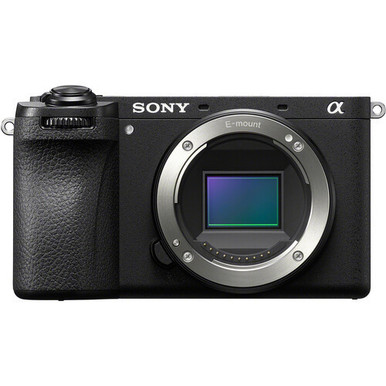
With the a6700 Mirrorless Camera, aspirational content makers now have access to robust and flexible photographic capabilities. The camera is equipped with the latest 26.0MP back-illuminated Exmor R CMOS sensor and the BIONZ XR processor, which allows it to capture still images at an unrestricted 11 fps or smooth ultra-high definition 4K video oversampled from 6K. Despite its smaller size, it is still a powerful tool for creatives who juggle multiple roles.
- 26MP Exmor R APS-C BSI CMOS Sensor
- BIONZ XR Image Processor
- UHD 4K 120p / FHD 240p / 10-Bit 4:2:2
- Up to 11-fps Shooting, ISO 100-32000
- 5-Axis Pixel-Level Image Stabilization
- Real-Time Tracking AF for Stills & Video
- 759-Point Phase Detection, 93% Coverage
- S-Log3, S-Gamut3, S-Cinetone, User LUTs
- Internal Mic + Inputs, USB Streaming
- 3" 1.03m-Dot Vari-Angle LCD Touchscreen


Best Compact Camera for Underwater Video - OM System TG-7
12MP BSI CMOS sensor and TruePic VIII image processor deliver excellent photo and video performance

The OM System Tough TG-7 Digital Camera is an excellent point-and-shoot that can endure the harsh circumstances of outdoor life. Thanks to its 12MP BSI CMOS sensor and TruePic VIII image processor, it captures stunning photos and videos, even in dim light, with a maximum aperture of f/2 and an ISO range of up to 12,800.
While the TG-7 does have a lot of the same basic design as its predecessor, it adds a bunch of additional features like USB-C connectivity, interval shooting, exposure smoothing, and support for vertical video. These extras put you in a good position to record scenes and transfer them to your devices using the camera's 3.0" 1.04m-dot LCD screen. In addition, the TG-7 can be used with 17 other attachments, such as underwater housings, lens protection filters, fisheye/tele-converters, and many more, to increase the camera's functionality.
- 12 megapixel, 1/2.33" sensor (smaller than Canon G7X Mark III and RX100 VII)
- Olympus TruePic VIII image processor
- Waterproof (50ft without housing), shockproof, crushproof, freezeproof
- Fast f/2.0-4.9 lens with 4.5mm - 18mm focal length (equivalent to 25mm - 100mm)
- Sensor-shift image stabilization (up to 2.5 stops)
- Minimum working distance 1cm (in super macro mode)
- ISO range 100 - 12,800
- 25 autofocus points with Single AF and Tracking
- 4K@30p video recording (approx. 102 Mbps bit rate)
- High Speed Movie mode with 1920x1080@120fps / 1280x720@240 fps / 640x360@480fps
- 4K timelapse video
- Pro Capture mode for 20fps image capture
- Shutter speed 4 sec to 1/2000 sec
- Custom white balance (4 slots)
- Built-in flash
- SD storage (SD, SDHC, SDXC)
- RAW and jpeg shooting
- WiFi capabilities, including camera control via smartphone
- Action track sensors record location, temperature, direction and altitude data


Best Action Camera for Underwater Video - GoPro Hero 12 Black
Cutting-edge technology and top-of-the-line features - 12-megapixel sensor with 4K 60fps

The GoPro Hero 12 Black is packed with an impressive array of features that make it a standout camera in the action sports industry. It boasts a 12-megapixel sensor that delivers crystal-clear, high-resolution images and videos. The camera is capable of shooting in 4K resolution at 60 frames per second, allowing you to capture every detail with incredible clarity. Additionally, the Hero 12 Black features advanced image stabilization technology, ensuring that your footage remains steady and smooth even in the most extreme conditions.
The Hero 12 Black is also equipped with a built-in touchscreen display, making it easy to frame your shots and navigate through the camera's settings. It offers intuitive controls and a user-friendly interface, allowing you to focus on your adventure without any distractions. Furthermore, this action camera is waterproof up to 33 feet (10 meters), making it perfect for underwater adventures or capturing those epic surfing sessions.
- 27MP with Improved Performance
- 5.3K60/4K120/2.7K240 Video, 27MP Photos
- HyperSmooth 6.0 Image Stabilization with 360° Horizon Lock
- Front and Rear LCD Screens
- Bluetooth Audio Connectivity and Control
- 33' Waterproof without Housing
- 8x Slow-Motion Video
- 1720mAh Capacity Rechargeable Battery
- HDR (High Dynamic Range) Video + Photo for more vivid images
- Longer runtimes, including 1.5 hours at 5.3K30 and over 2.5 hours at 1080p30²
- Large image sensor captures ultra wide 156° field of view in 8:7
- 27 megapixel photos with 24.7 megapixel stills from video
- New Timecode Sync to wirelessly synchronize multiple HERO12 Black cameras at once
- GP-Log and LUT support
Best Smartphone for Underwater Video - Iphone 15 Pro Max
6.7-inch Super Retina XDR display with A17 Pro chip equipped with a 48MP main camera, 4K 60fps

Under the hood, the iPhone 15 Pro Max is powered by the A17 Pro chip, Apple's most advanced and powerful chip to date. This chip features a new 6-core CPU with 2 performance and 4 efficiency cores, delivering lightning-fast performance and energy efficiency. The device also houses a new 6-core GPU, enabling stunning graphics and smooth gameplay. With the new 16-core Neural Engine, the iPhone 15 Pro Max takes machine learning and AI capabilities to the next level, enhancing tasks such as facial recognition and augmented reality experiences.
Equipped with a 48MP main camera, this system features a second-generation sensor-shift optical image stabilization, 100% Focus Pixels, and support for super-high-resolution photos. The device also includes a 12MP Ultra Wide camera with a 120° field of view and a 12MP 2x Telephoto camera that enables 3x optical zoom in and 2x optical zoom out.
When it comes to video recording, the iPhone 15 Pro Max is a powerhouse. It offers 4K video recording at 24 fps, 25 fps, 30 fps, or 60 fps, along with 1080p HD video recording at 25 fps, 30 fps, or 60 fps. The device also supports HDR video recording with Dolby Vision up to 4K at 60 fps, allowing users to capture cinema-quality videos with vibrant colors and incredible detail.
- 6.7-inch OLED Display
- 120Hz adaptive Refresh Rate
- A17 Pro Chip
- 256GB, 512GB, 1TB Storage options
- 48MP main/12MP ultrawide/12MP telephoto w/ 5x zoom Rear Cameras
- 12MP Front Camera
- 4K video recording at 24 fps, 25 fps, 30 fps or 60 fps
- 4,422 mAh Battery
- USB-C Charging Port