
Sea & Sea YS-D130R Underwater Strobe Review
Posted by Nirupam Nigam on February 6th, 2026
The Sea & Sea YS-D130R marks Sea & Sea’s return to the flagship strobe category—nearly two decades after the release of the original YS-250 Pro. The YS-250 Pro set the benchmark for professional underwater photographers in the early 2000s, and despite a long line of capable successors in the popular YS-D series (D1, D2, and D3), many of our customers have been eagerly waiting for a true replacement. That wait is finally over.
Under new ownership, the YS-D130R is Sea & Sea’s first strobe built on an entirely new engineering platform, departing from the familiar “yellow submarine” design. It features a circular flash tube that delivers a wide 102-degree beam with 130 watt-seconds of output. At full power, recycle time is impressively fast at just 0.8 seconds—making it a full 1.2 seconds quicker than the Hybrid Flash at full power, and 0.4 seconds faster than the Sea & Sea YS-D3, though still slightly behind the Marelux Apollo III.
When the YS-D130R was first announced at DEMA 2025, I made a beeline for the Sea & Sea booth to get my hands on an early prototype. Sea & Sea was kind enough to let me take one off the show floor, and I was able to capture the first underwater images shot with the YS-D130R. While the unit wasn’t yet production-ready, it functioned as a true working strobe—and we were genuinely impressed by the real-world results during dives in the deep, dark, cold waters of the Pacific Northwest.
US MSRP: $999 at Bluewater Photo. We recommend purchasing the YS-D130R pro package, which includes the lithium-ion battery pack and charger, for $1199. The pro package "unlocks" quicker recycle times and better performance - for a strobe at this price point, why wouldn't you spend a little more on a battery for peak performance?
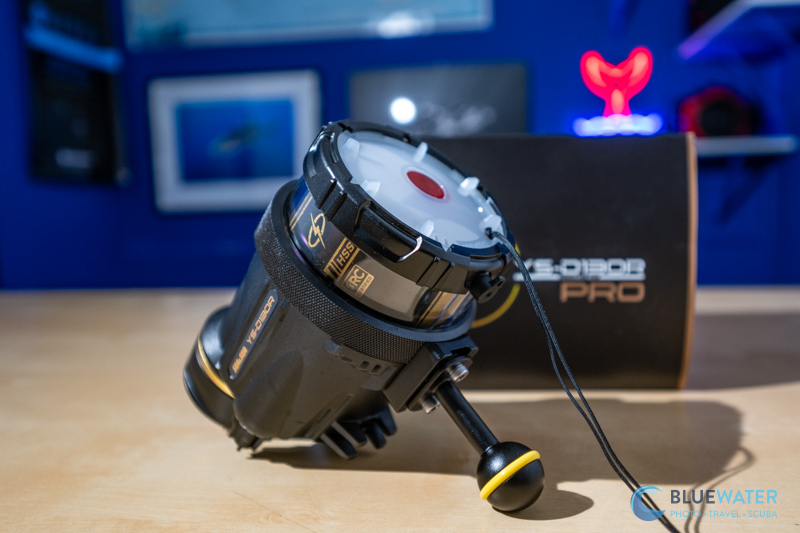
The Sea & Sea YS-D130R in Our Studio After a Day of Diving with the Strobe!
Sea & Sea YS-D130R Specifications
- Flash Output: 130 watt-seconds (Ws)
- Flash Tube: Circular ring flash tube for even illumination
- Beam Angle:
- 80 × 82° (no diffuser)
- 102 × 102° (with included diffuser)
- Recycle Time:
- ~0.8 seconds at full power (with Li-ion battery)
- Color Temperature: 5600 K (daylight balanced)
- Modeling Light
- Flash Modes:
- Manual
- DS-TTL
- RC wireless TTL (OM Digital Solutions certified)
- High-Speed Sync (HSS)
- Battery Options:
- SB-L02 Li-ion battery
- 4× AA batteries (Ni-MH or alkaline)
- Battery Included (Pro Package):
- SB-L02 Li-ion battery
- SC-L0D dual charger
- Sync Options:
- Fiber-optic cable
- Electrical sync cord (housing-dependent)
- Depth Rating: 100 m / 330 ft
- Dimensions: 98 × 110 × 157 mm (W × H × D)
- Weight (on land): 715 g
- Underwater Weight: approx. +30 g (with Li-ion battery)
- Included Accessories:
- Diffuser
- Red filter
- Ball-mount adapter
- Base block
- Silicone grease
- Compatibility:
- Mirrorless & DSLR systems
- OM SYSTEM RC mode officially supported
- DS-TTL support with compatible Sea & Sea converters
- MSRP (Pro Package): $1,199 USD
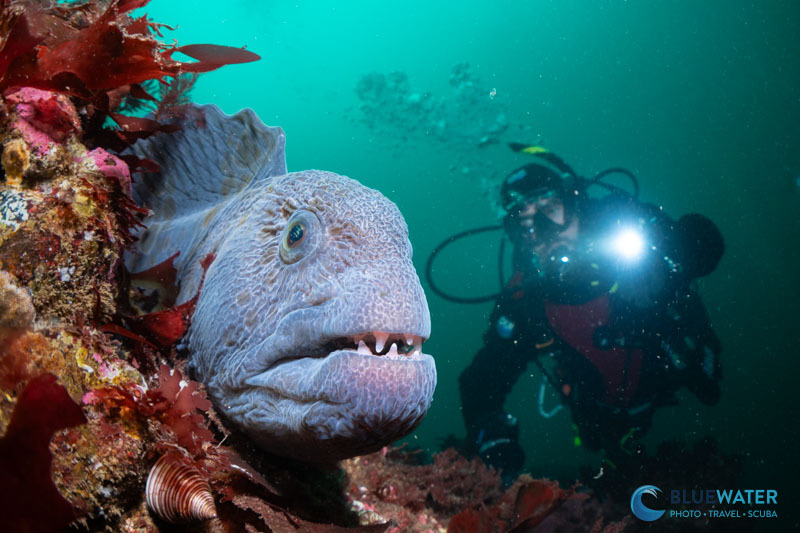
A portrait of a wolf eel photographed with a Nikon Z8 in a Marelux Z8 housing, Nikon 8-15mm fisheye lens, and a single Sea & Sea YS-D130R strobe. f/13, 1/50, ISO 800
Key Strobe Features
Powerful Output with a Wide, Even Beam
The Sea & Sea YS-D130R delivers a powerful 130 watt-second output paired with a circular flash tube designed to produce a wide, even beam. This design helps reduce harsh hotspots and uneven illumination, which are common challenges when lighting wide-angle scenes underwater. With a beam angle of up to 102° using the included diffuser, the strobe provides consistent edge-to-edge coverage that works well for reef scenes, large subjects, and close-focus wide-angle compositions.
At the time of writing, Sea & Sea has not published a guide number for the YS-D130R, which makes it difficult for me to directly compare output per square meter against the YS-D3 Duo. That said, based on my underwater use, the effective output of the YS-D130R feels higher.
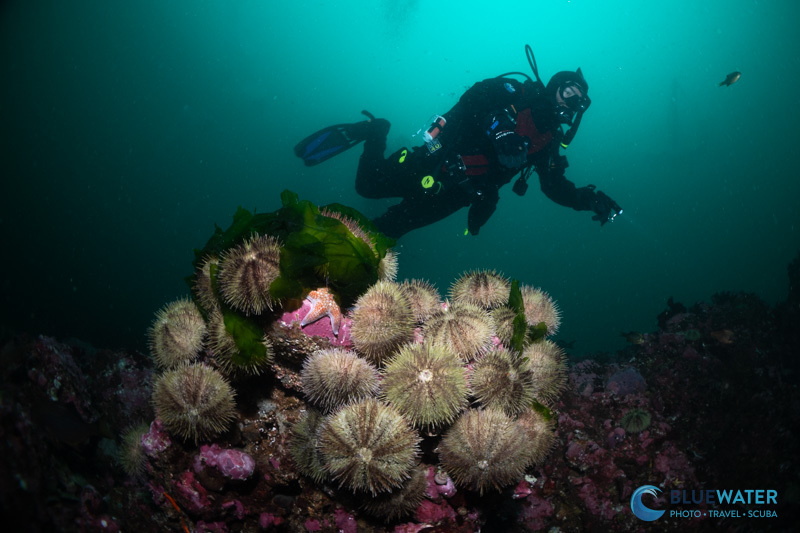
In the water, I was surprised by how much coverage I was getting from a single strobe. Shooting with a Nikon 8–15mm fisheye lens, I was able to light wide scenes without a diffuser using just one YS-D130R. I’m not entirely sure how Sea & Sea is measuring beam angle on paper, but in real-world shooting, the coverage felt broader than the published numbers would suggest.
I still prefer diving with two strobes for more creative control and better subject separation, but it’s worth noting that all of this testing was done with only a single demo unit. The beam quality itself reminded me a lot of the Ikelite DS230, which makes sense given that both strobes use a circular flash tube design.
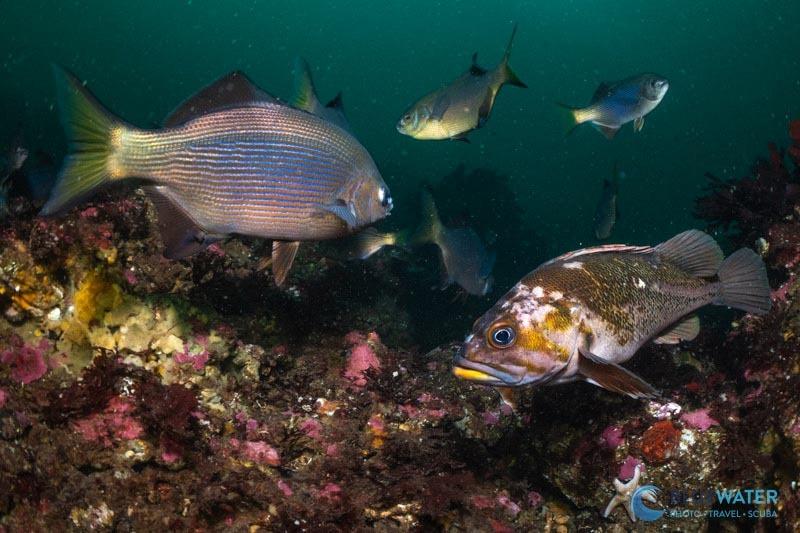
A Coldwater Reef Captured with a Single YS-D130R Strobe
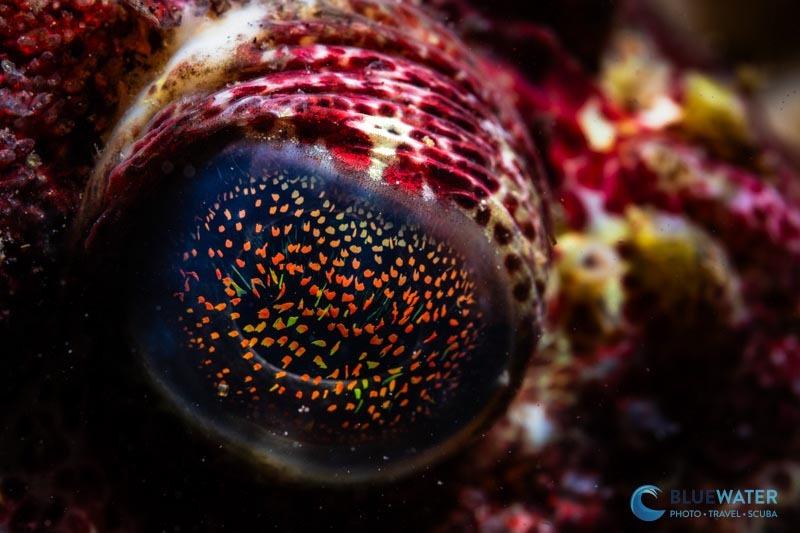
The color temperature of the Sea & Sea YS-D130R is 5600K. This seems to be a popular color temperature with most modern strobes as it's the best balance between a cold and warm beam. It's slightly on the cooler side and produces a beautiful "true to life" pop in underwater colors. This is particularly visible in our photo of a red irish lord eye:
"Lightning" Quick Recycle Times
Recycle speed is one of the most critical performance factors in a high-output underwater strobe, and the YS-D130R stands out with a rated full-power recycle time of approximately 0.8 seconds when powered by the lithium-ion battery. This allows photographers to shoot rapid sequences without waiting for the strobe to recharge, which is particularly valuable for fast-moving subjects (like sharks and dolphins) or action-heavy wide-angle scenes.
To evaluate real-world performance, we conducted burst shooting tests at high frame rates to see whether the strobe could maintain consistent output across consecutive frames. Fast recycle times are meaningless without stability, and this is where the YS-D130R’s performance becomes most apparent.
Take a look at the "lightning" test below:
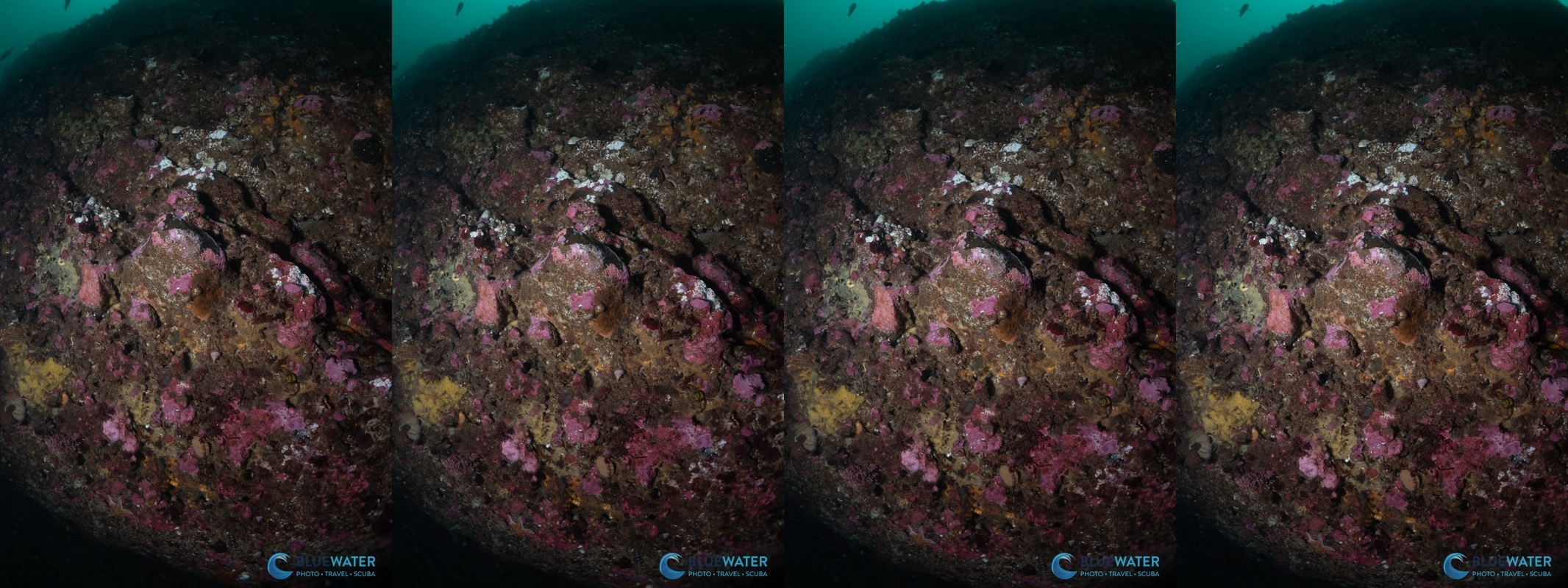
These four frames were shot at 10 frames per second with the strobe set to half power. There’s almost no visible difference between the frames. After the fourth shot, there was a noticeable drop-off, with no output on the fifth frame.
The consistency between shots is a major improvement over the YS-D3, where every frame in my lightning test showed slight variations in output.
HSS, TTL, RC-TTL Compatibility
The Sea & Sea YS-D130R is loaded with just about every acronym you could want in a strobe, including HSS, TTL, and RC-TTL. That’s a bit of a mouthful, so it’s worth breaking down what these shooting modes actually mean in practice.
The primary shooting mode on the strobe is manual mode, which works with every camera system. In manual mode, I set the power level myself using the dials on the strobe to dial in the exposure. This is still my preferred way to shoot most of the time, especially once lighting conditions are consistent.
TTL, or “through-the-lens,” is essentially automatic strobe power. When paired with a compatible TTL converter, the strobe reads information from the camera and attempts to choose the correct output for the scene. TTL is usually only about 70–80% accurate in my experience, but it can be much faster than manually adjusting power in fast-moving situations or changing conditions. RC-TTL is a protocol used by OM SYSTEM / Olympus cameras that makes TTL a bit more refined and, in many cases, slightly more accurate for that platform.
And finally, there’s HSS—High Speed Sync. This mode allows the strobe to rapidly pulse so it can illuminate the subject at shutter speeds higher than the camera’s normal flash sync speed. HSS can be useful for freezing motion or creating darker backgrounds in bright conditions, but it’s important to note that shutter speed directly affects strobe exposure when shooting in HSS mode.
Unfortunately, during my testing of the YS-D130R, I was using a manual flash trigger with my Nikon Z8, so I didn’t have the opportunity to test TTL or HSS performance firsthand.
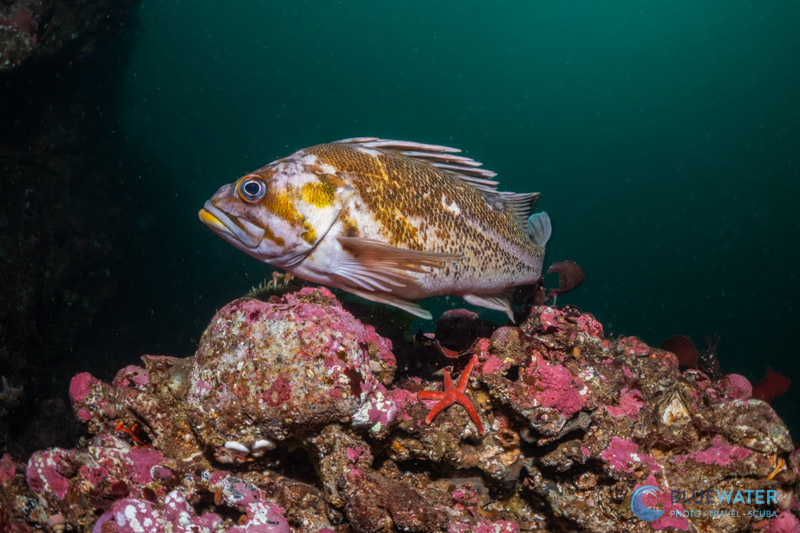
A rockfish on the reef photographed with the Sea & Sea YS-D130R
An Updated Design and Control Panel
The back panel and control knobs on the Sea & Sea YS-D130R have been tastefully redesigned. There’s now an LED indicator on the back that shows battery level and shooting mode, which is a welcome update. The strobe allows you to preset two modes before the dive. In my case, I set one preset to manual mode for Nikon and the other to HSS. I’ll be honest—the setup process was a bit confusing at first, but it’s something you only have to do once.
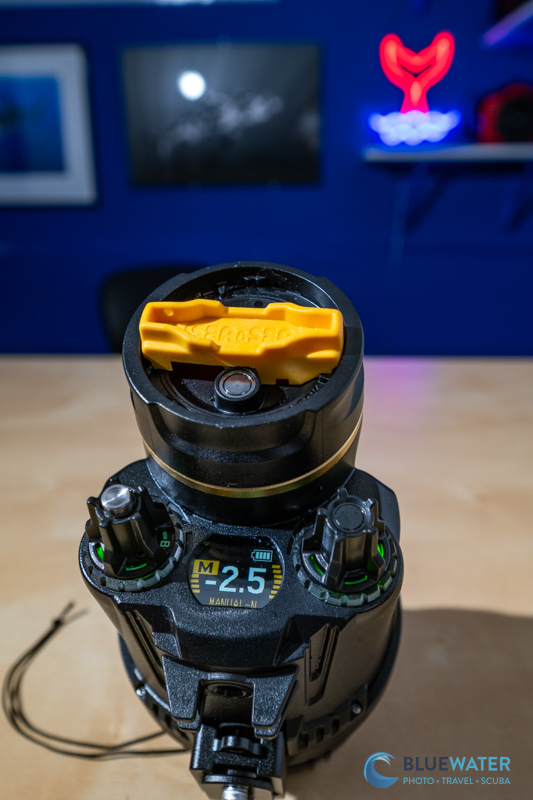
The new power knobs on the back panel are very easy to adjust, even in cold water while wearing thick gloves. I found them noticeably easier to use than the controls on the YS-D3, which makes a real difference when you’re making quick adjustments mid-dive.
I was initially disappointed to learn that the YS-D130R is technically larger than the YS-D3. However, once I put the two strobes side by side, I was pleasantly surprised to see that the size difference is actually minimal (see below).
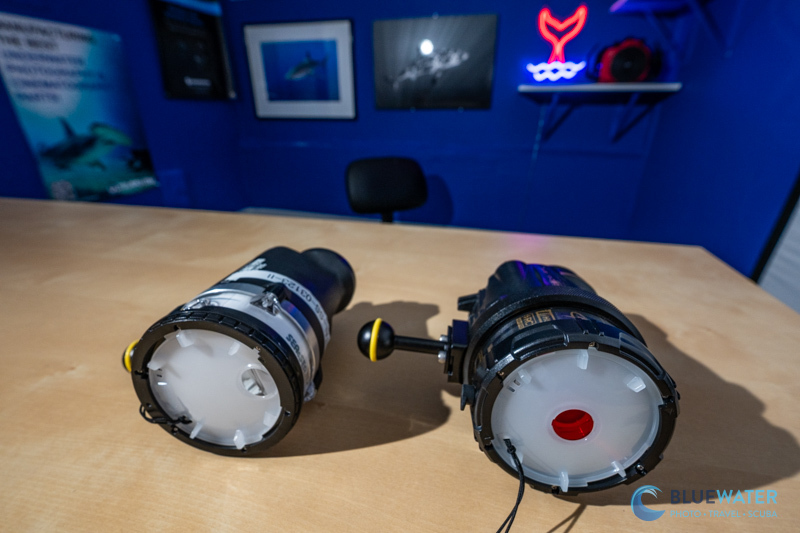
Perhaps my favorite change in the YS-D130R's design is the new battery compartment plug. While it's a bit stiffer to take on and off, it will not break like the old battery plugs on the YS-D1, D2, and D3.
A New Lithium Ion Battery
The YS-D130R uses Sea & Sea’s SB-L02 lithium-ion battery, which enables faster recycle times and more consistent performance compared to traditional AA-only strobes. Lithium-ion power is especially beneficial for high-output shooting, where recycle speed and voltage stability directly affect frame-to-frame consistency. We highly recommend getting the YS-D130R strobe package which includes this battery. Although it is more expensive, if you are already spending the money to purchase a high-end strobe, it's best to spend a little more on the battery to optimize your recycle time and batterylife.
Importantly, the strobe retains compatibility with standard AA batteries, providing a practical backup option for remote travel, cold-water diving, or situations where charging lithium-ion packs is not convenient. This dual-power approach offers flexibility without locking photographers into a single battery ecosystem.
Putting Sync Cords to Rest
Much like other strobe manufacturers, it appears that Sea & Sea has decided to put sync cords to rest. The Sea & Sea YS-D130R is only compatible with fiber optic cables.
Who Should Buy the Sea & Sea YS-D130R?
The Sea & Sea YS-D130R was created for professional wide angle underwater photographers who need and want the finest in Sea & Sea's legacy of strobe technology. This strobe definitely isn’t for everyone, but for the right shooter it makes a lot of sense.
If you’re mostly shooting wide-angle and want a strobe that keeps up, the YS-D130R is a strong option. The wide beam and consistency between shots make lighting easier and more predictable, especially when you’re shooting bursts or dealing with moving subjects. That’s the kind of thing you really notice underwater, not something that just looks good on a spec sheet.
I also think this strobe makes sense for people diving in colder water or more demanding conditions. The controls are easy to use with gloves, the build feels solid, and overall it feels like a strobe you can rely on when dives aren’t calm or controlled. That’s been important for me.
If you like flexibility in how you shoot, the YS-D130R also gives you a lot of options - from TTL to HSS.
On the flip side, if you’re a casual shooter, mostly doing macro, or building a small travel rig, this is probably more strobe than you need. It’s not tiny, it’s not cheap, and you won’t get much benefit from the extra power and beam width in close-up macro work.
Bottom line: if you’re an experienced underwater photographer looking for a modern replacement for the YS-D3 and you care about real-world performance more than specs, the YS-D130R is absolutely worth a look.