
Best Scuba BCD for 2026
Posted by Jamie Ayliffe on July 29th, 2026

Best Scuba BCDs (2026 Guide):
Expert-Tested Reviews & Buying Advice
A well fitting dive BCD does far more than keeping you afloat at the surface: it allows you to maintain precise neutral buoyancy underwater; maintain a good trim; reduce air consumption and move effortlessly on your dive. For underwater photographers- the type of BCD you use can be a complete game changer for your your shooting! Dive BCDs can be attached to scuba tanks in two different ways (backmount or sidemount). There are many variations of the name including BCD, BC, BCV, or BV depending on the manufacturer and country of origin, but in this article, let's stick with BCD and dive into helping you choose the right Scuba BCD for your comfort, safety, and needs.
With so many different styles of BCDS to choose from, such as jacket-style; back-inflation; and backplate and wing BCDs, choosing the perfect BCD for your needs can be overwhelming. So our team of dive professionals accepted the challenge, packed our gear, and headed out diving to test today's leading BCDs in order to seperate the truely great from the meerly good. As we tested each of the BCDs in our line, we evaluated each model on their comfort, buoyancy control, durability, travel friendliness, and overall performance. (I must admit- this was an enjoyable test to do!). Once our tests were completed- we compared notes and favorites to create this guide. Whether you are looking to buy your first ever personal BCD, the best travel BCD available, or you are looking for a worthwhile upgrade, I hope that this guide will help you find the right BCD for your diving style, budget and level.
How we tested these BCDs:
Quick Guide to the Best Scuba BCDs:
- Best Budget-Friendly BCD: Tusa Crestline
- Best BCD for Entry Level Diver: Cressi StartPro 2.0
- Best for Advanced Divers: Halcyon Infinity BCD System
- Best for Female Divers BCD: Mares Kaila SLS
- Most Durable BCD: Mares Rock Pro
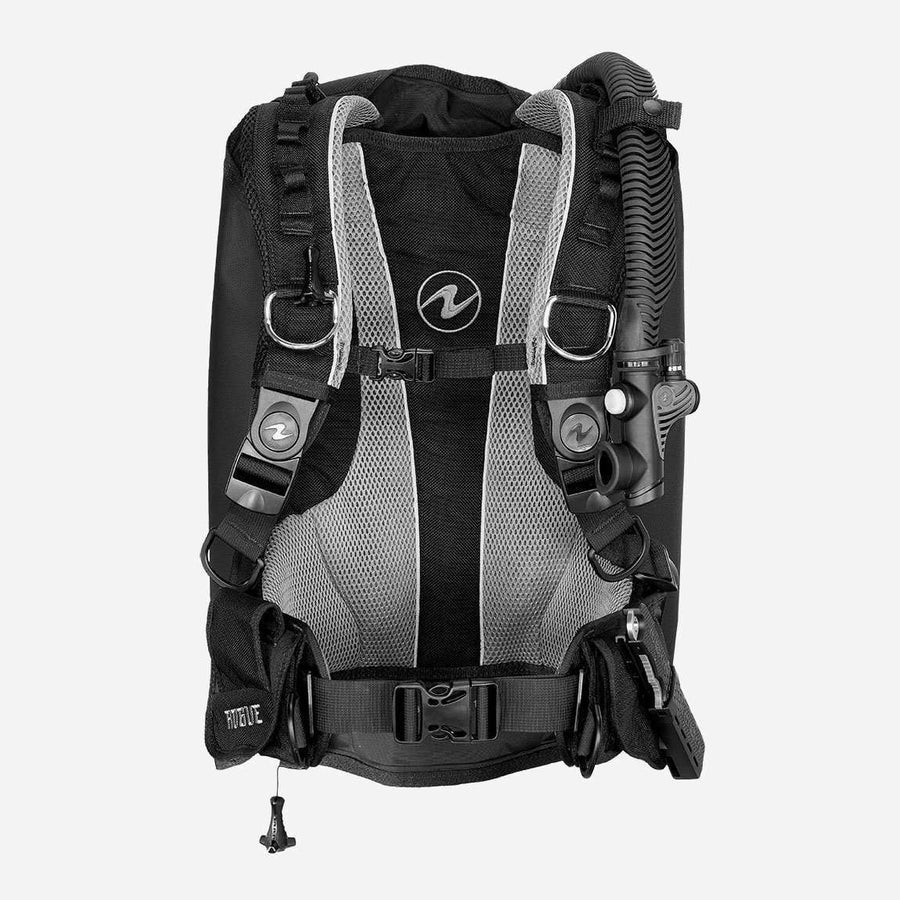
- Best Travel BCD: Aqualung Rogue
- Jump to Section -
Comparison Table of Our Best Bouyancy Compensators
| BCD | Best For | Style | Weight System | Our Favorite Feature |
|---|---|---|---|---|
| TUSA Crestline | Budget-conscious recreational divers | Jacket | Integrated Weights | Great value for money with a comfortable, user-friendly design. |
| Cressi StartPro 2.0 | New divers and dive school rentals | Jacket | Integrated Weights | Durable and easy-to-use design |
| Halcyon Infinity BCD System | Advanced divers, technical divers and photographers | Backplate & Wing | Weighted Backplate / Integrated Weights | Incredible trim, stability and modularity |
| Mares Kaila SLS | Female divers | Jacket (Hybrid Aircell) | SLS Integrated Weights | Women's-specific fit with excellent comfort and trim |
| Mares Rock Pro | Instructors and frequent divers | Jacket | Integrated Weights | Designed to withstand challenging conditions |
| Aqualung Rogue | Minimalist divers and travelers | Modular Back Inflate | SureLock II Integrated Weights | Lightweight, modular design that packs into small pieces |
Best Budget-friendly BCD
The Tusa Crestline is best suited for:
The Tusa Crestline is less ideal for:
Key Features:
- Jacket BCD
- Available Sizes: XS, S, M, L, XL
- Lift capacity from 18- 45 lbf
- Durable 500 Cordura/420 denier nylon shell
- Resin D-Rings: 4 for additional accessories
- Ultimate Stabilizing Harness (U.S.H.)
- Weight: 6.6 lbs
What we loved during testing:

Best BCD for Entry Level Divers
The Cressi Start Pro 2.0 is best suited for:
Newly certified divers, dive schools, and recreational divers looking for a straightforward, durable BCD.
The Cressi Start Pro 2.0 is less ideal for:
Advanced divers looking for a highly customizable system; or divers looking for lots of space for their integrated weights. I found that the integrated weight pockets can be too small for some divers.
Key Features:
- Jacket BCD
- Up to 200N / 44.96lbf lift capacity
- Large cargo pockets
- Intregrated weight system
- Four D-Rings (2 on shoulder straps, 2 on lower air cell)
- Ultra-durable constrution due to Cordura 500 Denier (exterior), Nylon 420 Denier (interior) material
- Weight: 5.59 lbs
What we loved during testing:
I tested this BCD personally in Fiji, and even wore this BCD often while teaching a few courses. It was great for frequent use, as the material is quite tough. My favorite feature, however, are the many D-rings on this BCD, which I used to attach shakers; my SMB and writing slates.
Best BCD for Advanced Divers
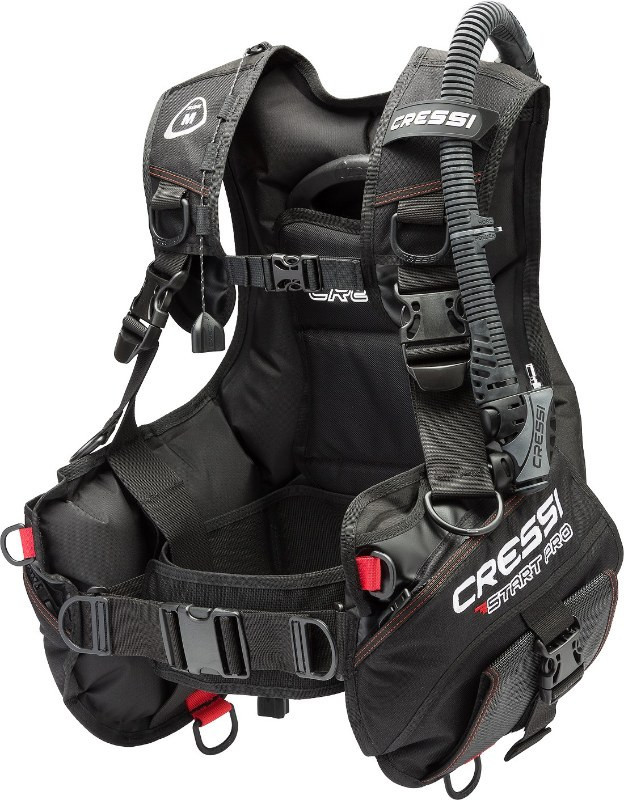
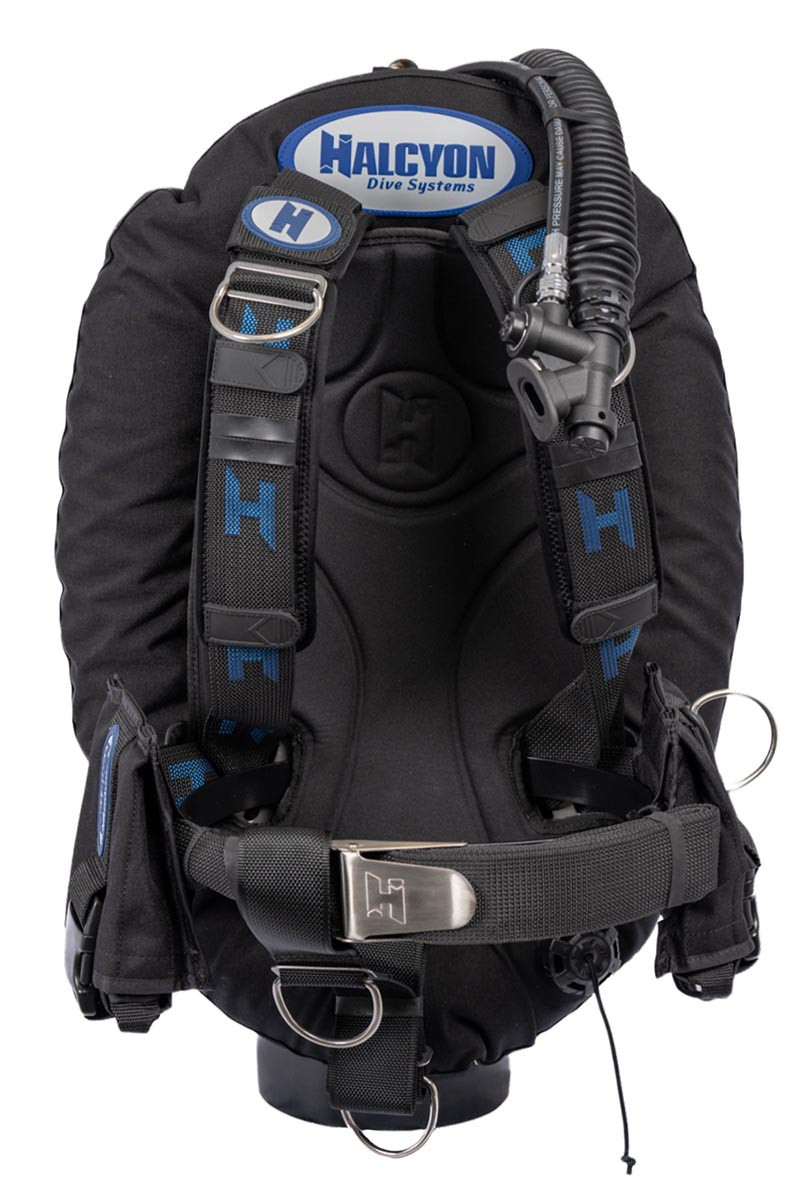
Backplate and wing BCDs are becoming increasingly popular, and the Halcyon Infinity BCD System has earned an excellent reputation- so naturally, we had to test it for ourselves. We're happy to report that it's well deserved. Throughout our testing, the Infinity impressed us with its exceptional trim, stability, and modular design. The underwater photographers on our team especially loved how easy it was to maintain precise buoyancy while shooting. If you'd like to compare other options, check out our guide to the best backplate and wing BCDs.
The Halcyon Infinity BCD System is best suited for:
Advanced recreational divers, technical divers, and underwater photographers looking for a BCD with precise buoyancy control, and a design that can develop with their diving.
The Halcyon Infinity BCD System is less ideal for:
Beginners who are looking for an intuitive, simple jacket-style set-up, or travellers looking for lightweight gear.
Key Features:
- Cinch™ Quick-Adjust Harness
- Eclipse™ Wing Options: CE Certified wings available in 20 lb (9 kg), 30 lb (14 kg), or 40 lb (18 kg) lift capacities.
- Backplate Choices: Select between aluminum or stainless steel backplates in standard or small sizes
- ACB10 Weight Pockets: Integrated weight pockets with a 10 lb (4.5 kg) capacity
- Deluxe Harness and Back Pad
- Stainless Steel Single Tank Adapter (STA)
- Weight: 16 lbs
What we loved during testing:
We tested the Halcyon Infinity during one of our dive trips to the Galápagos. One of the first things that impressed our team was the range of lift capacities available. Once underwater, however, the standout feature was stability and how easy it was to achieve perfect trim. Although this BCD appears to be minimalistic, the padding on the backplate and harness made it surprisingly comfortable.
Best BCD for Female Divers
The Mares Kaila SLS BCD is best suited for:
The Mares Kaila SLS BCD is less ideal for:
Technical divers or more advanced divers who prefer the streamlined feel and trim of a back-inflate or backplate-and-wing BCD.
Key Features:
- Hybrid BCD
- Custom-fit design for women
- Slide and Lock System (SLS) weight system
- Great Lift Capacity of 180 N (Size M)
- High capacity cargo pockets
- 50mm swivel buckles
- Monoplate design for single and twin cylinders
- Trim Weight System
- Weight: 9.7 lbs
What we loved during testing:
Elma, our Scuba Gear Brand Manager, tested the Mares Kaila SLS during a series of dives in South Africa and was immediately impressed by how comfortable it felt. She mentioned that very little adjustment was needed before the first dive. One feature she particularly appreciated was the Hybrid Aircell design, which provided great surface stability while making it easy to achieve a comfortable, horizontal body position underwater.

Most Durable BCD
The Mares Rock Pro is best suited for:
The Mares Rock Pro is less ideal for:
Divers looking for a BCD with a streamlined and minimalist design
Key Features:
- Jacket BCD
- Great Durable and Weight Balance
- Integrated Weight System
- Padded Back Panel
- 6 Strategically Placed D-Rings
- Anti-Chest Compression Bladder
- Monoplate with Tyrpol padding
- Weight: 7.7 lbs
What we loved during testing:
Nirupam, our Bluewater Photo president, put this BCD through its paces in the cold Californian waters, and shared that he could quickly tell that this was a tough BCD. He mentioned that he really enjoyed the multiple stainless steel D-rings, which he used to attach his photography accessories; and also appreciated the multiple dump valves which were easy to use.

Best Travel Friendly BCD
AQUALUNG ROGUE
To see our other top travel BCD picks, have a look at our guide.
The Aqualung Rogue is best suited for:
The Aqualung Rogue is less ideal for:
Divers who need additional surface support and appreciate storage space in a BCD.
Key Features:
- Back-inflation BCD
- Weight capacity: 15 L/35 lb
- SureLock II Mechanical Weight Release System
- Bladder retraction which reduces drag
- ModLock connector system
- GripLock tank band
- Modular design
- Weight: 5 lbs
What we loved during testing:
I used this BCD for a couple of years, and I must say, I absolutely love it! When traveling between South Africa, Australia and Fiji, I was able to detach the shoulders and waist which made packing so much easier. Due to its ModLock connectors, this BCD has up to 27 configurations, which you can adjust to your liking. This helped me feel comfortable yet streamlined underwater. Some diers may miss the extra storage space, but I found that the webbed daising chain provided more than enough attachment options.

BCD Buyers Guide
How to Choose a BCD:
Fit
Comfort
Sizing
Sizing options are 99% in "alpha sizes" ranging from 3XS to 2XL or sometimes even 3XL. The standard T-shirt sizing is a good place to start, but all BCD manufacturers have their own sizing chart.
Do not hesitate to contact us and we will help you with a personalized online size consultation to find the best option for you.
Types of BCDs:
Jacket Style BCD | Back-inflate BCDs | Hybrid BCD | Travel BCD | Wing, Backplate, and Harness Systems |
 |  |  |  |  |
The most common BCD today, also known as the ADV (Advanced Design Vest). This was the follow-up design for the Horseshoe Jacket, which was popular in the 70s. The buoyancy bladder is distributed all around the chest, making it easy to stay upright at the surface and comfortable to use. The bulky construction makes them less streamlined and only offers a few options for D-rings. | The Back-inflate BCD is a recreational spin-off of the Wing & Backplate which has been a popular choice for the past 15 years. A back-inflate, or wing-style BCD, gives you a great trim and better freedom of movement because there's no buoyancy bladder under the diver's arms. There's a learning curve to this as they tend to tip slightly forward when over-inflated at the surface and are more for advanced divers. | Hybrid BCDs combine the best of both worlds, the comfort and convenience of a jacket and the freedom and mobility of a back-inflate, in one great BCD. They're a great choice for intermediate divers who can sacrifice streamlining due to a bulkier design because they have fantastic buoyancy distribution, stability, and comfort on the surface. | With more and more luggage restrictions, it's important to consider the weight of your Scuba BCD when you're traveling. The best Travel BCD is designed for warm-water nomad divers. They're lightweight, sometimes foldable or rollable to save space, but they're less durable because of the materials used and have limited lift and storage capabilities. | Fully modular system for technical or specialist diving. It's got a wing- or donut-shaped bladder mounted on a backplate made of stainless steel, aluminum, or even carbon, with a webbed nylon harness threaded through the backplate. The minimalist design helps create the best streamlining possible and D-Ring options with high-quality materials. There is a price tag to consider, as well as the need for assembly and more maintenance. |
Weight Systems
Integrated weight systems
Weight Belts
Fixed Weights
Trim weights are small pockets that you leave on either side of the back-mounted tank. Additional tank trim weights are small weights that are usually attached near the base of an aluminum cylinder. They keep the cylinder from tipping over when it's side-mounted and the gas is being consumed.
BCD Lift Capacity Explained:
Taking into account the usual rule of thumb of 10% of body weight, this is what the theoretical lifting capacity of your BCD should be, right? In terms of lifting capacity, which is usually expressed in N (Netwon). One N is 0.225 lbf (pound force) so to get the math right consider the following:
- Amount of lead weight used (10% rule)
- Weight of dive gear (BCD, Regulator, Wetsuit, Fins, Mask)
- Weight of tanks
When using steel tanks in twin packs, the lift limit can be reached pretty easily. Also, XS or even smaller BCDs don't have much lift, just because the bladder is smaller. My wife, who is an SSI Instructor Trainer and has been a professional diver for over 15 years, has struggled with the buoyancy limits of her XS BCD for most of her career. She ended up using a larger size when guiding or teaching to be able to carry extra weights for stints or as backup for her dive group.
Finding the Right Balance Between Durability and Weight in Your BCD:
Understanding the used material can help you make the best choice when finding the right BCD. Denier is a measurement of thread thickness in the material used for BCDs. Threads with a high denier rating, like 1200, are super resistant to scratches and rubbing. Think bumping against a sharp edge on a wreck or rubbing against rough surfaces in caves or caverns. They're not quite as resistant to punctures, though, like when you press a pointed object against them. On the other hand, low denier, like 420, is more resistant to punctures but more susceptible to scratches.
A lower denier makes the BCD lighter, which is great for travel, but a higher denier adds durability but makes it heavier. These days, many BCD manufacturers combine different denier panels to get the best of both worlds.
BCD Accessories and Features:
D-Rings-
BCD Pockets and special attachment points-
BCD pockets have come a long way in the last few years. Typical jacket-style BCDs have more room for pockets thanks to the front bouncy bladder design. When the first back inflation or hybrid BCDs came out, roll-up technology made it possible to have pockets in the most minimalistic BCD. It's a great way to store all the gadgets you need, from DSMBs, reels, cameras, pointer sticks, and more, to avoid dangling gear. Or even better, you can use it to store the rubbish you might find on your next dive adventure.
It's also handy to have special attachment mounts for dive knives, torches, or action-cam pole sticks.
Maintenance Tips for Your Diving BCD
- To prevent the deterioration of nylon threads and stitching, it is advisable to limit the duration and intensity of exposure to direct sunlight.
- It is advisable to avoid repeated or extended use in water with a high concentration of chlorine.
- It's important to make sure the BCD isn't touching anything sharp or rough that could damage the buoyancy bladder. The same goes for packing it in boxes or bags- don't put heavy objects like block weights on top of the BCD.
- Any contact with oil, gasoline, aerosols, or chemical solvents must be avoided.
- If you can, soak your BCD in fresh, clean water as soon as you take it off. I make sure to do this every time! If that's not possible, give it a good rinse, hang it up on a wide-shoulder hanger, and pack it away carefully so you can soak it as soon as you get a chance.
- Before you go on you next great diving adventure, check for leaks. Therefor inflate it particularly and submerge it in clean water. Move it around a little to make sure trapped air can escape and check for bubbles.
- While it's submerged, use it to work any and all moving parts to get all the gritty particles out. Make sure the oral inflation and power inflation buttons move freely by pressing them. Do this both in the soak/rinse tub and outside the tub. If they feel sticky, there might be sand or corrosion getting in the way. If you rinse the BCD and they still feel sticky, have them checked out by a certified technician. I mention this as you don't want the power inflation button to stick and send you to the surface.
- Rinse your BCD thoroughly. Salt water can leak into your BCD bladder through the dump valves and low-pressure inflator. Drain this out after every dive to avoid salt crystals forming and damaging the bladder.
How to Store your Scuba BCD
Frequently Asked Questions about the Best BCDs:
About the Author:

Jamie Ayliffe
With a degree in Ichthyology (fish) and Zoology, she has a strong passion for the underwater environment and marine conservation. She is equally passionate about sharing her love for diving, and dive gear, with fellow SCUBA enthusiasts.
With much experience in handling and upkeeping SCUBA gear, Jamie has a strong understanding of dive equipment functionality, individual diver necessities, and the latest trends in the diving industry. She is eager to share her insights with you!