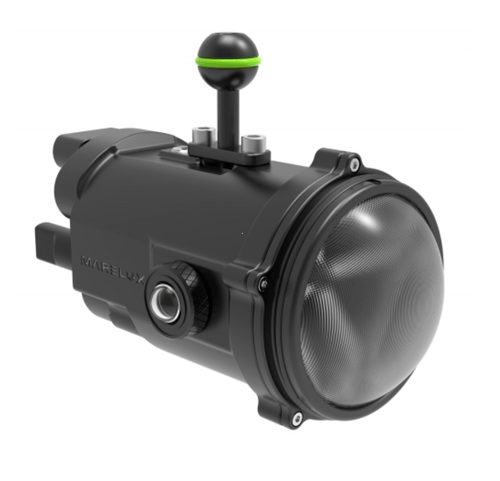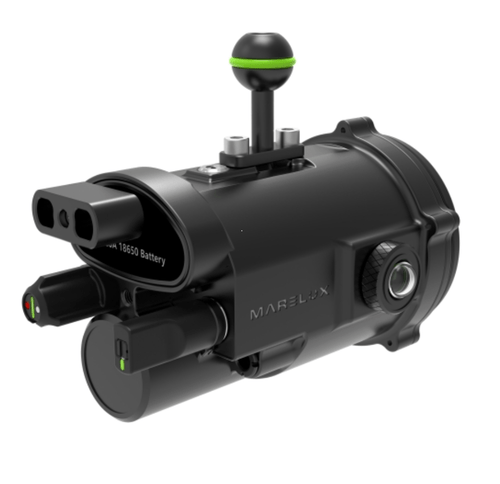


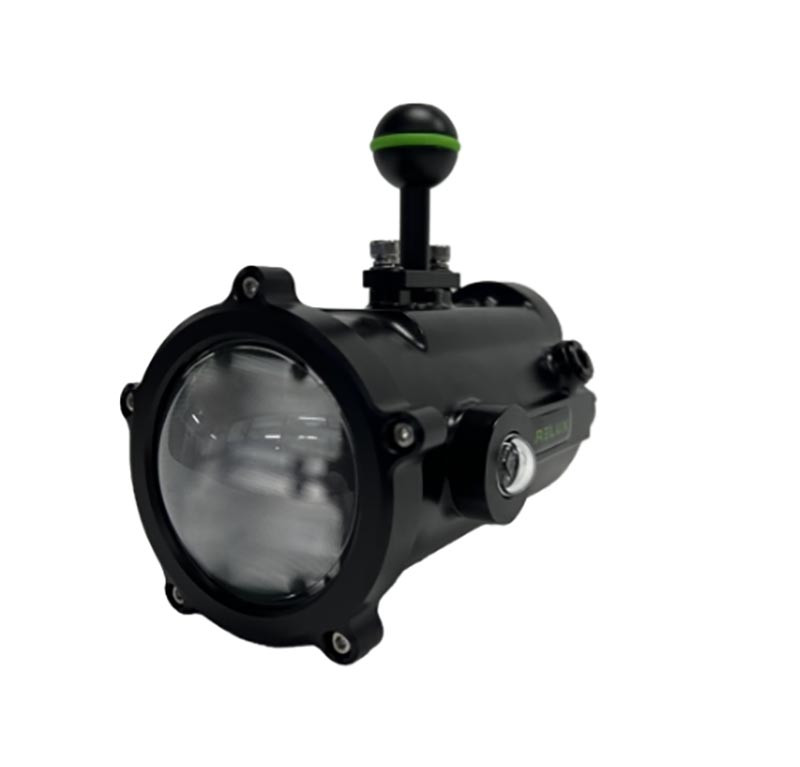
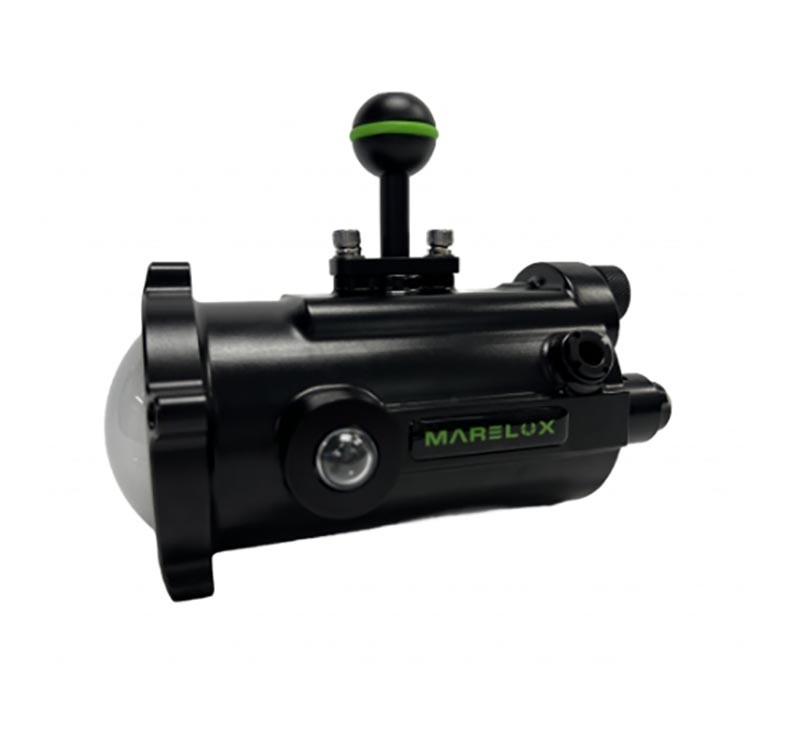
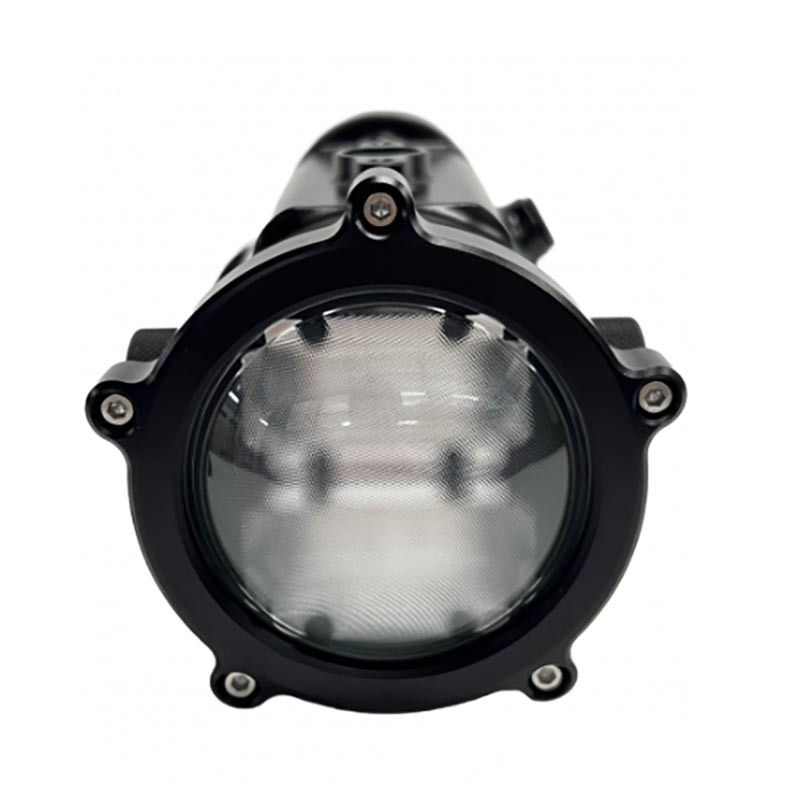
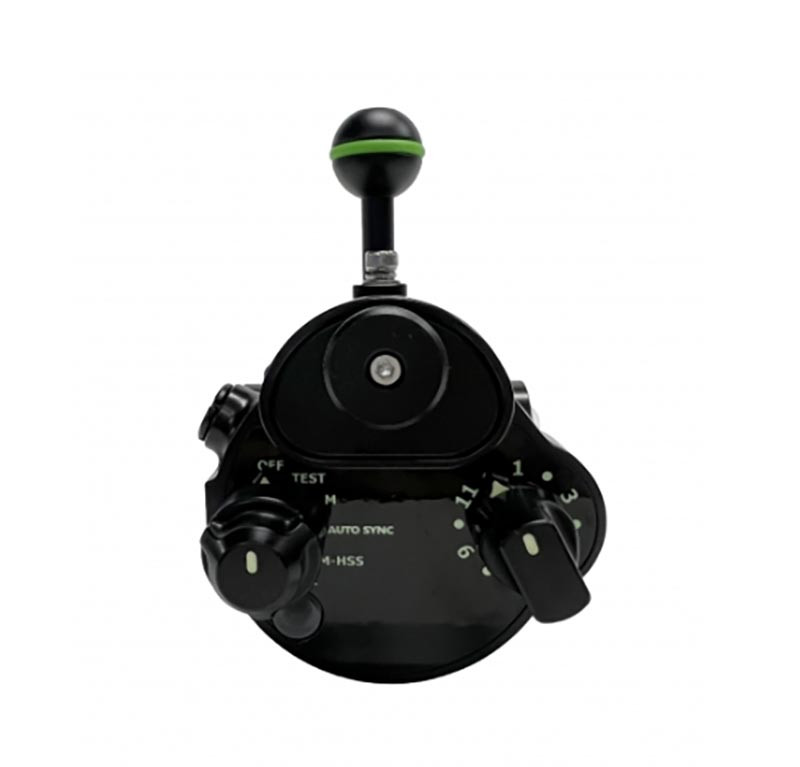


Marelux Apollo S 2.0 Underwater Strobe
Compact, high-output underwater strobe with fast recycle, wide beam coverage, and advanced trigger options for macro through wide-angle shooting.
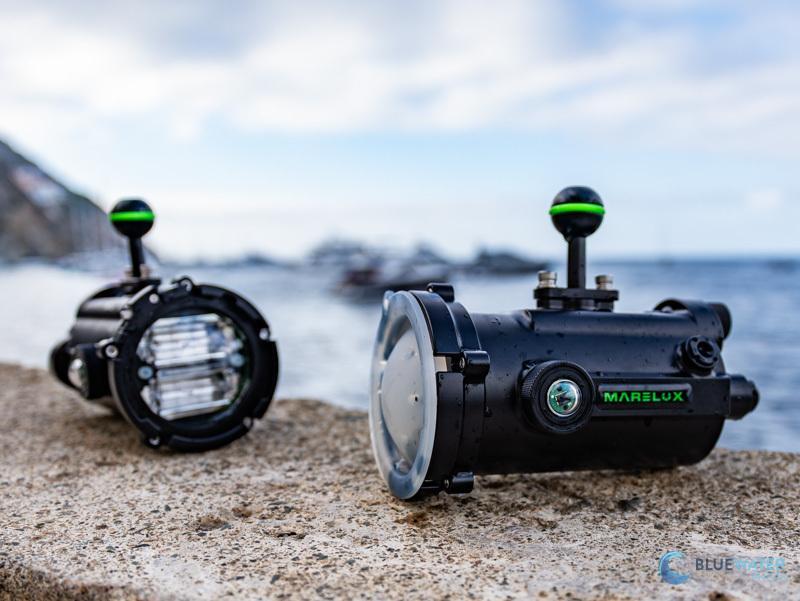
OUTPUT
GN 36 on land
BEAM
120° underwater, 140° with dome diffuser
RECYCLE
0.9 sec at full power
DEPTH RATING
100m / 330ft
The Marelux Apollo S 2.0 is the kind of underwater strobe we recommend to photographers who want real lighting headroom without jumping all the way to the larger Marelux Apollo III. What stood out to us while using these strobes underwater was not just the spec sheet, but how often it is described as being easy to use underwater: compact enough to feel out of the way, quick enough to keep up when subjects start moving, and flexible enough to handle everything from California reef scenes to mantas in the Maldives and macro critters in muck destinations.
For most underwater photographers, that is why the Marelux Apollo S 2.0 feels like a serious contender for the best underwater strobe in the premium compact class. It brings GN 36 power, a 0.9-second recycle time, a 120° beam that opens to 140° with the dome diffuser, and support for TTL, RC, HSS, MTL, and Lumilink wireless triggering. The key thing to check early is compatibility: if you are using a Marelux housing or another fiber-triggered system, make sure your flash trigger supports the modes you actually want to use. That is exactly where we help customers get the setup right before they buy.
BEST FOR
Traveling underwater photographers who want one compact strobe that can handle macro, close-focus wide angle, and general reef wide-angle work.
MAIN ADVANTAGE
Strong output for its size, fast recycle, and advanced shooting modes in a strobe that stays easier to handle than many larger alternatives.
COMPATIBILITY NOTE
TTL, HSS, and RC are system-dependent. Your housing, flash trigger, fiber path, and camera brand all matter.
DIFFERENTIATOR
The Apollo S stands out by mixing compact size with MTL burst capability, wireless M/MTL/HSS triggering, and wide beam coverage.
TRADEOFF
It does not have built in focus light, or like some other strobes, built in video lights. This is a staright up underwater strobe, NOT a hybrid strobe.
Quick Specs
Guide Number
GN 36 (ISO 100, tested on land)
Beam Angle
120° underwater
With Dome Diffuser
140° beam, 5500K
Color Temperature
6000K standard
Recycle Time
0.9 sec at full power
Burst / MTL Mode
Up to 20 FPS, up to GN20
Triggering
M, TTL, RC, HSS, MTL, wireless triggering
Wireless Sensor Coverage
160° with dual fisheye sensors
Battery
2x18650 lithium cells
Flashes per Charge
Around 800 at full power
Underwater Weight
150g with batteries and ball mount
Dimensions
70mm max diameter, 160mm overall length
Compatibility
WORKS WITH
- Underwater camera systems that can fire an external strobe via fiber optic trigger.
- Setups using compatible flash triggers for TTL, HSS, or RC operation.
- Wireless Lumilink 2.0 workflows for M, MTL, and HSS triggering.
- Single-strobe macro rigs or dual-strobe wide-angle rigs.
If you are using a Marelux housing, check the installed flash trigger, fiber routing, and whether you plan to shoot wired or Lumilink wireless.
REQUIRES
- Two 18650 lithium batteries.
- A compatible charging solution for those batteries.
- Fiber optic cable for many standard strobe setups; or Lumilink 2.0.
- Compatible flash trigger support if you want TTL, HSS, or RC.
The main setup dependency is not the strobe body itself. It is the camera + housing + trigger path you are using.
OPTIONAL GEAR
- Lumilink 2.0 wireless transmitter for cable-free M, MTL, and HSS workflows.
- Additional diffusers for beam shaping and color control.
- Arms, clamps, and tray handles for strobe positioning.
- Focus light for faster autofocus and easier framing in dark water.
Compatibility varies by system — contact Bluewater Photo to confirm your setup.
Why This Underwater Strobe Stands Out
THE MAIN REASON TO CHOOSE THIS
In our view, the Apollo S is appealing because it pushes more advanced strobe behavior into a compact body. You are getting strong output, a quick recycle, broad coverage, and more than just manual flash mode.
WHERE THIS FITS BEST
For most underwater photographers, this fits best as a premium compact strobe for travel rigs, mirrorless systems, macro shooters who still want wide-angle capability, or anyone building a flexible lighting kit without jumping straight to a full-size powerhouse strobe.
WHAT MAKES IT DIFFERENT
The combination of MTL burst support, wide optical sensor coverage, and Lumilink 2.0 wireless options makes it more flexible than many compact underwater strobes that stop at simple manual and TTL operation.
Feature Highlights

Multiple shooting modes that actually matter underwater
WHY IT MATTERS
What comes through clearly when using these strobes, is that the Marelux Apollo S is not one of those underwater strobes where the extra modes are there just to look good on a spec sheet. Photographers keep coming back to the fact that different modes were genuinely useful in different dive situations: manual for repeatable macro lighting, TTL when subjects or conditions were changing quickly, HSS for freezing motion or darkening backgrounds, and MTL when timing mattered and older strobes could not keep up. Marelux also lists RC support, but that only matters if your camera and trigger path support it (using Olympus cameras)
- Manual mode: best when you want predictable light for macro, snooting, and repeatable exposures.
- TTL mode: useful when fish, divers, or ambient light are changing faster than you want to adjust power manually.
- HSS: lets you work at higher shutter speeds for freezing fast action or controlling bright water backgrounds.
- MTL mode: Marelux publishes continuous-flash support up to 20 FPS at up to GN20, this being useful for burst shooting and peak-action timing.
SETUP NOTE TTL, HSS, and RC are not universal. If you are using a Marelux housing or another optical-triggered system, check your flash trigger before assuming every mode will work with your camera.
Wireless control opens up cleaner rigs and more creative lighting
WHY IT MATTERS
In our experience, wireless features only matter if they solve a real underwater problem. While shooting in California, we found it was a huge benefit because it let the strobes move around without cables getting in the way. That is where the Apollo S separates itself from many underwater strobes in the same size class.
- Dual fisheye wireless sensors: published 160° coverage helps the strobe see the trigger signal from more angles.
- Lumilink 2.0 compatibility: supports wireless M, MTL, and HSS workflows, with published sync support up to 1/200s.
- Useful range underwater: Marelux publishes about 2 meters in bright shallow conditions and more than 10 meters in darker, deeper water.
- Encrypted optical signaling: designed to reduce interference when you are shooting around other lights and other divers.
THE TRADEOFF Wireless does not remove the need for good positioning. You still need line of sight to the strobe’s wireless sensor, and reviewers noted that close-focus wide-angle can get trickier when that path is blocked.
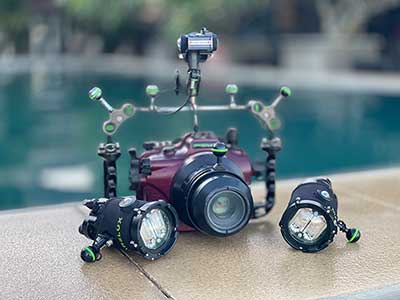

Long battery life and easy handling make the strobe easier to live with on real trips
WHY IT MATTERS
A lot of underwater strobe pages focus only on power, but real-world usability matters just as much. During long-term usage the Apollo S was found to be compact enough to almost "disappear" underwater, and how easy the controls are to use with gloves. That combination is a big part of why the Marelux Apollo S feels more practical than some larger options, including stepping up to the Marelux Apollo III when you do not actually need that extra size and output.
- Published battery life: around 800 full-power flashes on two 18650 batteries.
- Real-world reviewer experience: It has been documented that getting through roughly two full days of macro diving before recharging is not uncommon, which tells us the strobe is not just efficient on paper.
- Travel-friendly handling: 813g on land with batteries and only 150g underwater keeps the strobe easier to position than many larger underwater strobes.
- Control ergonomics: large knobs and a clear rear display are the kind of details that matter more once you are wearing gloves and trying to change settings quickly between shots.
PRACTICAL ADVICE For most underwater photographers, the best way to stretch battery life is simple: shoot only as much power as you need, recharge before the next dive day, and carry a spare matched set of 18650s if you plan to use more HSS or MTL. Those modes are useful, but they naturally ask more from the strobe.
Perfect For
TRAVEL DIVE PHOTOGRAPHY
If your priority is packing smaller without dropping to an entry-level strobe, this is a strong fit. It gives you more headroom than many compact underwater strobes while staying easier to travel with than larger units.
MACRO + GENERAL WIDE-ANGLE IN ONE KIT
For photographers who alternate between reef scenes and macro subjects on the same trip, the Apollo S is one of the more flexible “one strobe family” choices because it is not locked into a single use case.
ADVANCED MIRRORLESS SYSTEMS
This fits best when you are willing to dial in trigger compatibility and want access to HSS, TTL, RC, or MTL workflows rather than a simple manual-only flash.
Comparison Table
| Product | Output / Power | Beam / Coverage | System Compatibility | Best Use | Best For |
|---|---|---|---|---|---|
| Marelux Apollo S 2.0 | GN 36 on land | 120° underwater; 140° with dome diffuser | Fiber optic plus compatible flash trigger for TTL / HSS / RC; Lumilink 2.0 for wireless M / MTL / HSS | Travel-friendly macro through wide-angle | Shooters who want compact size with advanced modes |
| Sea & Sea YS-D3 Duo | GN 33 | 80° x 105° bare; 100° x 110° with diffuser | Fiber optic or 5-pin Sync Cord/N; DS-TTL II, RC, manual | Balanced macro and wide-angle lighting | Buyers who prefer AA batteries and the Sea & Sea trigger ecosystem |
| Backscatter Atom Flash | GN 28 | 110° native; 130° with included flat diffuser; 150° with dome diffuser | Fiber optic; compatible flash trigger needed for SC / HSS; remote lighting via REM Tx / Rx | Compact travel, macro, remote-light workflows | Shooters who want a compact strobe with a mature remote-lighting path |
How we would summarize it: the Apollo S is the better fit when you want more output than many compact strobes plus more mode flexibility. The YS-D3 Duo stays attractive for AA-powered simplicity and Sea & Sea compatibility, while the Atom Flash is compelling for buyers invested in Backscatter’s remote-lighting and diffuser ecosystem.
Why Buy From Bluewater Photo
Content reviewed by Bluewater Photo staff with real-world experience supporting, selling, and configuring underwater camera systems.
We write product pages like this to help buyers understand the full system, not just the strobe body. That matters here because trigger compatibility, battery choice, fiber routing, and arm setup all affect whether the Apollo S works the way you expect underwater.
If your buying question is really “will this work with my setup,” that is exactly the right question to ask before you order.
Ready to Build Your Lighting Setup?
Expert support from underwater photographers.
Add the Marelux Apollo S 2.0 to your CartNeed help confirming triggers, cables, or batteries before checkout? Contact Bluewater Photo with your camera and housing details.
Related Gear
- Browse underwater strobes and flashes
- Shop fiber optic cables and sync accessories
- Shop strobe arms and trays
- Shop clamps and ball mounts
- Shop underwater focus lights
- Browse underwater video lights
These categories make the most sense if you are building the Apollo S into a complete underwater camera rig rather than buying the strobe by itself.
Guides and Articles
Bluewater Photo Guides
These are the best starting points if you are comparing the Apollo S against other underwater strobes.
Underwater Photography Guide Articles
These articles help with beam placement, strobe technique, and deciding whether the Apollo S fits your shooting style.
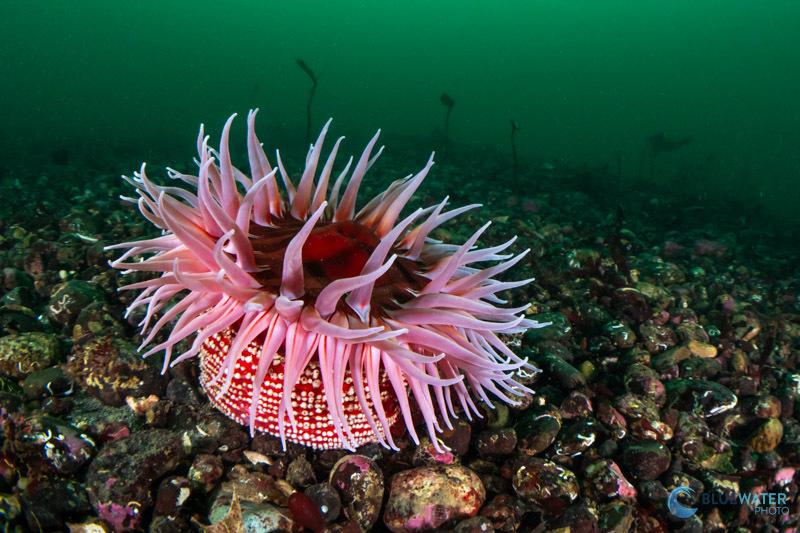
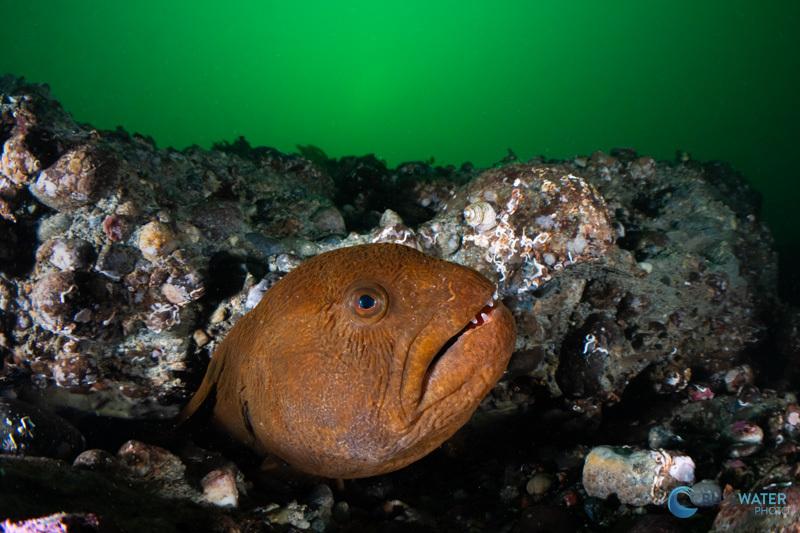
In-Use Gallery
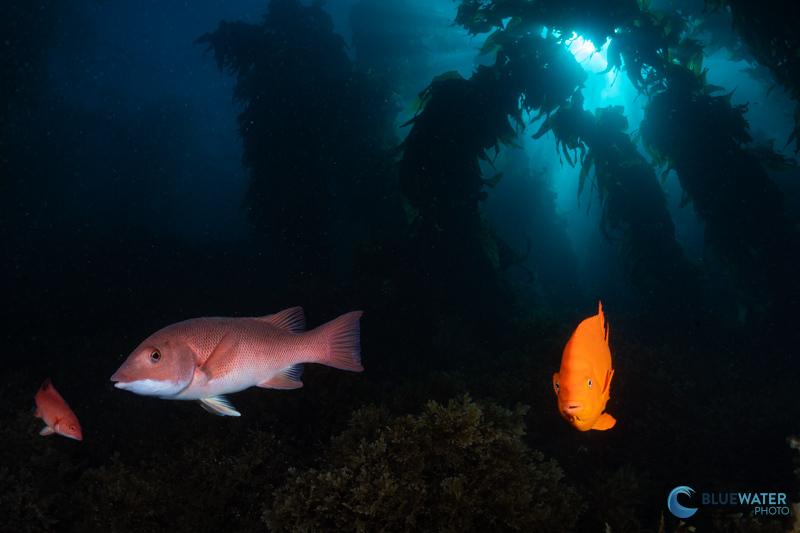
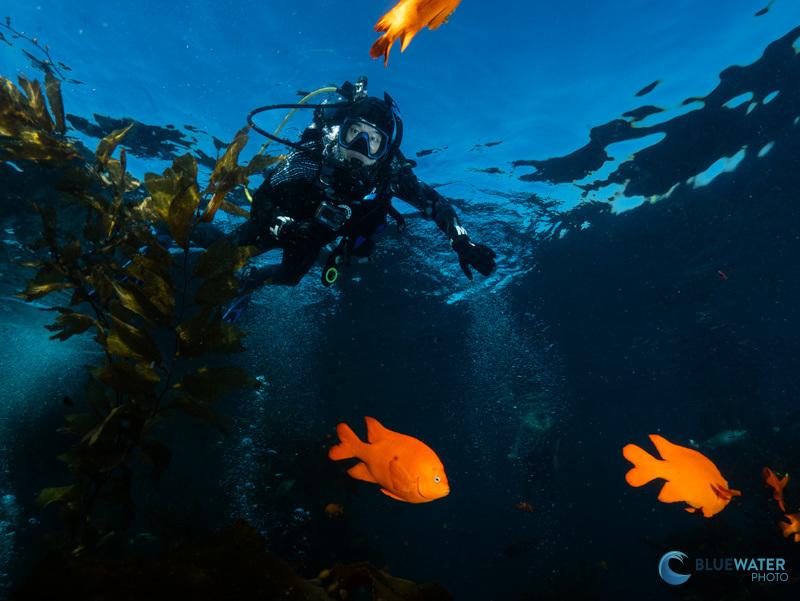
Watch our Review of the Marelux Apollo S
Specifications
Build
- Waterproof battery chamber
- Depth rating: 100m
- Dual fisheye wireless signal sensor units
- Sensor coverage: 160°
Mounting: Ball-mount based setup is implied by the published weight specs with ball mount attached.
Optical / Lighting
- Guide number: 36 at ISO 100 (tested on land)
- Scattering angle underwater: 120°
- Scattering angle with dome diffuser: 140°
- Color temperature: 6000K
- Color temperature with dome diffuser: 5500K
- MTL mode: continuous flashes up to 20 FPS at up to GN20
Recycle time: 0.9 second at full power
Triggering / Compatibility
- Supports TTL, RC, HSS, manual, MTL, and wireless triggering
- TTL, HSS, and RC require compatible flash triggers
- Wireless trigger supports M, MTL, and HSS
- TTL and RC require fiber
- One fiber optic port
Lumilink 2.0: published sync up to 1/200, with range dependent on ambient conditions and depth.
Power
- Battery type: 2x18650 lithium batteries
- Approximate battery weight: 93g total
- Full-power flashes: around 800
Published minimum discharge guidance varies by source, so confirm the current battery requirement before ordering spare cells.
Physical Specs
- Maximum diameter: 70mm
- Main body length: 140mm
- Full length including knobs: 160mm
- Weight on land: 720g without battery, 813g with batteries
- Weight in water: 150g with batteries and ball mount
Underwater feel: light enough that arm buoyancy tuning is easier than with many larger strobes.
Pros, Cons, and Setup Notes
Pros
- Strong output for a compact underwater strobe
- Fast full-power recycle helps with moving subjects and repeat shots
- Wide beam suits wide-angle lenses better than many compact competitors
- Advanced trigger modes add real flexibility for experienced shooters
- Relatively manageable underwater weight for travel and long dives
Our take: it is one of the more interesting premium compact underwater strobes right now.
Cons
- Advanced modes are only as good as the trigger compatibility behind them
- TTL and RC are not universal across every camera and housing setup
- 18650 battery management is less simple than an AA-based strobe
- Wireless does not eliminate the need to understand your full trigger path
- Buyers who only want manual flash may not use its deeper feature set
The tradeoff to understand: more capability means more setup responsibility.
Setup Notes
- Confirm your housing’s flash trigger before expecting TTL, HSS, or RC behavior.
- Plan your system around fiber if you need TTL or RC.
- Use matched 18650 cells and the correct charger from day one.
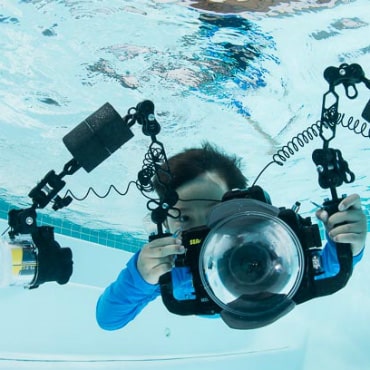
- For wide-angle, dual strobes usually make more sense than a single Apollo S.
- Check whether your arm and clamp setup matches how you want the strobe to float and handle underwater.
Compatibility nuance: this strobe can work beautifully, but only when the camera, housing, trigger, and cables are treated as one system.
- Maximum Guide Number 36 (on land)
- Support for TTL, RC, HSS, wireless triggering (The TTL, HSS, and RC modes require compatible flash triggers
- With a special designed MTL mode, support continuous flashes)
- Strobe has 2 fisheye wireless signal sensor units - sensor coverage is 160 °
- Full power flash: around 800 times
- Wireless trigger supports M, MTL, HSS. (TTL ,RC needs fiber)
- Temp 6200k
- With dome diffuser, scattering angle 140 °, Temp 5500k
- Comes with Wireless Trigger
- Fiber optic trigger port
- Battery: 2x 18650
- Max diameter 70mm, length of main body 140mm,full length including knobs 160mm
- Weight on land 720 grams (without battery, with ball mount),813 grams with 2x18650 batteries (with ball mount)
- Weight in water 150 grams,(including 2x18650 batteries, including ball mount).The weight after putting on the buoyancy suit is 50 grams
- Waterproof Depth : 100m
- Marelux Apollo S 2.0 Underwater Strobe
- Ball Mount Adaptor
- Dome Diffuser
- Protective Back cover
- 2x Spare O-rings
- Lanyard Sheet
- Fiber Port Plug
FAQ
Will the Apollo S work with my housing?
It works with underwater systems that can trigger an external strobe through fiber optics or a compatible flash trigger. TTL, HSS, and RC depend on the exact camera, housing, and trigger combination.
Do I need a fiber optic cable?
In many setups, yes. Fiber is especially important when you want TTL or RC, while Lumilink 2.0 is aimed at wireless M, MTL, and HSS workflows.
Does it support TTL?
Yes, but TTL is not universal by default. You need a compatible flash trigger and a housing setup that supports the required trigger path.
Is one strobe enough or should I buy two?
One Apollo S is a good choice for macro and some compact travel rigs. For most wide-angle underwater photography, we recommend two strobes for better coverage and shadow control.
What batteries does it use?
It uses two 18650 lithium cells (2x18650 lithium batteries(discharging current equal or over 20A), .93 grams total).
How is it different from the Sea & Sea YS-D3 Duo?
The Apollo S makes more sense if you want a smaller strobe with faster recycle and more advanced wireless or burst options. The YS-D3 Duo is appealing if you prefer AA batteries and Sea & Sea’s DS-TTL II / RC workflow.
When should I look at the Marelux Apollo III instead?
Choose the Apollo III when your priority is more raw power and you are comfortable with a larger strobe body. Choose the Apollo S when compact size and travel efficiency matter more.