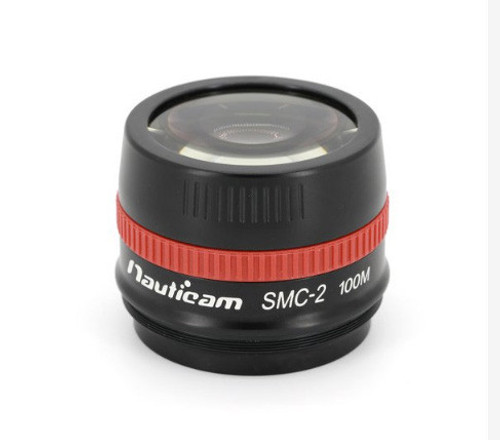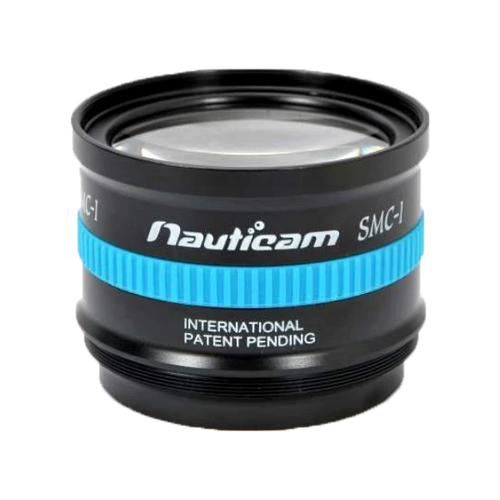


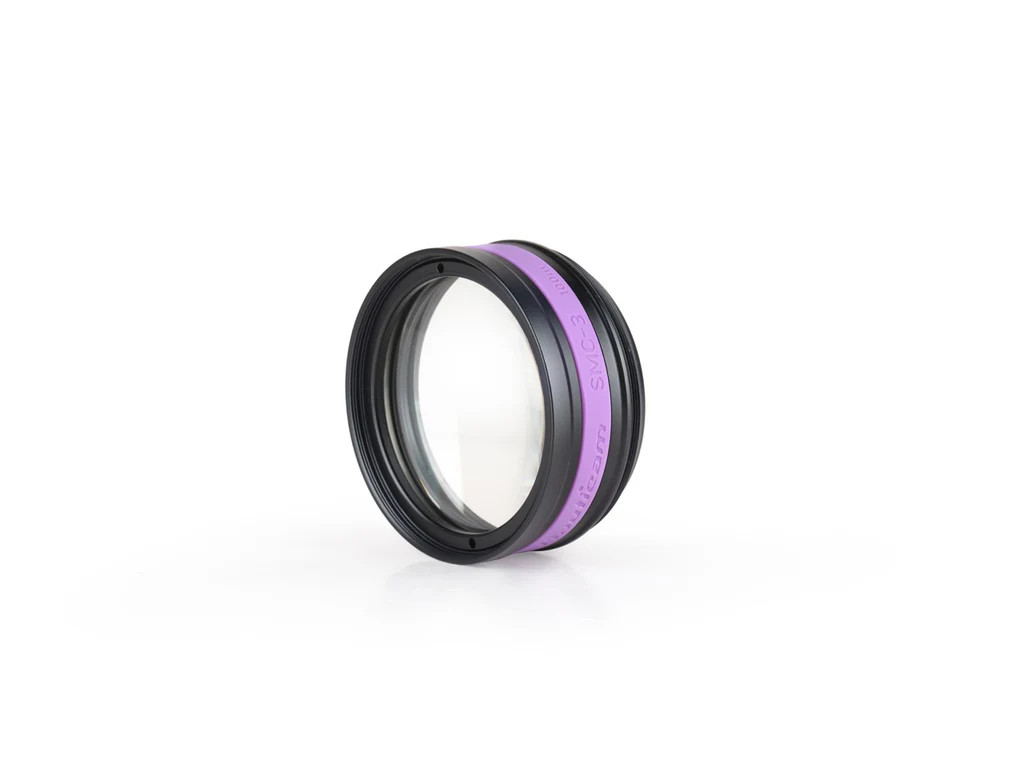
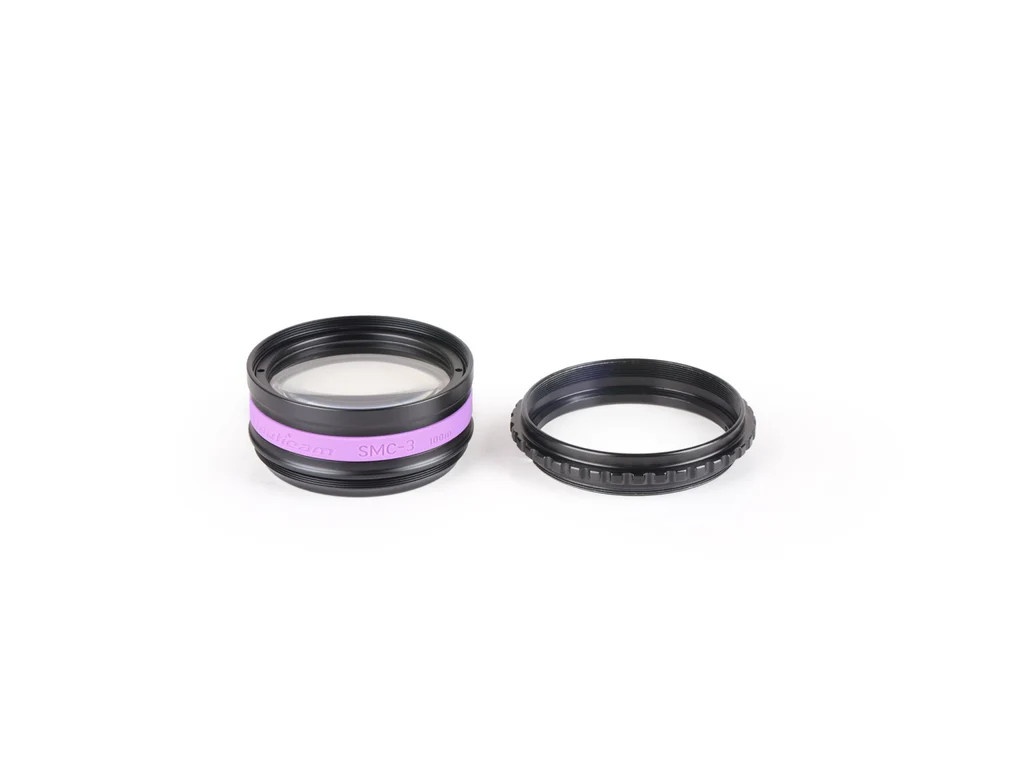
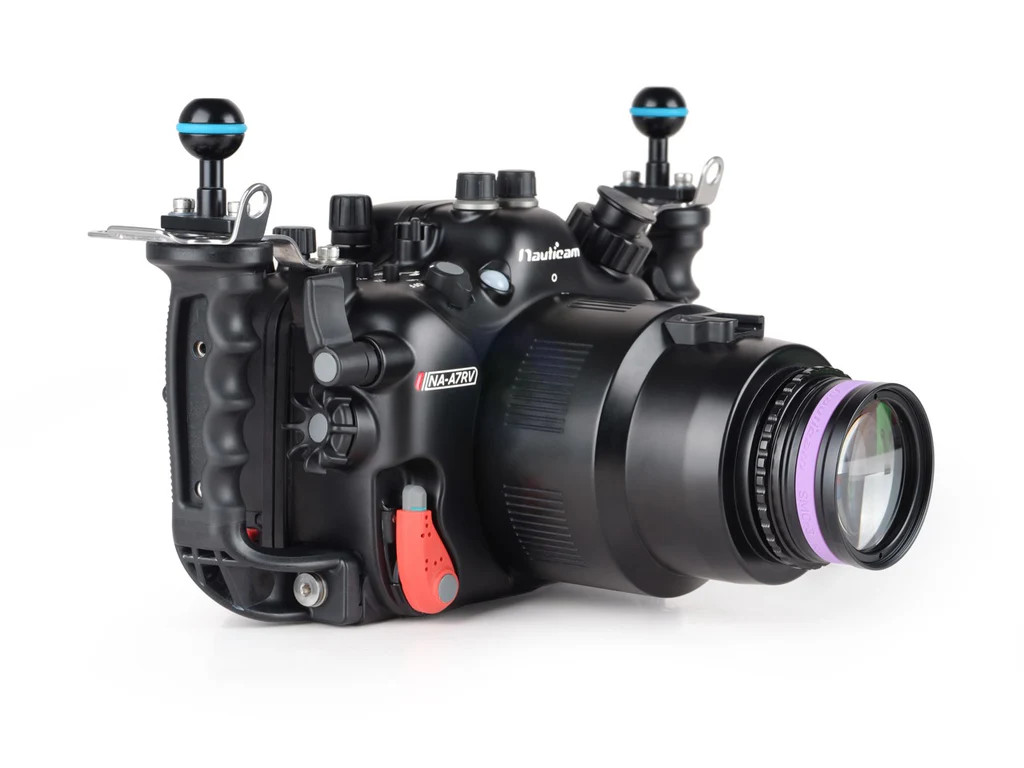


Nauticam SMC-3 Super Macro Converter
Part #: Nau-81203
Nauticam is proud to introduce the SMC-3, the latest evolution in our line of water contact optics! Designed as a renewed version of the acclaimed SMC-1, the SMC-3 boasts a lightweight build—now only one-third the weight of its predecessor—without compromising on optical performance.
Key Features
- Ultra-Lightweight Design: Weighing in at just two-thirds of the SMC-1, the SMC-3 offers unparalleled portability for on-the-go use.
- Superior Optical Performance: Enjoy the same exceptional clarity and precision you’ve come to expect from the SMC series.
- Increased Working Distance: The redesigned lens allows for a greater working distance, meaning it's easier to use and provides enhanced versatility.
- Premium Materials: Crafted with advanced materials to enhance durability while minimizing weight.
- Cost-Effective: Slightly more affordable than the discontinued SMC-1, the SMC-3 delivers exceptional value.
 Uncompromised Optical Quality
The Super Macro Converter 3 is constructed from lenses that are precision crafted of specially formulated low dispersion optical grade glass, ground to the most demanding standards. These exceptional measures, enhanced by broadband anti-refective coatings effectively reduce common optical issues such as chromatic aberrations, coma, spherical aberration, and field deformation associated with underwater macro photography using traditional magnifying lenses. These optics are assembled in a rugged hard anodized aluminum housing, and nitrogen purged during assembly to eliminate fogging.
Stunning Magnification
When combined with a full frame camera and a 100mm or 105mm macro lens, the device converts the optical system to provide a maximum of 2.4X magnification factor. In other words, a subject area of 15.6mm X 10.4mm will fill the whole frame of a 36mm X 24mm sensor.
Improved Sharpness and Contrast
As the Super Macro Converter 3 is optimized explicitly for using together with a macro lens underwater, images captured exhibit exceptional sharpness compared with conventional magnification lenses. Thanks to the broadband multi-layer anti-reflection coating on each surface of the lenses, images also exhibit higher contrast.
Superb Light Transmission
All the lens elements installed inside the SMC are optically optimized to appropriate diameters so as to provide maximum light transmission. The SMC doesn't suffer from vignette issues under even the most extreme conditions. The broad band multi-layer anti-reflection coating on all surfaces also greatly improves light transmission.
Optimized for Autofocus
By utilizing a specially developed algorithm in the optimization process, the SMC renders superior image quality over the full focusing range of the camera lens (which becomes ~50 to ~100 mm in front of the SMC). Also benefitting from the high brightness and contrast of the image, the autofocus system of the camera usually works acceptably well within this range.
Ample Working Distance
Even at the maximum 2.3X magnification, there is still more than 50mm of working distance between the front element and the subject with 100/105mm macro lenses. This working distance is crucial when capturing behavior with skittish subjects.
Resolution
High resolution was a primary design goal of the SMC project. This has been achieved using computer aided optimization and high grade optical glasses with unique refractive and dispersion properties. Images taken with this new system exhibit very high resolution and quality. Results have exceeded expectations, and these images rival the quality of the macro lens in air.
Smooth Bokeh
The Converter retains the optical properties of the macro lens for the whole system underwater, resulting in a blurred (out of focus) background that has a pleasing smoothness and creamy look, without the normal purple and green fringing.
Avoiding Diffraction
Due to the overall superior optical performance of the SMC-3 it is possible to shoot larger apertures with excellent image quality. This avoids reaching the diffraction limit of high resolution sensors, and allows selective focus effects with narrow depth of field in super macro images.
Compatible Lenses:
- Nikon AF-S VR Micro-NIKKOR105mm f/2.8G IF-ED
- Nikon NIKKOR Z MC 105mm f/2.8 VR S Macro
- Canon EF 100mm f/2.8L Macro IS USM
- Canon RF 100mm f/2.8 L Macro IS USM
- Canon RF 85mm f/2 Macro IS STM
- Sony FE 90mm f/2.8 Macro G OSS
- Olympus M. Zuiko Digital ED 60mm f2.8 Macro
- Panasonic LEICA DG MACRO-ELMARIT 45mm F2.8 ASPH. EGA O.I.S.
Recommended Accessories:
- Nauticam Flip Diopter for M67 Macro Port
- Nauticam Double Flip Diopter for M67 Macro Port
- Nauticam M67 Port to Bayonet Mount Converter for Wet Lenses
- Nauticam Bayonet Mount - CMC / SMC Adapter
- 83250 M67 to Bayonet Mount Converter II
- 83251 M77 to Bayonet Converter II
- 86221 M67 Flip holder for MWL-1
- 86222 Double Flip Holder for MWL-1
- 87501 Flip Holder for EMWL
- Depth Rating: 100m
- Weight Air: 307g
- Weight Water: 215g
- Dimensions: OD 70mm x H 32mm
- Mount Thread Diameter: 67mm
- Max Magnification: 2.3x
- Working Distance: 51-103mm
- Lens Construction: 3 elements in 2 groups
- Lens Coatings: Anti-reflection Coating
- SMC-3 Wet Lens
- Front and rear rubber caps
- Neoprene bag
- M67 Spacer ring for SMC/CMC
- Lens cloth Nikon
FAQ
Will the Nauticam SMC-3 work with my camera and housing?
It works with compatible underwater macro systems that support wet diopters, but the exact match depends on your camera, housing, port, lens, and mount. Compatibility varies by system — contact Bluewater Photo to confirm your setup.
Is the SMC-3 better than the older SMC-1?
For many divers, yes, because the big improvement is usability. Nauticam designed it as a lighter replacement with similar premium optical intent, which makes it easier to travel with and easier to manage underwater.
Do I need a macro lens to use the SMC-3?
Yes, this is intended for macro shooting, not as a general-purpose wet lens. It is especially suited to systems using 100mm or 105mm class macro lenses on full-frame cameras.
Is autofocus still usable with the SMC-3 underwater?
It is designed to maintain usable autofocus performance over the working focus range, helped by good brightness and contrast. In practice, strong focus light, careful technique, and patient subject approach still make a big difference.
What accessories should I plan to buy with it?
Most photographers should plan on a compatible mount or flip adapter, a way to stow the lens when not in use, and a good focus light. Precise strobe positioning also becomes more important at this magnification level.
Is the SMC-3 a good first wet lens for underwater macro?
Usually not. It is better suited to photographers who already have solid macro technique and want to push into true super macro rather than those building their first entry-level setup.
How should I maintain the SMC-3 after diving?
Rinse it thoroughly in fresh water after each dive day, dry it carefully, and protect the optical surfaces during transport. Treat it like a premium optic, because that is exactly what it is.