Olympus TG-7 Underwater Macro Photography: A Research Diver’s Review
Posted by Lisa Garner on September 9th, 2026
Underwater Research Cameras: Olympus TG-7 & GoPro HERO11 Black
Alongside a career at Bluewater Travel, I am a Zoology Master's student living in South Africa. Living in this country meant that I was really spoiled for choice when it came to choosing a research subject. Although this might sound like a positive, I found myself incredibly overwhelmed by the number of possible directions I could take. Then, a subject came to me in the least expected way.
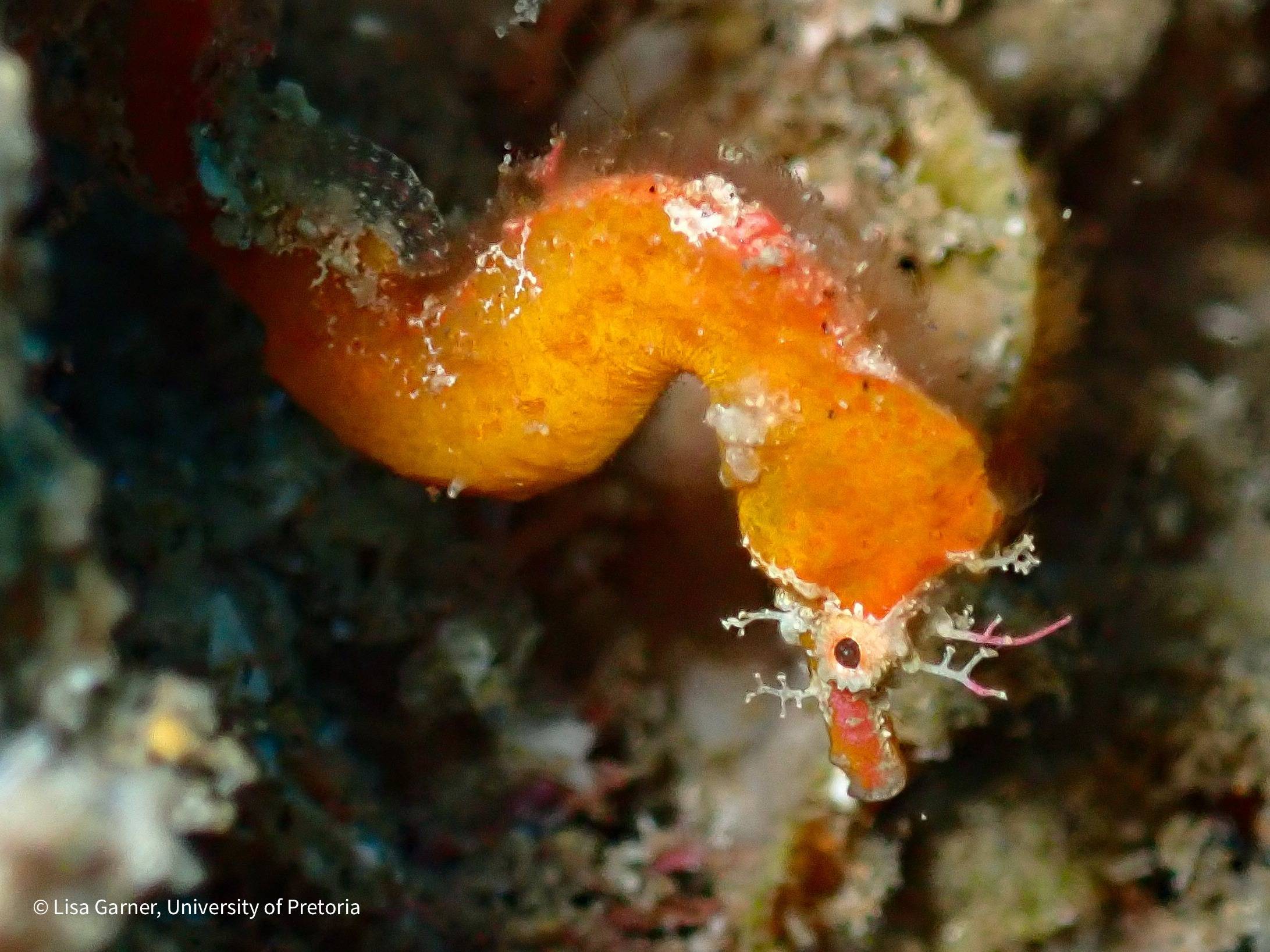
The Sodwana Bay pygmy pipehorse, Cylix nkosi, is a rare sight, with many locals never encountering one, even after 20 years of diving these reefs. Yet, while working as a divemaster, I found not just one, but four individuals over the span of a single week. I took this incredible coincidence as my sign to focus my research on these cryptic creatures.
But instead of focusing on just one minute syngnathid, why not make things a little more interesting by studying two? And so, I added Hippocampus nalu to the mix: the world's second-smallest known seahorse species.
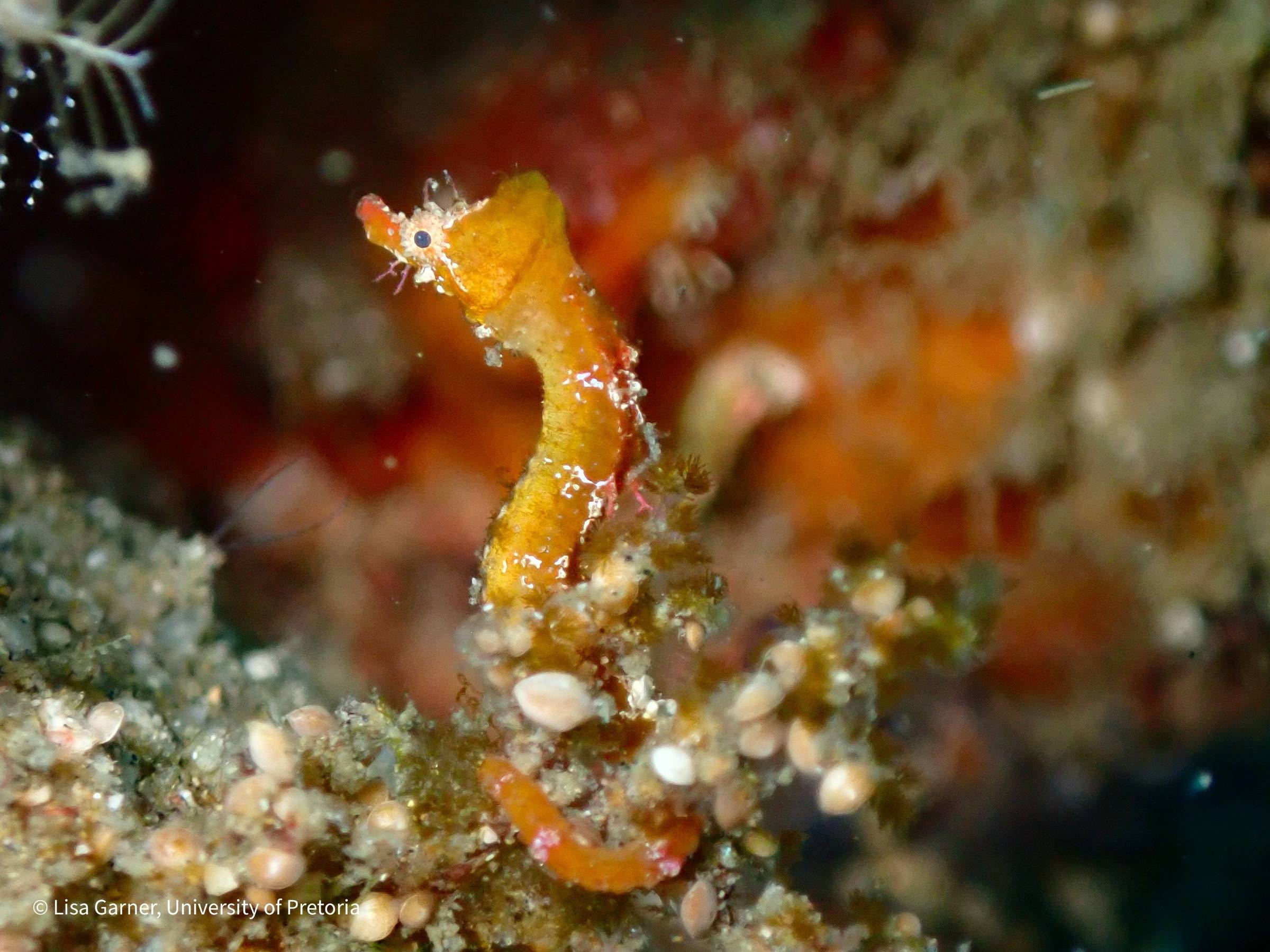
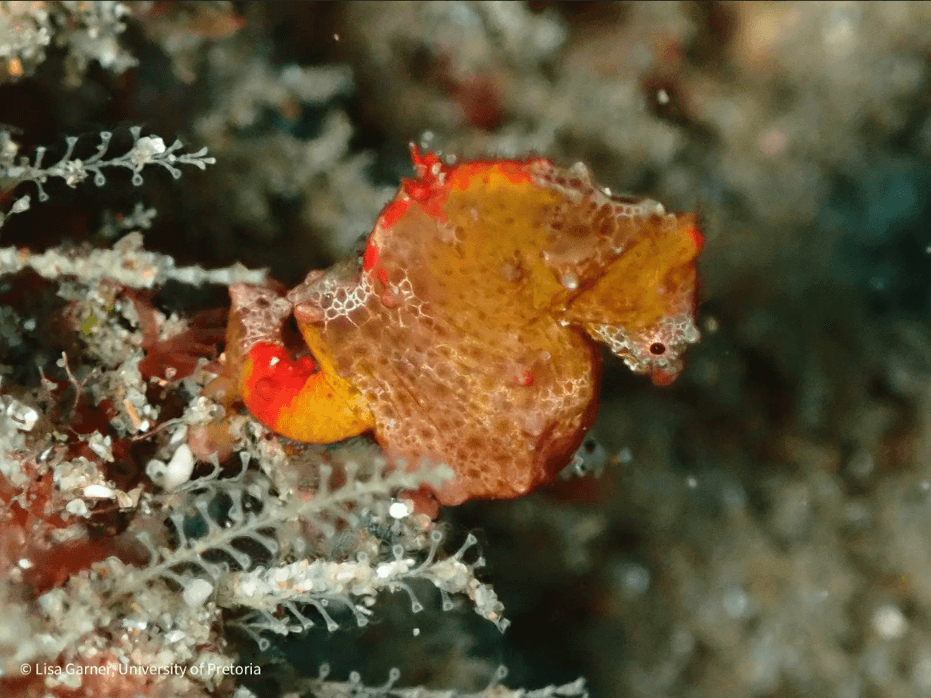
Although it may be hard to believe, after spending enough time searching for these individuals, your eyes begin to adjust. What initially looks like another piece of algae, hydroid, or coral starts to stand out. A slightly unusual curve. A tiny shape where there shouldn't be one. A movement out of sync with the rest of the reef.
Surprisingly, for me, the difficult part isn't finding them, but rather choosing the correct dive gear and photography equipment. For my research dives, I keep my gear simple and reliable: a TUSA Liberator BCD, Aqualung i330R dive computer, and Aqualung FitFlex Lady 3mm wetsuit. Having a comfortable, familiar setup means I can focus less on my equipment and more on finding and documenting these tiny animals. Unlike recreational underwater photography, an incredible amount can rest on a single image in scientific diving. Without a useful, crisp, and clear photograph, the encounter can mean nothing. There is no photographic evidence to support the sighting, and that individual cannot be incorporated into the data.
Over the past two and a half years, I have put the Olympus TG-7 to the ultimate test in macro photography. Here's why I would highly recommend it to any researcher working with marine macro life.
Through countless research dives and encounters with some seriously tiny subjects, I've found that its compact size, ease of use, and macro capabilities make it particularly well suited to this kind of work.
Why the TG-7 Earned Its Place in My Kit
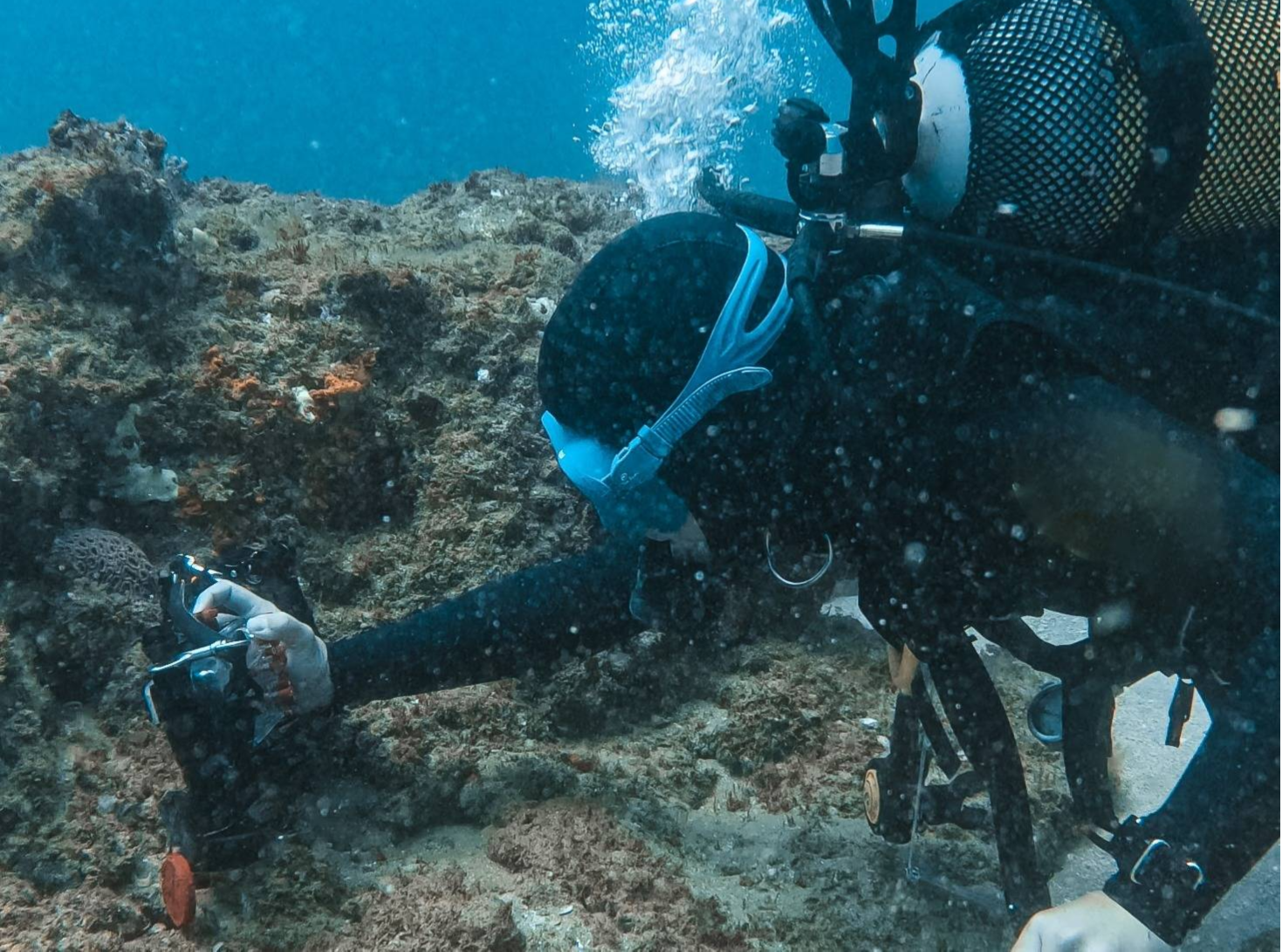
During research dives, I often have a lot on my hands: a slate, sometimes a measuring reference, and often a buoy line. There's also plenty going through my head during surveys, so the last thing I need is a large, two-handed camera rig that adds another layer of complexity to the task.
The Olympus TG-7, paired with the Olympus underwater housing, solves that problem almost entirely. It's small enough to operate one-handed while I manage everything else.
That might sound like a minor convenience until you're the one trying to steady a camera in mild surge and current while ensuring your study animal isn't disturbed. If the individual moves, it can interfere with the habitat data I'm collecting. Suddenly, that small convenience isn't so minor. It's the difference between getting the shot and watching the moment pass.
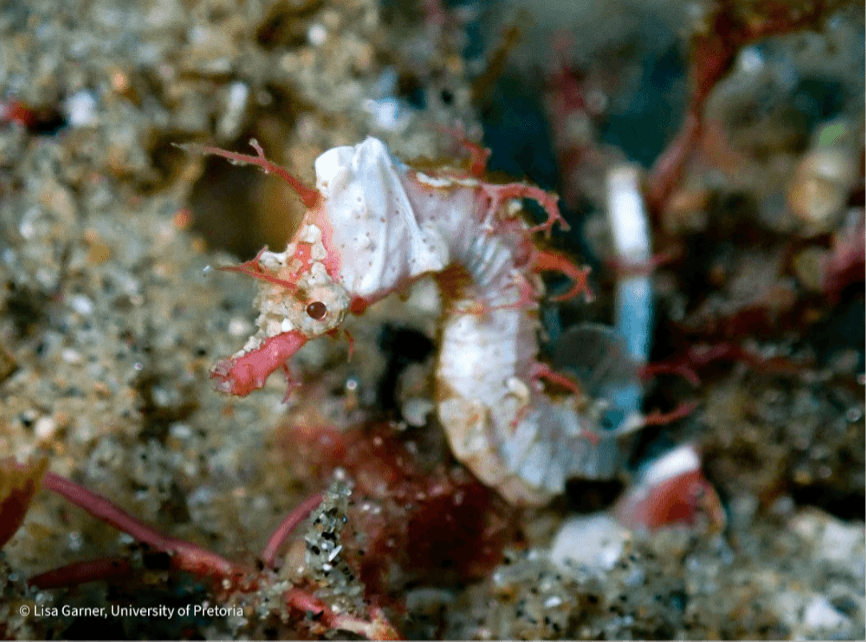
Beyond its size, three things mattered most for this specific work:
1) Macro Performance at Genuinely Close Range
The TG-7's microscope mode allows me to get close enough to fill the frame with an animal smaller than my thumbnail, without needing a supplementary diopter for most shots.
When I wanted to push even closer, particularly for juvenile pipehorses that are even more slender and easier to lose against their background, the setup still had room to scale up with additional accessories.
2) RAW Capture and Manual Control
This is one of the details that separates a documentation-grade image from a snapshot. Shooting in RAW means I can recover detail and correct colour accurately during post-processing.
For identification and research purposes, that flexibility isn't optional.
3) Lighting That Could Keep Up
I paired the camera and housing with the OrcaTorch D710V MK II Triple-Color Video Light, and it made a bigger difference than I expected.
Ambient light at the typical depths where I encounter these species in Sodwana is already dim and blue-shifted, and pygmy syngnathids tend to tuck themselves into shaded pockets of reef structure. A strong, even, continuous light source meant I wasn't fighting motion blur caused by slower shutter speeds, while also allowing me to see the animals' true colours and textures more clearly in real time.
Using the GoPro HERO11 Black to Document Cylix nkosi Behavior
Letting the Camera Do the Watching....
The Olympus was perfect for capturing my image data however it didn't work when I needed to disappear entirely and let an animal behave as if I wasn’t there. For that, I switched tools completely, from the TG-7 to a GoPro Hero 11 Black, set up to run unattended for an hour at a time.
An individual pipehorse named Cheese, and his partner Mac, remained in one area for 3 months, allowing me to capture incredible footage of the pair's behaviour using my GoPro.
The settings:
For footage that needed to be used for actual behavioral analysis rather than just look good, I shot at 4K/60fps. This is enough resolution to zoom in during review without losing detail, and a frame rate high enough to slow footage down if a behavior happened quickly. I used the Linear field of view rather than Wide: Wide's fisheye distortion is great for dramatic reef scenes, but it distorts spatial relationships and apparent scale, which matters when you're trying to accurately assess distance, size, or movement between two animals. I capped the ISO ceiling to keep noise manageable in Sodwana's lower-light pockets, and dialed exposure compensation down slightly to protect highlight detail rather than blow it out. HyperSmooth stayed off, the camera wasn't moving, so there was nothing to stabilize.
The setup:
Rather than a tripod or a fixed rig, I attached the housing to a single dive weight. It sounds low-tech, but that was the point: it's small enough to tuck into tight reef structure near where I'd been observing activity, heavy enough to sit dead still against surge, and it leaves next to no footprint on the surrounding habitat compared to anything staked or clamped in. I could position it, check the framing, and swim off without disturbing anything nearby.
Because the camera was left completely unattended for the full hour I needed a housing I could genuinely trust not to flood or fail with nobody there to catch a problem. I used GoPro's official housing for that reason; an hour is a long time to have gear sitting on the reef with no one checking on it, and it didn't give me a moment's concern.
That hour paid off. I recovered footage of Cylix nkosi individuals mating, the first documented footage of this behavior for the species. It's the kind of result that simply isn't possible with a diver hovering nearby, however careful they are.
What I'd do differently:
The biggest recurring issue was subjects drifting out of frame, an hour is a long time for a 5cm animal to stay put. Next time I'd consider a slightly wider framing margin or a second angle if the site allows it. Card and battery life weren't a real constraint at the one-hour mark, but it's worth planning around if you're pushing toward multi-hour sessions.
If This Has You Wanting Your Own Pygmy Encounter
Sodwana Bay and the wider iSimangaliso Marine Protected Area are genuinely special, particularly because we have two endemic pygmy syngnathid species. But they're far from the only places in the world where you can find these tiny and incredible animals.
If you're building a photography trip around the hunt for pygmy syngnathids, a few destinations consistently deliver:
The spiritual home of muck diving and one of the most reliable places on Earth to find multiple pygmy seahorse species on a single trip. The region is also home to a pygmy pipehorse species, making it an especially exciting destination for anyone fascinated by these tiny members of the syngnathid family.
A favourite among underwater macro photographers for good reason, with a dense concentration of dive sites known for pygmy seahorse sightings and an incredible diversity of other unusual macro subjects.
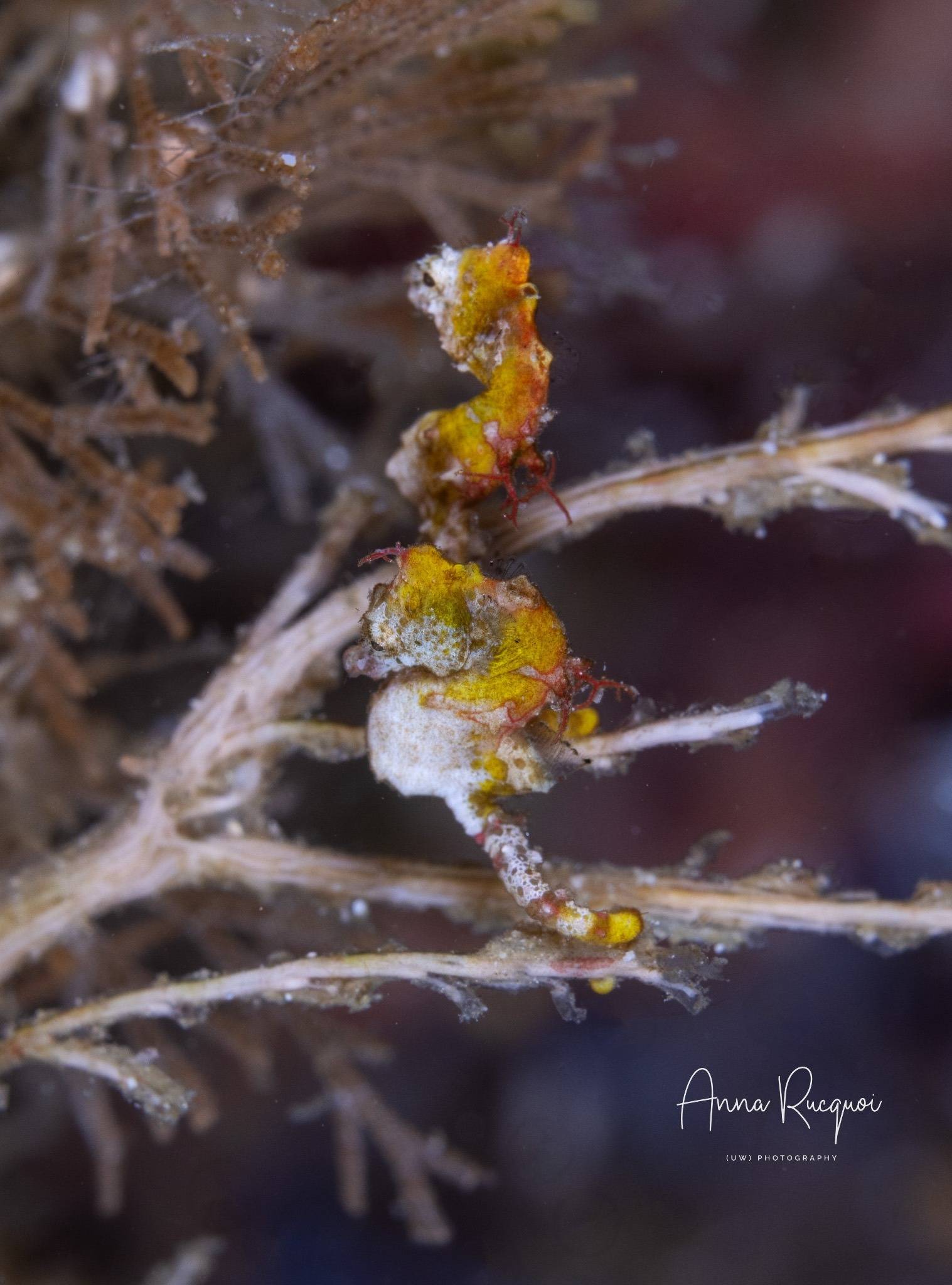
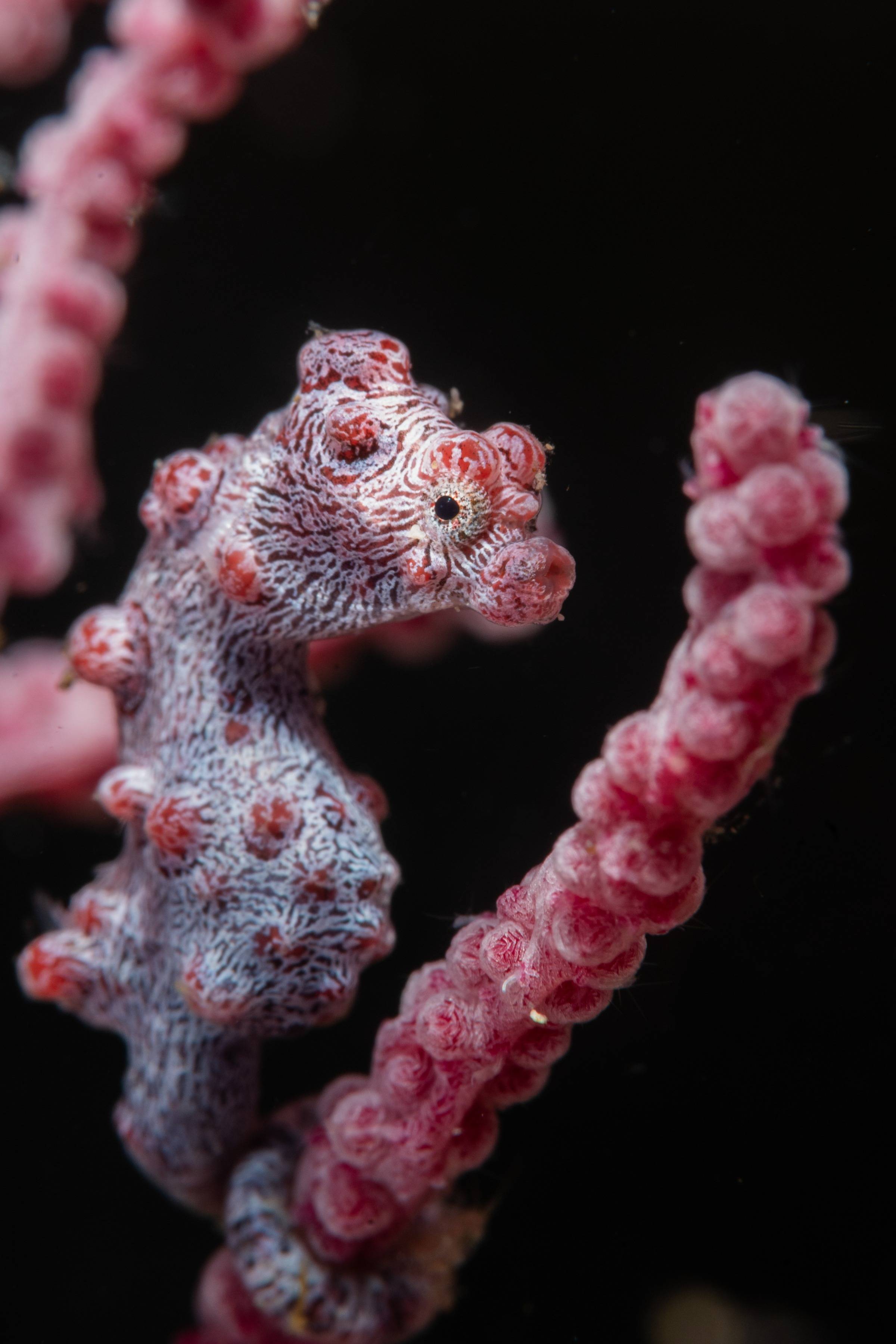
Quieter than Anilao but every bit as rewarding for muck and macro enthusiasts, with regular pygmy seahorse sightings alongside an impressive variety of other tiny and cryptic marine life.
Better known for its extraordinary biodiversity, spectacular reefs, and iconic big marine life, Raja Ampat also offers fantastic opportunities for macro photographers. Its healthy gorgonian sea fans provide habitat for pygmy seahorses for those willing to slow down and look closely.

Lisa Garner
Lisa is a Marketing Associate and Video Specialist at Bluewater Travel, where she combines her passion for the ocean with her love of design and content creation. Her journey into the marine world began with a degree in Zoology, but it was after completing a Discover Scuba Diving experience that she truly fell in love with the underwater world. What started as a single DSD soon led her to complete her Divemaster training, and she has now been diving for seven years. Lisa went on to combine her academic background and passion for diving by specialising her postgraduate research in marine life. She has also worked in the Maldives, where she gained hands-on experience in coral restoration and marine conservation.