

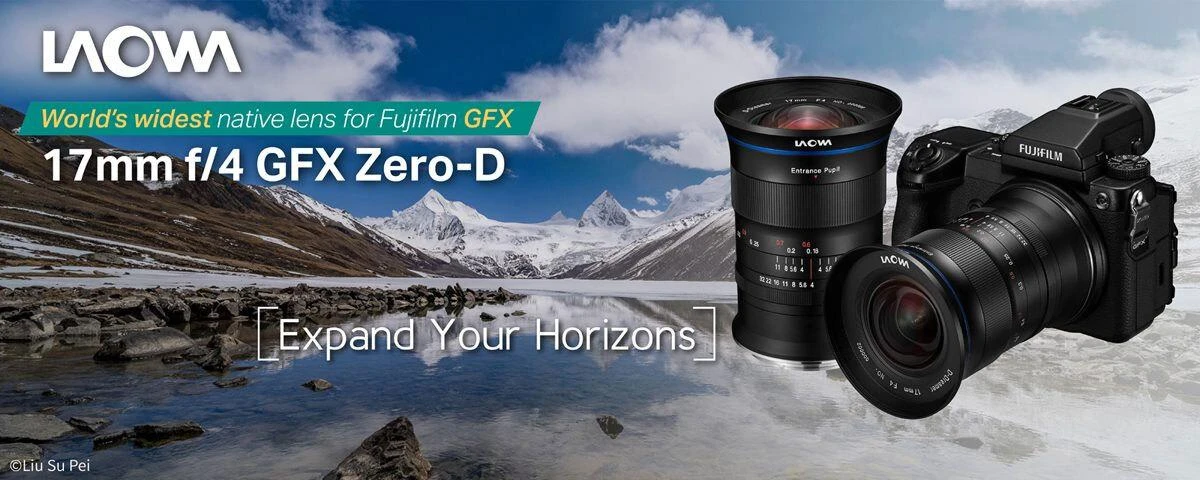
*This is a new, boxed, unused lens.
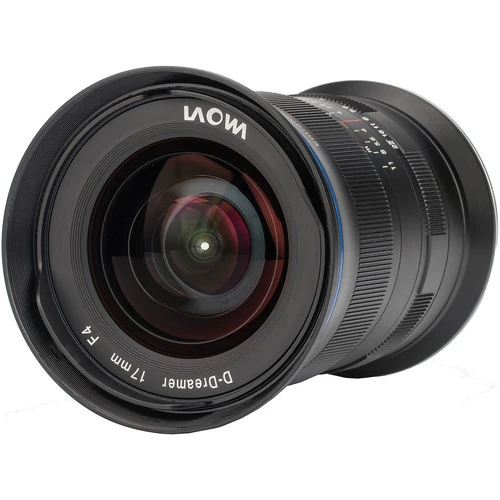
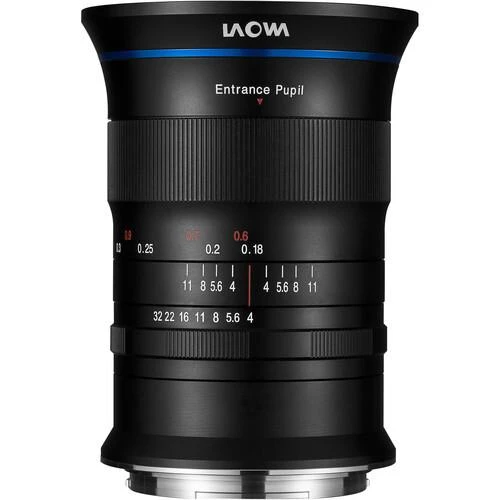
The Laowa 17mm f/4 GFX Zero-D is a manual-focus, rectilinear ultra-wide prime made specifically for Fujifilm G-mount medium-format cameras. Its 113° angle of view and 20 cm minimum focusing distance make it particularly interesting underwater, where getting the camera close to a reef, wreck or foreground subject helps reduce the amount of water between the lens and subject while preserving an expansive background.
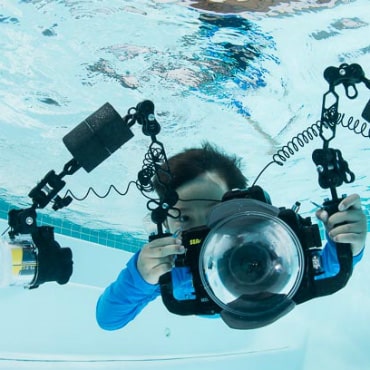
For a properly configured Nauticam N120 Fujifilm G-mount system, current port-chart documentation lists the lens with the WACP-2 for a converted 140° field of view, as well as 230 mm and 250 mm optical glass dome-port configurations. That makes this one of the more specialized Laowa lenses for high-end medium-format underwater wide-angle photography.
- Best for: reef scenics, wreck interiors, close-focus wide angle, large animals and dramatic medium-format landscapes underwater.
- Main advantage: extremely wide rectilinear coverage without the characteristic curved rendering of a fisheye lens.
- Compatibility: native Fujifilm G mount; underwater port, extension and focus-control requirements depend on your exact housing.
- Major differentiator: 17 mm focal length, 113° view and 20 cm minimum focus give it more extreme coverage and closer focusing than Fujifilm's GF 23mm f/4.
- Tradeoff: this is manual focus only, and a serious GFX wide-angle underwater configuration can require substantial port hardware.
- Why Bluewater Photo: we can help match the lens to the correct housing, focus gear, extension ring and port instead of treating the lens as an isolated purchase.
Designed for use with:
- All Cine Cameras
- FUJIFILM GFX ETERNA 55 G/PL Mount
- Medium Format Cameras
- FUJIFILM GFX 100
- FUJIFILM GFX 100 II
- FUJIFILM GFX 100S
- FUJIFILM GFX 100S II
- FUJIFILM GFX 50R
- FUJIFILM GFX 50S
- FUJIFILM GFX 50S II
Quick Specs
Why the Laowa 17mm GFX Stands Out Underwater
Most Fujifilm G-mount wide-angle choices force you to choose between a less-extreme prime or a more versatile zoom. The Laowa takes the opposite approach: it gives you a fixed 17mm rectilinear perspective, very close focusing and deliberately simple manual operation.
That combination is attractive when your priority is maximum scene coverage and close-focus wide-angle rather than autofocus or zoom flexibility. Compared with the GF 23mm f/4, the Laowa is substantially wider and focuses closer; compared with the GF 20-35mm f/4, it gives up autofocus and zooming in exchange for a wider native view and a 20 cm minimum focus distance. Fujifilm lists 99.9° and 38 cm for the GF 23mm, while the GF 20-35mm covers 108°-76° with a 35 cm minimum focus distance.
Features That Matter Underwater
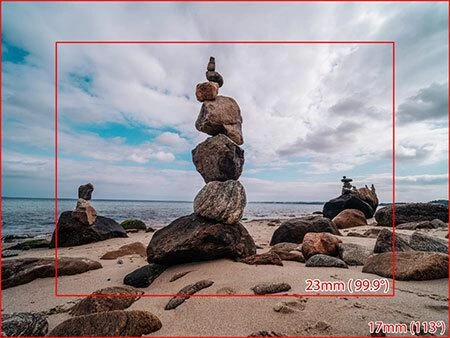
113° Rectilinear Coverage Without a Fisheye Look
Laowa's Zero-D designation is aimed at keeping geometric distortion very low for such a wide rectilinear lens. Underwater, that is useful when photographing wreck structure, reef walls, divers or other subjects where you want an expansive frame without pronounced fisheye curvature.
- Fits large subjects into the frame from close range
- Useful for wreck lines and structured reef compositions
- Maintains a rectilinear rather than fisheye rendering
20 cm Minimum Focus for Close-Focus Wide Angle
The 20 cm specification is measured from the sensor plane, not from the front of the lens or port, but it still gives the Laowa considerably more close-focus flexibility than many GFX wide-angle alternatives. Getting physically closer to a foreground subject is one of the most useful ways to reduce water-column haze and retain contrast underwater.
- Strong foreground-to-background perspective
- Useful for coral heads, anemones and reef structure
- Lets you work close while retaining an expansive environment
- Pairs especially well with carefully positioned wide-angle strobes
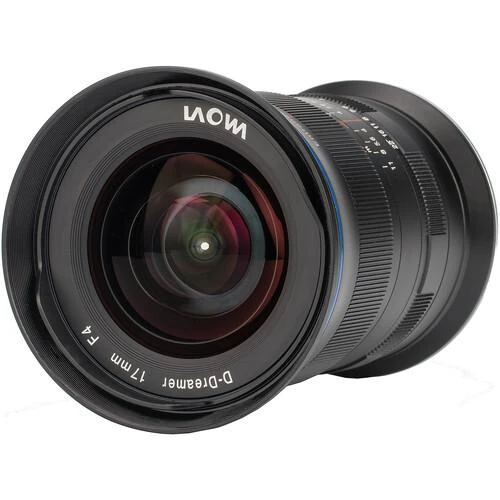
A Lens for Deliberate Manual-Focus Shooting
There is no autofocus here. For static reef scenics and wreck work, manual focus can be very workable with the proper housing control and a considered aperture, but fast-moving animals are less forgiving.
- No autofocus mechanism to manage
- Housing focus control remains important for changing subject distances
- Do not assume a topside pre-focus position will remain ideal behind a dome; verify focus underwater
- Better suited to photographers comfortable with deliberate manual technique
Why Buy Your Laowa Lens from Bluewater Photo?
Laowa has built its reputation around specialty wide-angle and macro optics rather than a conventional general-purpose lens catalog. With an underwater system, however, lens quality is only part of the purchase—the focus control, extension, port and lighting configuration all have to work together.
Content reviewed by Bluewater Photo staff, recognized as the #1 online retailer specializing in underwater photography and scuba diving equipment, with real-world experience supporting, selling, and configuring underwater camera systems.
Ready to Build Your GFX Wide-Angle Setup?
Confirm your housing and port configuration before finalizing the system.
Expert support from underwater photographers.
Guides & Articles
- Bluewater Photo Underwater Photography Equipment Guides
- Bluewater Photo: Acrylic vs Glass Dome Ports
- Underwater Photography Guide: Dome Port Optics
- Underwater Photography Guide: Close-Focus Wide Angle
Dome-port selection and close-focus technique have a major effect on wide-angle results underwater.
Laowa 17mm f/4 GFX Zero-D Specifications
Imaging
- Focal length: 17mm
- Maximum aperture: f/4
- Angle of view: 113°
- Format compatibility: Medium format
- Maximum magnification: 1:3.6
Optical Construction
- Lens structure: 21 elements in 14 groups
- Aperture blades: 5
- Minimum focusing distance: 20 cm
- Design type: Rectilinear ultra-wide
Controls & Compatibility
- Focus mode: Manual focus
- Lens mount: Fujifilm G
- Filter thread: 86mm
- Autofocus: No
Physical
- Dimensions: 88 × 124.5 mm
- Weight: 829 g
- Venus Optics Laowa 17mm f/4 GFX Zero-D Lens for FUJIFILM G
- Front and Rear Lens Caps
- Limited 3-Year Manufacturer Warranty
Laowa 17mm f/4 GFX Zero-D FAQ
Will the Laowa 17mm f/4 work on my Fujifilm GFX camera?
The lens uses the Fujifilm G mount and is designed for GFX medium-format cameras. Underwater compatibility is separate: your camera body, housing, focus control, extension and port must all be compatible.
Can I use the Laowa 17mm underwater in a Nauticam GFX housing?
Nauticam's N120 Fujifilm G-mount port chart documents configurations for this lens, including WACP-2 and large glass domes. Confirm your exact GFX housing and current port-chart revision with Bluewater Photo before ordering.
Does the Laowa 17mm have autofocus?
No. The Laowa 17mm f/4 GFX Zero-D is a manual-focus lens, so underwater shooters should verify that their housing configuration provides appropriate focus control.
What is the best underwater port for the Laowa 17mm GFX?
For the documented Nauticam N120 system, WACP-2 provides a charted converted field of view of 140°. Nauticam also lists 230 mm and 250 mm optical glass dome configurations, so the best choice depends on budget, desired optical performance and the rest of your system.
How close does the Laowa 17mm focus?
The minimum focusing distance is 20 cm measured from the sensor plane. Actual subject-to-port working distance underwater depends on the port or water-contact optic being used.
Is Laowa Zero-D the same as a fisheye lens?
No. The Laowa is a rectilinear lens designed to keep geometric distortion low, while a fisheye intentionally uses a curved projection to achieve very wide coverage.
What accessories should I order with this lens for underwater use?
Start with the correct focus-control components, extension ring and port for your exact housing. For a complete wide-angle rig, also plan for strobes, arms, clamps, buoyancy and a housing vacuum system where supported.
Why Buy from Bluewater
- Authorized Sea & Sea dealer — full manufacturer warranty.
- Founded and staffed by active divers, underwater photographers, and explorers.
- Decades of combined hands-on experience with the gear we sell.
- We test and use most of the equipment ourselves before recommending it.