Marelux Remote Strobe Trigger Explained: How It Works Underwater
Posted by Nirupam Nigam on September 16th, 2026
Read time:
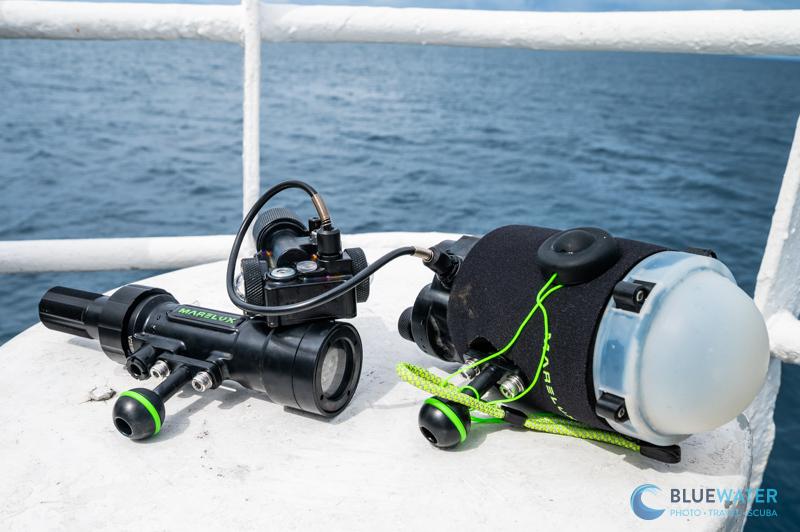
The Marelux Lumiflux and Marelux Terminal Flash Repeater in the Field at Truk Lagoon
Remote lighting can add unique depth and drama to an underwater wide angle image. A white halo glow over a subject can resemble backlighting in macro photography. In other situations, you can use remote lighting to illuminate more of a wreck or reef scene. Or you can even use it to represent an element in your image. For instance, in the image below, I used a remote strobe to make the bow gun on a World War II shipwreck fire again after over 80 years.
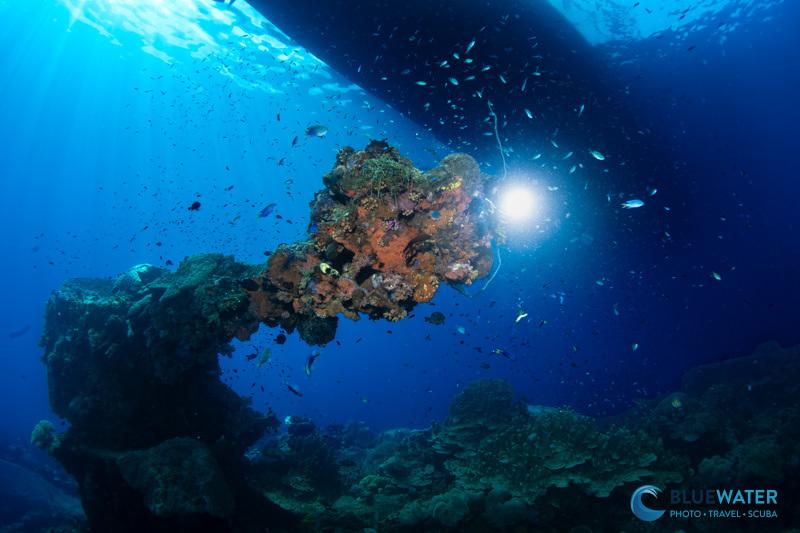
Using Strobes vs Video Lights for Remote Lighting
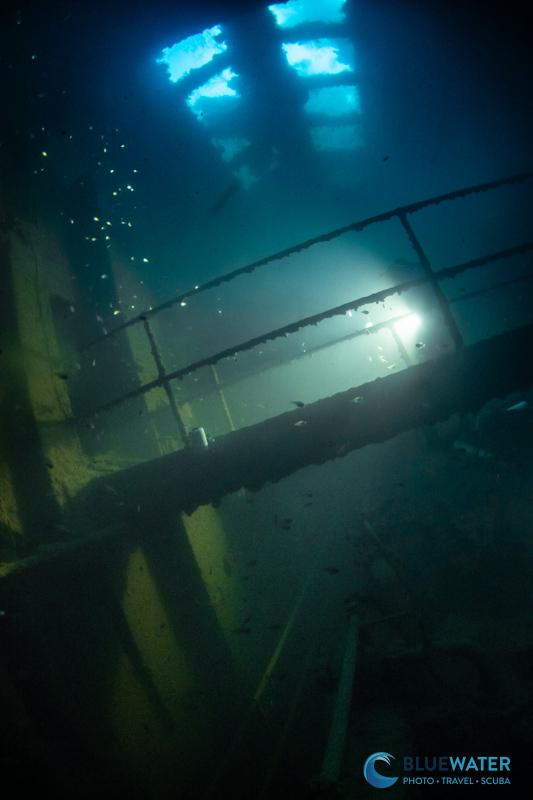
While powerful underwater video lights can accomplish the job, strobes output much more light and present an even better tool in situations where you have strong ambient light. Strobes also tend to output whiter light in your images because they penetrate water a bit better. Just take a look at the two examples below. In the first image you can see where an underwater video light helps illuminate a dark engine hold. It's a bit greener than you would see with a more powerful strobe in the same situation. You tend to be able to see the beam as more defined because it scatters less with a video light.
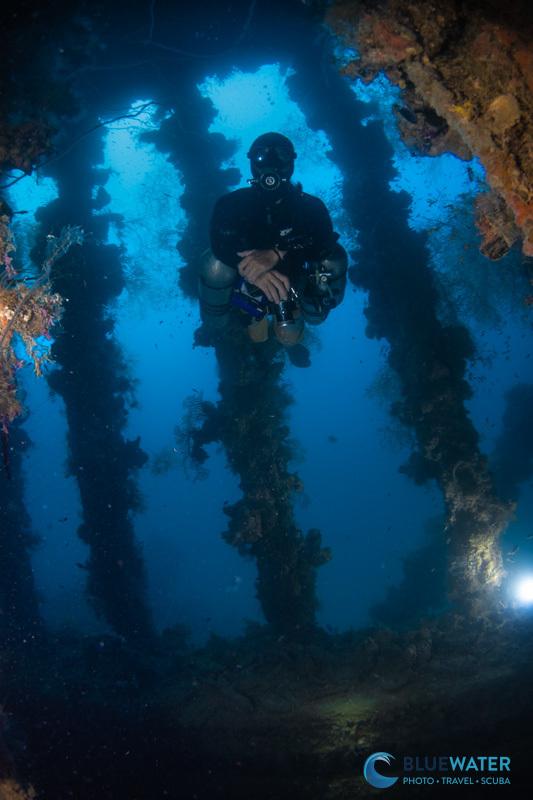
Now take a look at this image, also captured on the inside of a ship. This was taken with an Ikelite DS232 strobe triggered remotely with the Marelux Terminal Flash Repeater. You can see that it has a less defined beam and whiter light. The white light can also be more visible in areas with high ambient light. In the photo below I actually dropped the strobe down to quarter power so as not to blow out the scene.
Strobes also allow you to adjust your shutter speed without adjusting the exposure of the remote beam from the strobe which make them more consistant and easier to work with when you are setting up remote lighting. Thus when you change your shutter speed you can control the color and exposure of the ambient light coming through a shipwreck window but it won't affect the strobe light.
Understanding Marelux's Unique Wireless Remote Trigger System
Both types of remote lighting have their own niche in wide angle photography. If you decide that a remote strobe is the right direction for your photography, you might quickly realize that there aren't great ways to trigger a strobe remotely. There are long fiber optic cables & sync cords and unreliable slave receivers. But Marelux has designed a unique, long-range wireless transmitter that works with every strobe on the market - including their own.
The Transmitter: Marelux Lumiflux
In order to trigger the a strobe from a distance, you'll need a transmitter. The Marelux Lumiflux focus light is the transmitter of choice from Marelux and the key to the success of this remote trigger system. With a 1000 lumen white light and a 500 lumen red light, the Lumiflux doubles as a focus light. It's also capable of outputting an encrypted blue signal up to 30-45 ft underwater, depending on the strength of ambient light in the scene. This is more than enough distance for most wide-angle scenes and further than any wireless remote trigger system that we currently know of. All you have to do is mount the lumiflux to your underwater housing and plug a sea and sea style fiber optic cable into the fiber optic port. As long as you have a flash trigger or built in flash on your camera to attach to the other side of the cable, the lumiflux will be able to seamlessly sync your camera to the remote strobe (as well as any other onboard strobes you may have).
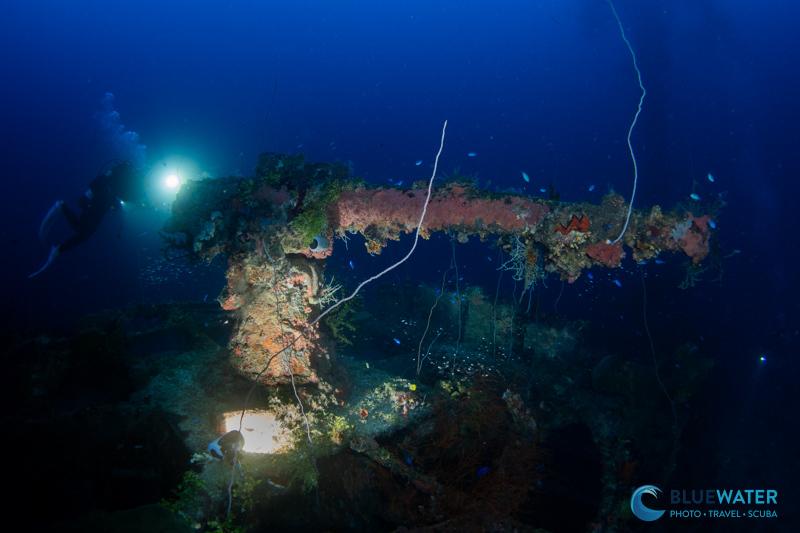
Testing the range of the lumiflux on the bow gun of the San Francisco Maru on Truk Lagoon
In my underwater tests of the transmitter, I did find that I could transmit a signal at least 30 ft in a dark environment. That distance was reduced the ambient light in a scene increased. But I often found that I never needed nearly that much distance from my subject. In the image above, where there was not much light at 165 ft of depth, I was able to back up quite far from the bow gun on the wreck of the San Francisco Maru. The additional strobe (the Ikelite DS 232 seen on the deck of the ship) added lighting from below to create drama.
I also noticed something very useful when I was shooting with the lumiflux. The blue signal from the device is quite powerful and able to wrap around items that may be blocking your remote lighting. This can create really unique backlighting effects that I used consistently during my trip in Truk Lagoon.
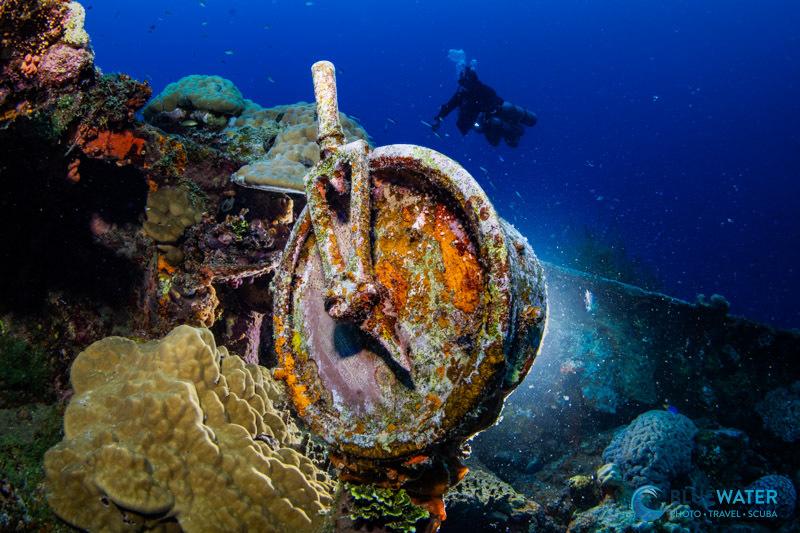
Backlighting with a remote strobe was used to create drama behind this stationary telegraph on the bow of a World War II shipwreck
The Receiver: Marelux Terminal Flash Repeater
There are two ways for a remotely placed strobe to sync with and receive a signal from your Lumiflux. The first is to use a Marelux Apollo S or Marelux Apollo III 2.0 strobe. Both of these strobes have a built-in receiver, so all you have to do place the strobe down where you want it to fire.
The second way is to use the Marelux terminal flash repeater. This gadget plugs into any strobe via a fiber optic cable as long as there is fiber optic compatibility. Then all you have to do is turn on the strobe and the terminal flash repeater and set them down where you want the strobe to fire. You'll want to make sure that there is a clear view from the receiver of the terminal flash repeater to the lumiflux output. The lumiflux has a button that you can use to test if the signal is transmitting properly.
In either case, we recommend using a cardellini clamp kit to help secure your strobe. It allows you to clamp down onto any substrate. Just make sure you are not harming marine life in the process!
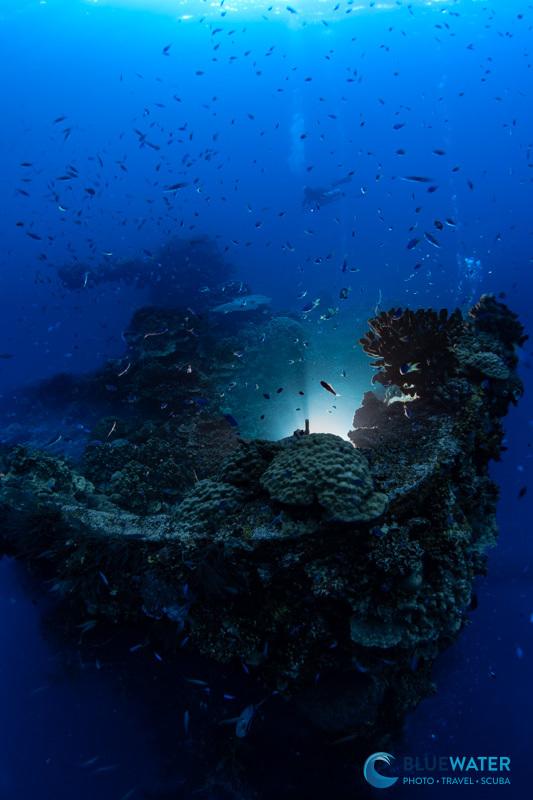
A cleverly placed strobe can make it seem like the bow of this World War II vessel is under attack
Why a Remote Strobe is Now Permanently Part of My Dive Kit
After years of ignoring the niche of remote strobe photography, a remote strobe is now part of my permanent dive kit. On every wide angle dive, I clip on a third strobe attached to a Marelux terminal flash repeater with a couple of double enders attaching the two together and to my BCD. I use the Marelux lumiflux as my focus light and simply move one of my fiber optic cables to the optical port when im ready to fire my third strobe remotely. It has created a new and dramatic depth to my photography. While it's not useful in every scenario, you end up with images that very few others have dabbled with in the past.
Tips for Remote Strobe Photography
Remote strobe photography is not the easiest art form and it took me a couple of week of diving to truly perfect the art. You need a lot of time, a complex diving environment or subject, and patience. It can require a lot of guess and check work that involves swimming and replacing strobes between shots. So try to plan your shots before you get in the water and do your research about a dive site or shipwreck while you are on land.
Here are my top tips for remote strobe photography:
- Use a cardellini clamp kit to position your remote strobe
- After strobe placement, test the exposure of the remote strobe. You'll need to make sure you are the same distance away as where you intend to take the photo. Look for subjects that you might want (or not want) to block the strobe. Look at the angle of your strobe and the subject that it is lighting up. This process will involve a lot of swimming back and forth
- While you are swimming, frog kick so you don't kick up silt and cause backscatter (unless you want it)
- Try to place a complex subject with holes (like a fishing net, wheel, or kelp) in front of the remote strobe
- Don't forget about ambient light! Lower your shutter speed so that you let enough ambient light into the scene. It will not effect the strobe exposure - only ISO and aperture will
- Use the strobes on your housing to lighting up the foreground and add color (or don't).
- Don't be afraid to think creatively. Use the light to represent something (like a bomb on a ship or the firing of a gun)
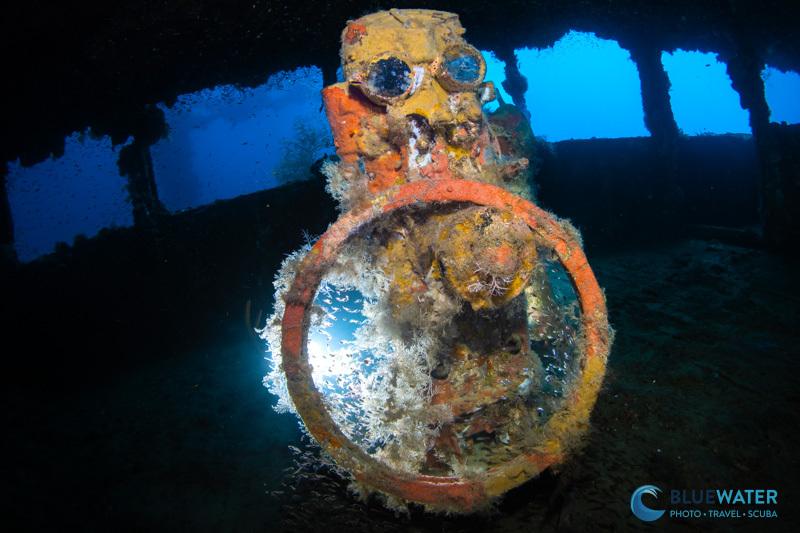
The bridge of the Nippo Maru with remote lighting
Conclusions
I personally hope that the Marelux remote trigger system will revolutionize wide angle photography for other divers the same way that it has changed mine. Certainly, it produces exceptionally unique images and opens new doors to depth and drama. The simplicity and lack of wires with the Lumiflux and Terminal Flash Repeater make it an easy system to carry on any dive. All you need is a third strobe!
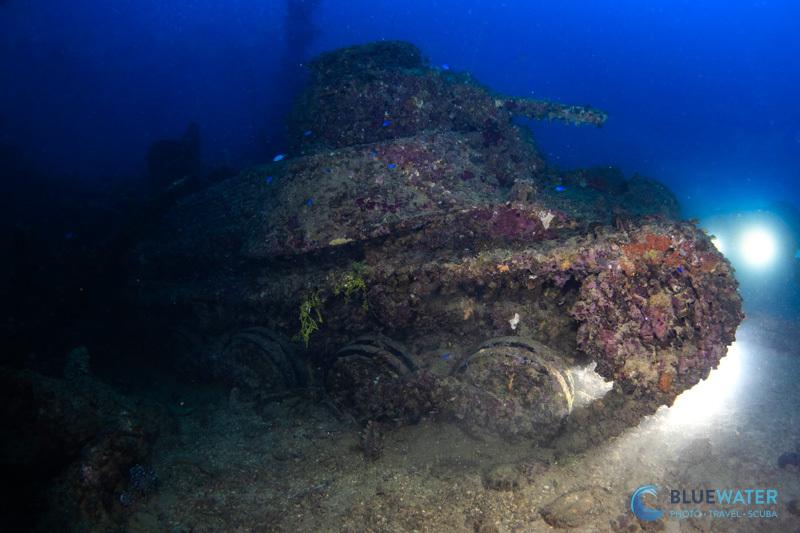
A remote strobe behind this Japanese battle tank allowed the treads to be easily identified