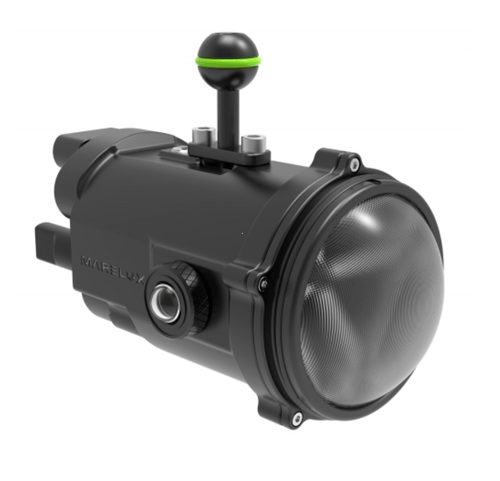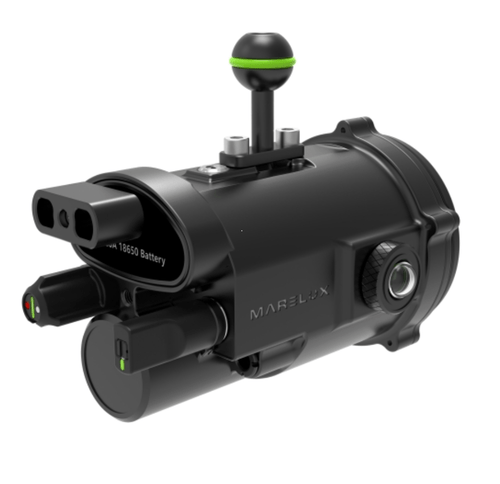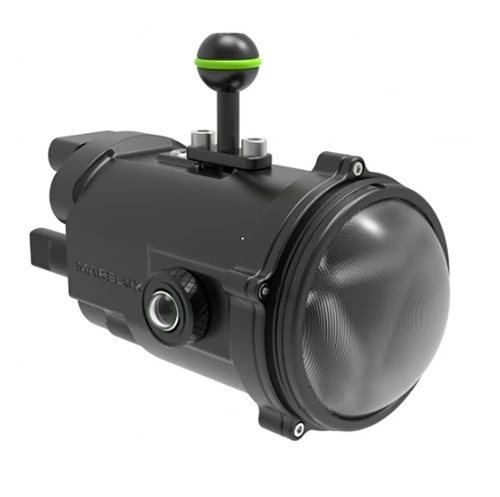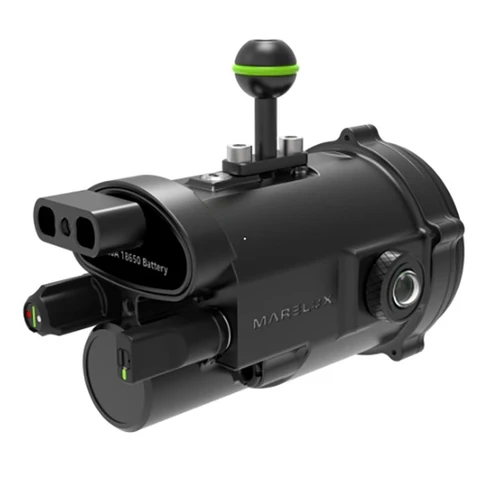



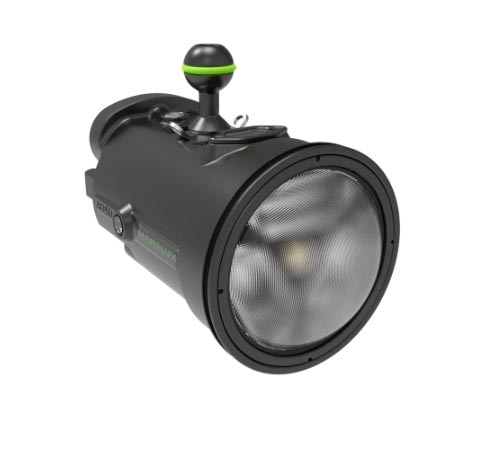
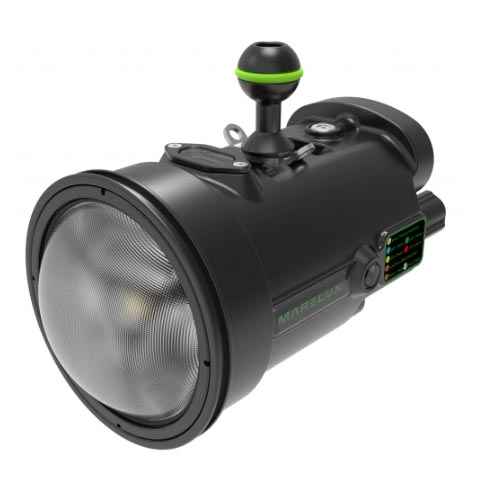
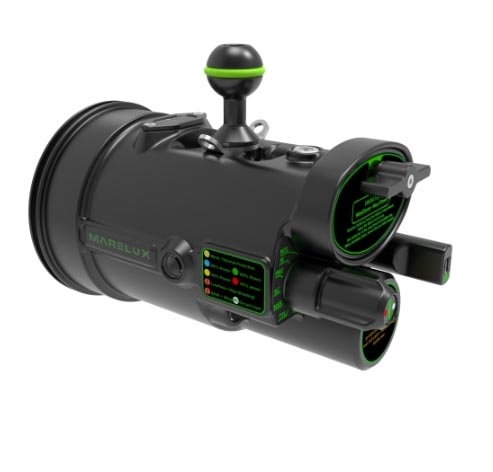
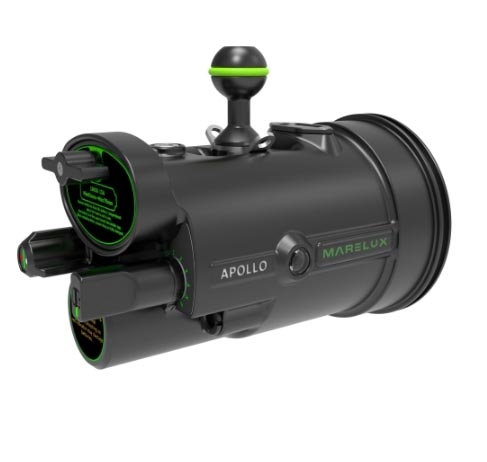
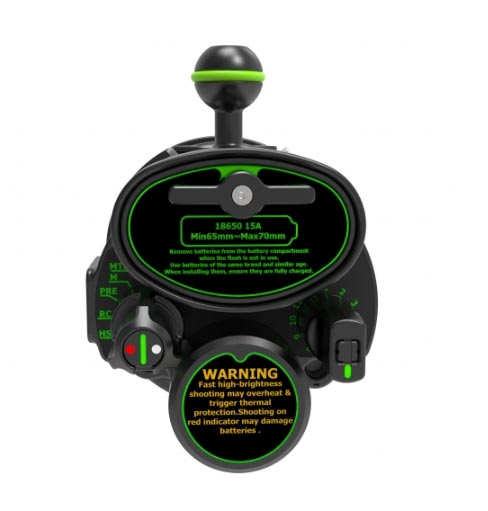
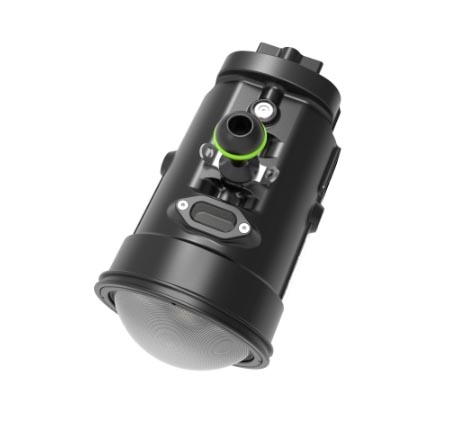


Marelux Apollo III 3.0 Underwater Strobe
GN44 power, a 0.6-second full-power recycle and high-speed MTL burst shooting for photographers who need wide, powerful light without waiting for the strobe to catch up.
The Marelux Apollo III 3.0 is Marelux's flagship underwater strobe, built around a GN44 flash, a wide 120° beam and an unusually fast 0.6-second recycle at full output. Its real advantage shows up when photographing fast marine life, wide-angle reef scenes, blackwater subjects or any situation where a slower strobe forces you to wait between frames.
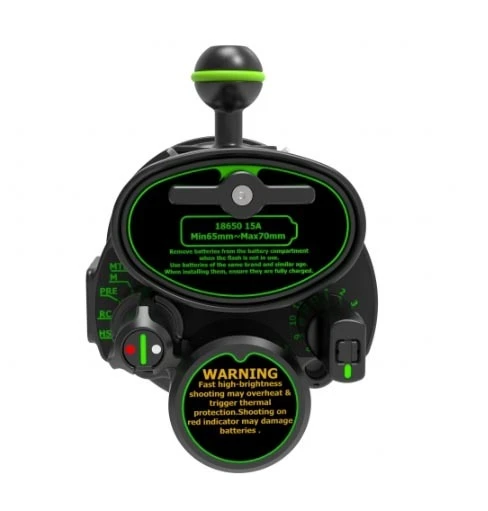
It also supports Marelux's MTL burst mode, TTL, HSS, RC and PRE-M workflows, but advanced automatic modes depend on the camera, housing and flash trigger being able to provide the correct signal. If you're building a system rather than replacing an existing strobe, we recommend confirming the complete trigger path before ordering.
- Best for: serious wide-angle, wildlife, blackwater and high-speed underwater still photography.
- Main advantage: GN44 output with a manufacturer-specified 0.6-second full-power recycle.
- Burst advantage: MTL mode supports 20 fps at GN22 with a 0.05-second recycle specification.
- Compatibility: Universal compatibility – including OFF, TEST, MANUAL, TTL, HSS, RC, PRE-M, and MTL mode dial,works with all major cameras and flash modes
- Major differentiator: combines fast flash recycling with a 120° beam, 3,000-lumen video/target light and Marelux encrypted wireless triggering.
- Tradeoff: Three 18650 batteries are required (batteries are not included - we recommend the Marelux 18650 Battery), and photographers wanting TTL, HSS or wireless control must pay close attention to trigger compatibility rather than assuming every feature works automatically with every housing.
Quick Specs
Marelux Apollo III 3.0 Compatibility
The physical mounting side is straightforward: the Apollo III 3.0 can be integrated into a normal underwater camera tray-and-arm system. Trigger compatibility deserves more attention because manual firing, TTL, HSS, RC, PRE-M and MTL do not all use the same camera or trigger logic.
Works With
- Mirrorless, DSLR and compact-camera underwater systems with a compatible optical triggering pathway
- Marelux underwater housings with the appropriate flash trigger configuration
- Other housing brands when the housing and trigger can provide the required optical signal
- Standard underwater strobe arm systems using the appropriate ball-mount hardware
Requires
- 3 × compatible 18650 batteries
- Camera-to-strobe triggering solution
- Compatible flash trigger for TTL and HSS operation
- Strobe arm and clamp system for normal housing mounting
Optional Gear
- Marelux Lumilink-compatible transmitter for supported wireless workflows
- Fiber-optic cable for traditional optical triggering
- Dual strobes for wide-angle photography
- Float arms if your complete rig needs additional buoyancy
- Spare 18650 batteries and charger for multi-dive days
Why the Apollo III 3.0 Stands Out
Most powerful strobes make you choose between output and recycle speed. The Apollo III 3.0's strongest argument is that it gives you both: GN44 output with a 0.6-second full-power recycle, plus an MTL mode designed specifically for high-frame-rate shooting at reduced output.
That makes it especially interesting for fish behavior, schooling action, blackwater and other subjects where the best expression or body position may last only a fraction of a second. Compared with slower strobes, you spend less time waiting for the ready light and more time following the subject through the viewfinder.
Key Features in Real Underwater Use
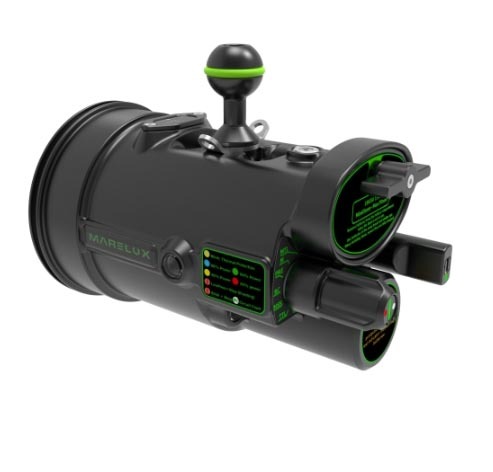
20 fps MTL Mode for Fast Wildlife
A fast camera body is not much help if the strobes miss every second or third frame. Marelux's MTL mode is specified to fire at 20 fps at GN22 with a 0.05-second recycle time, making it one of the Apollo III 3.0's most useful features for behavior and rapid sequences.
- Better suited to fast fish and split-second behavior
- Lets modern mirrorless burst modes become more useful underwater
- Maintains more lighting continuity through a sequence
- GN22 output is the tradeoff for maximum burst speed
GN44 Power Across a 120° Beam
Wide-angle underwater photography needs more than a headline guide number. Coverage matters because a concentrated hotspot is much harder to place cleanly across a reef scene. The Apollo III 3.0 combines GN44 output with a 120° beam, a triple-tube design and a beaded dome lens intended to spread light more evenly across the frame.
- Strong choice for reefscapes and larger subjects
- Wide coverage reduces the need to aim a narrow beam precisely
- Useful when shooting fisheye and ultra-wide lenses
- Dual strobes remain the preferred setup for large, evenly lit scenes
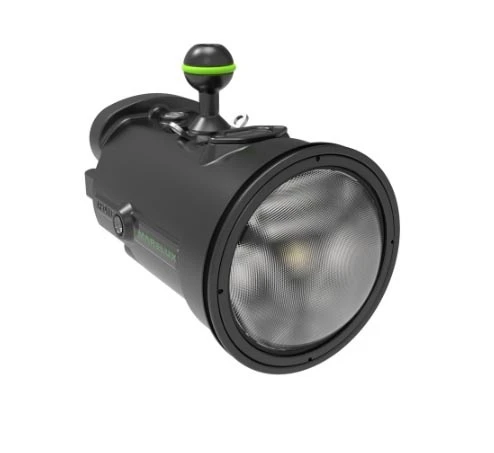
3,000-Lumen Light and Better In-Water Controls
The built-in 3,000-lumen, 95 CRI, 5500K light can serve as a target light and handle shorter video clips without adding another small light to the rig. An LCD and dedicated controls also make it easier to confirm settings when conditions are dark or the dive is moving quickly.
- 3,000-lumen auxiliary video/target light
- 95 CRI and 5500K specification
- LCD provides visible operating information
- Dedicated controls reduce menu-driven adjustments underwater
Marelux Apollo III 3.0 vs. Other High-End Underwater Strobes
Guide number, watt-seconds and beam coverage are not standardized equally across every manufacturer, so headline power figures should not be treated as direct apples-to-apples measurements. The table below is most useful for comparing beam, recycle speed, triggering features and intended use.
| Product | Power / Output | Beam | Full Recycle | Best Use | System Compatibility |
|---|---|---|---|---|---|
| Marelux Apollo III 3.0 | GN44 | 120° | 0.6 sec | High-speed stills, wildlife, wide angle | Manual, TTL, HSS, RC, PRE-M, MTL; fiber/wireless pathways depend on trigger |
| Backscatter Hybrid Flash HF-1 | GN40; 5,000-lumen video light | 120°; 140° flat diffuser; 160° optional dome | 1.6 sec | Photo/video hybrid rigs | Fiber optic; Smart Control TTL for supported Sony and OM System setups; HSS support |
| Retra Maxi | GN46; optional 6,000-lumen video light | 160° with WA diffuser | Up to 1.95 sec | Very wide coverage and hybrid lighting | Optical; TTL and HSS; compatibility depends on trigger system |
| Sea & Sea YS-D130R | 130 Ws | 80°×82°; 102°×102° with diffuser | 0.8 sec with dedicated Li-ion battery | Fast general-purpose still photography | Manual, DS-TTL II, OM RC and manual HSS |
Expert Verdict
Who should buy the Marelux Apollo III 2.1?
Buy the Marelux Apollo III 2.1 if you want one of the strongest still-photo underwater strobes with fast recycle time, broad coverage, and modern triggering options. It belongs on the shortlist for divers comparing the best underwater strobes for serious mirrorless and DSLR systems.
Choose a different strobe if you primarily shoot video and need a high-output continuous video light built into the same body, or if you want the smallest possible travel strobe. For advanced still photographers who want speed, power, and expandability, the Apollo III 2.1 is a very compelling Marelux strobe.
Why Buy Marelux from Bluewater Photo?
Marelux has developed a broad underwater imaging ecosystem that includes aluminum housings, ports, strobes, video lights, flash triggers and optical accessories. The Apollo III 3.0 continues that system approach with multiple trigger modes, replaceable batteries and a flash-tube design Marelux states has been endurance-tested to one million shots.
More importantly, Bluewater Photo can help with the part that product specification sheets rarely solve: matching the strobe to the exact camera, housing and trigger already in your rig.
Content reviewed by Bluewater Photo staff, recognized as the #1 online retailer specializing in underwater photography and scuba diving equipment, with real-world experience supporting, selling, and configuring underwater camera systems.
Ready to build your lighting setup?
Expert support from underwater photographers.
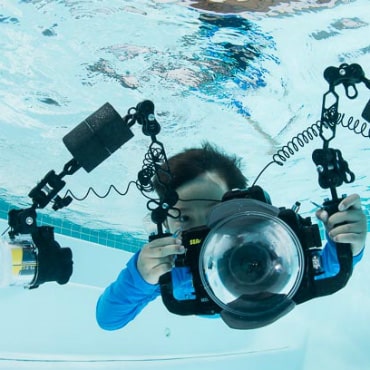
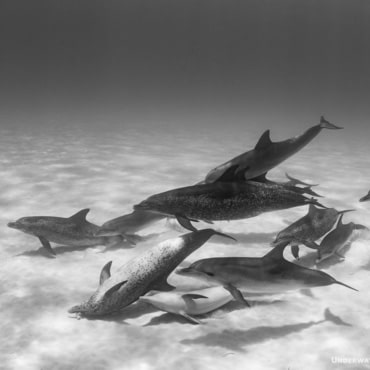
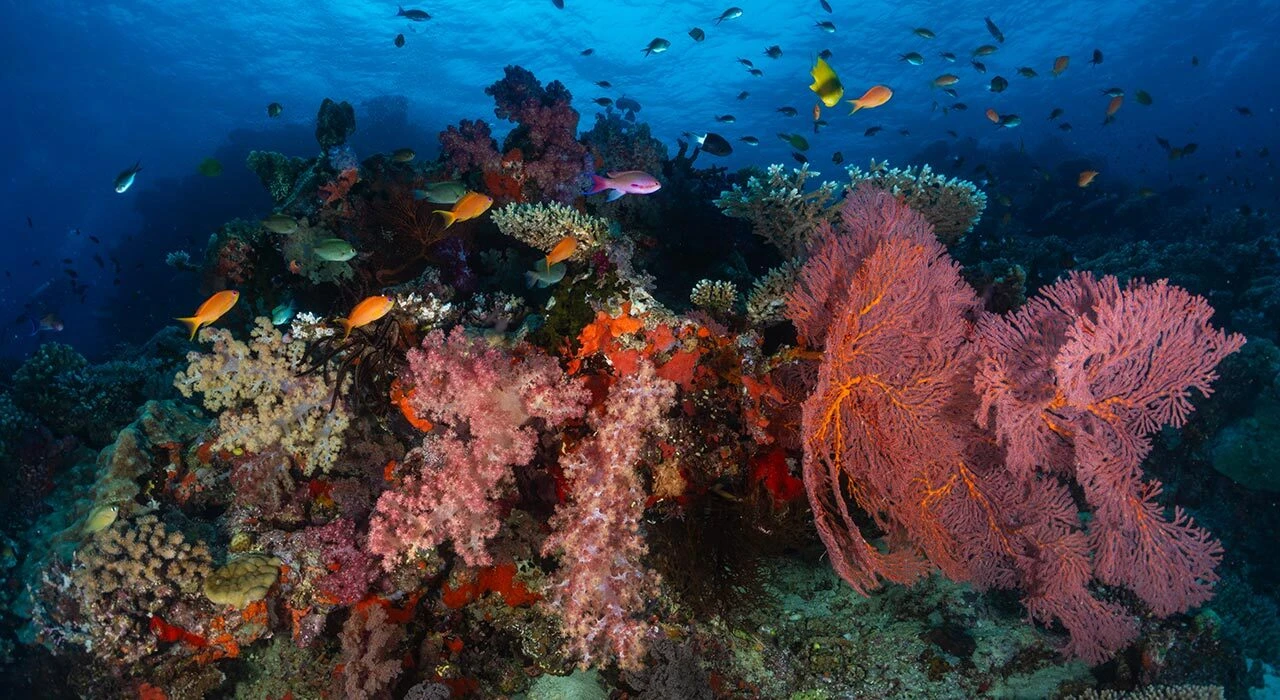
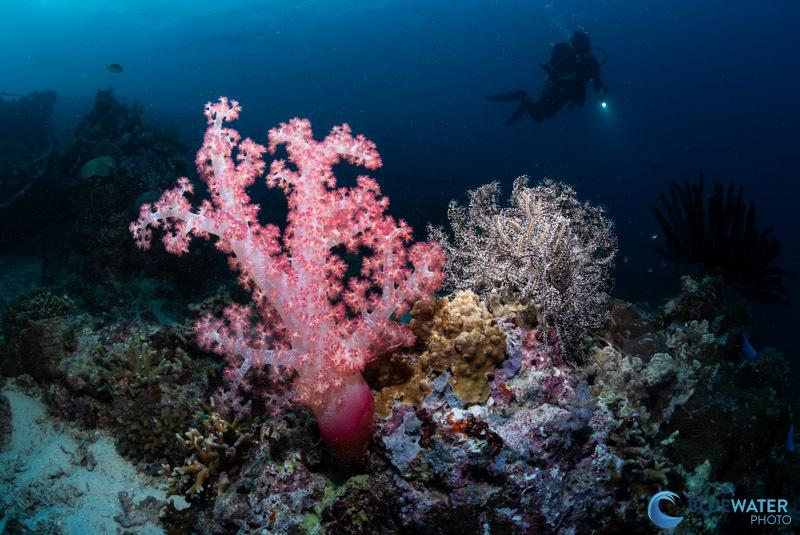
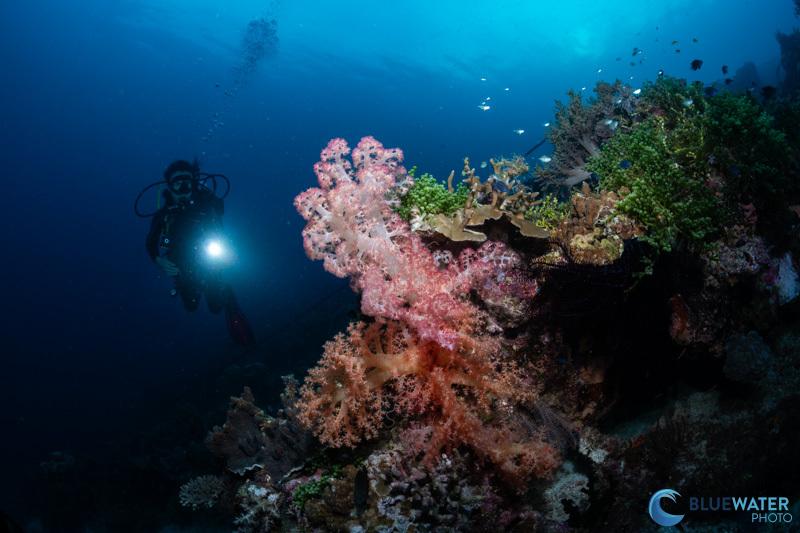
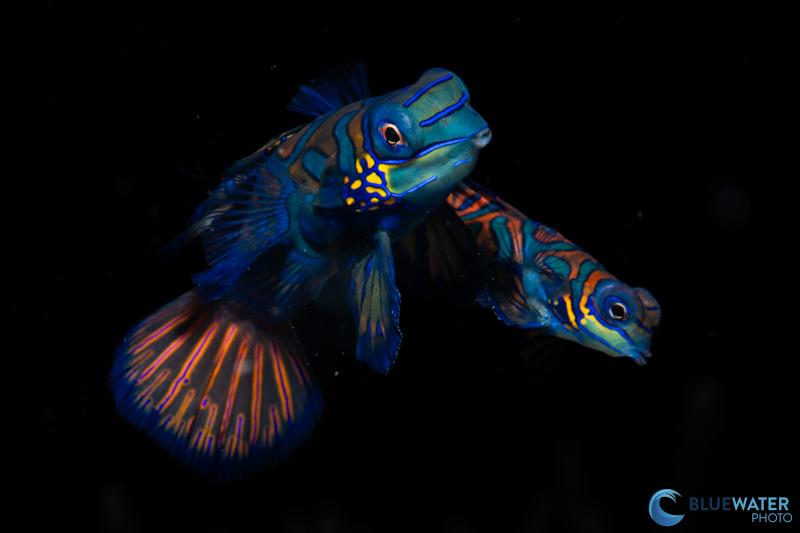
Some sample images taken using the Nikon Z8 in a Marelux housing with an Apollo III Strobe:
Related Underwater Gear Categories:
Marelux Apollo III 3.0 Specifications
Flash & Lighting
- Guide number: GN44
- Beam angle: 120°
- Full-power recycle: 0.6 second
- MTL: 20 fps at GN22
- MTL recycle at GN22: 0.05 second
- Video / target light: 3,000 lumens
- Video / target light CRI: 95
- Video / target light color temperature: 5500K
Triggering & Controls
- Modes: OFF, TEST, MANUAL, TTL, HSS, RC, PRE-M, MTL
- PRE-M mode: Yes
- Encrypted wireless triggering: Yes
- Wireless range: up to 15 m, manufacturer specification
- LCD display: Yes
- TTL/HSS trigger requirements: system dependent
Power
- Battery: 3 × standard 18650 cells
- Full-power flashes per charge: [VERIFY]
- Battery charging specification: [VERIFY]
- Batteries included: [VERIFY]
Build
- Flash design: Triple tube
- Front optic: Beaded dome lens
- Flash-tube endurance test: manufacturer states testing to 1 million shots
- Depth rating: [VERIFY]
- Dimensions: [VERIFY]
- Weight in air: [VERIFY]
- Weight in water: [VERIFY]
- Manufacturer item number: 42520
- Marelux Apollo III Underwater Strobe
- Ball Mount Adaptor
- Dome Diffuser
- Protective Rear Cover
- 2x O-Rings
- Fiber Port Plug
- Lanyard Sheet
Marelux Apollo III 3.0 FAQ
Will the Marelux Apollo III 3.0 work with my underwater housing?
It can work with a range of underwater housing systems when the housing has a compatible optical trigger pathway. TTL, HSS, RC and other advanced modes depend on the camera and flash trigger, so contact Bluewater Photo with your exact camera, housing and trigger if you want those features confirmed.
Does the Apollo III 3.0 support TTL?
Yes, the strobe supports TTL mode, but TTL operation requires a compatible flash trigger and camera/housing configuration. Simply connecting a fiber-optic cable does not guarantee automatic TTL with every system.
What is MTL mode and when would I use it?
MTL is Marelux's high-speed continuous-flash mode. The Apollo III 3.0 is specified for 20 fps at GN22 with a 0.05-second recycle, making it particularly useful for wildlife behavior, blackwater and fast action.
What batteries does the Marelux Apollo III 3.0 use?
It uses three standard-format 18650 batteries. Confirm the approved battery specification before purchasing third-party cells and always transport lithium-ion batteries according to current airline requirements.
Can I fire the Apollo III 3.0 without fiber-optic cables?
The strobe supports Marelux encrypted wireless triggering with a manufacturer-specified range of up to 15 meters. A compatible transmitting device is still required, and available flash modes depend on the trigger configuration.
Is the 3,000-lumen light enough for underwater video?
It is useful for target lighting and shorter hybrid photo/video shooting, especially at close range. Dedicated video shooters covering large scenes will usually benefit from higher-output dedicated video lights or a hybrid strobe with more continuous-light output.
How should I maintain the Apollo III 3.0 after diving?
Rinse the assembled strobe thoroughly in fresh water after saltwater dives, operate the controls during the rinse and inspect the battery-compartment sealing surfaces before opening. Keep O-rings clean and follow Marelux's specified maintenance procedure and lubricant recommendations.