
Sony A7 V Underwater Camera Review
Posted by Nirupam Nigam on March 8th, 2026
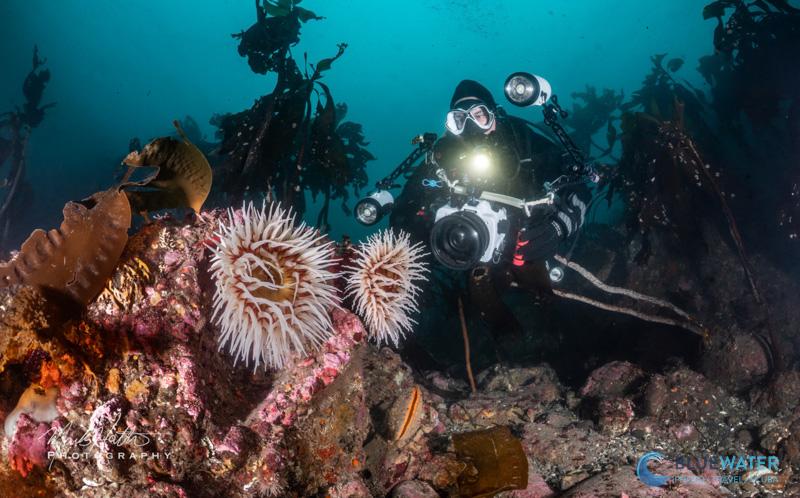
Nirupam Testing the Sony A7V in an Ikelite A7V Housing with Dual Ikelite DS 232 Strobes. Photo by Mark Hatter
The Sony A7 V is Sony's newest prosumer hybrid full-frame mirrorless camera and the successor to the extremely popular Sony A7 IV. The A7 IV has been one of our best-selling cameras at Bluewater Photo since its release in 2021, making the A7V one of the most anticipated upgrades in Sony’s lineup. In addition to 33-megapixel photos and 4K/120p video recording, the new camera promises improved image stabilization, faster burst shooting, better autofocus performance, and longer battery life. However, at a starting price of nearly $2,900, the Sony A7V starts to look more like a “pro” camera than Sony’s traditional mid-range offering — especially with the 61-megapixel Sony A7R V costing only about $400 more.
So is the Sony A7V really worth the upgrade? We took an Ikelite Sony A7V housing diving in the cold waters of the Pacific Northwest to find out. I made sure to deck it out with the latest and greatest including a pair of Ikelite DS 232 strobes, the new Sony 100mm macro lens, a Sony PZ 16-35mm, and a Marelux SOFT Mini snoot with the new Marelux Apollo Y. With all this gear, the chances for a successful cold-water adventure were high. My excitement about the prospect of the perfect hybrid mirrorless camera was even higher — and I was not disappointed.
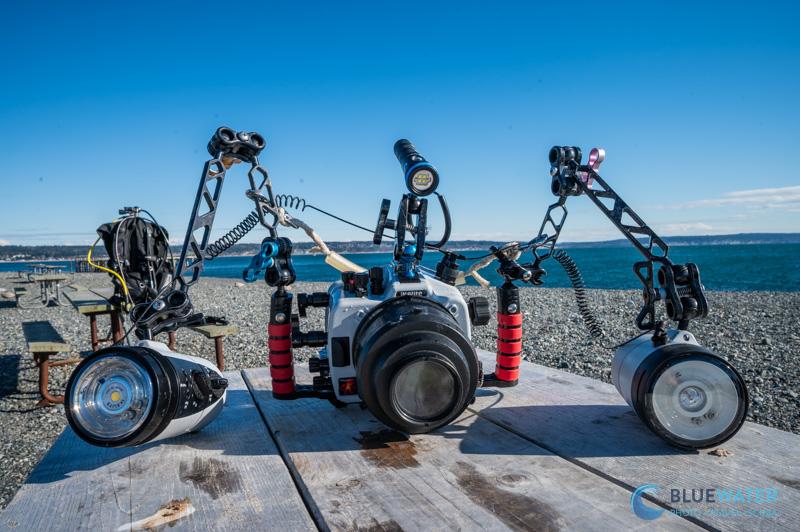
The Sony A7 V with Dual Ikelite DS232 Strobes in an Ikelite A7V Housing....before a dive at Keystone Jetty

Support our content and get your Sony a7 V camera body and underwater housings at Bluewater Photo! More housings coming soon...
Ikelite Sony A7 V Underwater Housing
Nauticam Sony A7 V Underwater Housing
Marelux Sony A7 V Underwater Housing
Sony A7 V Underwater Housing Guide
Read our Top Sony A7 V Underwater Settings
Sony A7V Specifications
- 33 megapixel full frame partially stacked Exmor RS sensor
- BIONZ XR2 image processor with dedicated AI processing unit
- 759 phase detect autofocus points with real-time tracking across most of the frame
- AI subject recognition for humans, animals, birds, insects, and vehicles
- Up to 30fps continuous shooting with electronic shutter
- Up to 10fps burst shooting with mechanical shutter
- Pre-Capture shooting to record frames before the shutter is pressed
- Flash sync speed up to 1/250 sec with mechanical shutter
- Electronic shutter up to 1/16,000 sec
- 4K/60p full frame video recording with 10-bit 4:2:2 internal recording
- 4K/120p video recording in Super 35 crop mode
- 7K oversampled 4K video for improved detail
- S-Log3, S-Cinetone, and advanced picture profiles for video
- 5-axis in-body image stabilization rated up to 7.5 stops
- Reduced rolling shutter compared to previous generation sensors
- 3.68 million dot OLED electronic viewfinder with 120 fps refresh rate
- 3.2 inch 4-axis multi-angle touchscreen LCD
- Dual card slots supporting CFexpress Type A or UHS-II SD cards
- NP-FZ100 battery rated up to approximately 630 shots with EVF or 750 shots with LCD
- Dual USB-C ports plus Wi-Fi and Bluetooth connectivity
- Dimensions: 130.3 mm × 96.4 mm × 82.4 mm
- Weight: 695 grams with battery and memory card
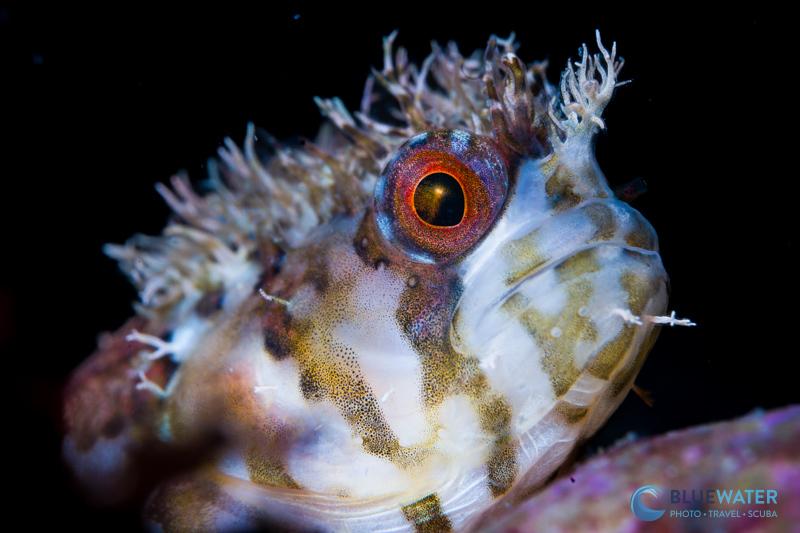
Mosshead warbonnet photographed with the Sony a7 V and the new Sony 100mm macro lens
Sony A7V Key Features
33 Megapixel Photos
The Sony A7V features the same 33-megapixel resolution that was introduced in the Sony A7 IV. This is a modest step up from the 24-megapixel sensor found in the older Sony A7 III, and in my opinion it remains an ideal resolution for a full-frame hybrid camera. There is a slight difference in the A7 V's sensor...it's partially stacked. This means the camera has faster readout speeds, contributing to quicker autofocus, less rolling shutter, and better video features.
While higher resolution cameras like the Sony A7R V offer incredible detail, they can also produce more noise at higher ISOs. The 33-megapixel sensor strikes a very nice balance between resolution, file size, and low-light performance. And low light performance is often a sticking point in the Pacific Northwest where I regularly shoot past ISO 1000 to get nice green backgrounds.
For underwater macro photographers, this resolution provides plenty of detail while still allowing you to crop macro images when needed.
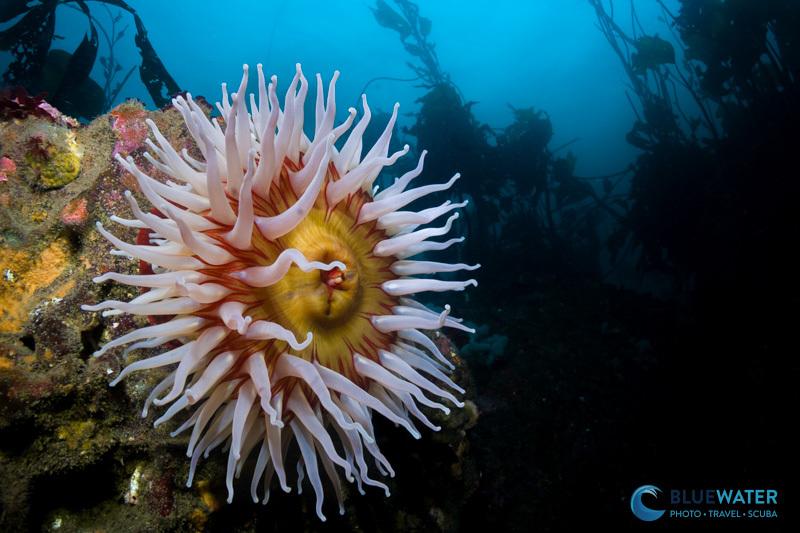
A fisheating anemone photographed with the Sony A7 V, Sony PZ 16-35mm lens, and dual Ikelite DS 232 strobes. ISO 500, f/13, 1/40
Improved AI Autofocus
Recent Sony models have benefited from a dedicated Sony AI autofocus processor. It allows the a7 V to recognize and track subjects much more intelligently than the A7 IV. I found that when I used the autofocus tracking mode on the camera (see our settings guide for details), the A7 V was easily able to pick up fish eyes and the bodies of fish swimming by. However, I do wish the low light autofocus EV rating was below -4. I found that the camera did struggle to acquire a subject in low light if I wasn't using my Bluewater 3000 as a focus light.
That said, I also found that the autofocus with the new Sony 100mm macro lens to be a little too fast and jumpy, requiring me to lower the autofocus sensitivity.

Great autofocus keeps the rhinophores on your nudibranch shots tack sharp like this clown dorid photographed with the Sony a7 V and the Sony 100mm macro lens
Better Image Stabilization
The A7 V's in body image stabilization now recovers up to 7.5 stops of stabilization with an optically stabilized lens as compared to 5.5 stops on previous models. This allowed me to shoot at low shutters speeds (like 1/40 of a second with the PZ 16-35mm) and still have tack sharp images that would have otherwise had motion blur from my hands. Shooting at slow shutter scan be especially beneficial for wide angle photography when the goal is to capture a pretty blue background - even on a dark day.
It also made handheld video shooting a lot easier. I was able to capture multiple macro clips with my 100mm macro lens without a tripod and with minimal camera shake. It certainly helped that I was also able to film at 4K/120fps.

Beautiful blue backgrounds with the Sony A7 V were made possible by shooting at a slow shutter speed of 1/40 of a second
Better Battery Life
The battery life on the Sony A7 V has been increased to a whopping 750 shots per charge! Did I notice? Not really since the Sony A7R V - Sony cameras have come a very long way from the frustratingly short battery life of older models. That said, it was awesome to be able to shoot for a full day and still have half a battery left. I would still recommend charging your batteries every night. But it's great to have the peace of mind during a dive day knowing I'll never run out. I can easily get through 4 or 5 dives. It's a big contrast to the disappointingly short battery life of the new Nikon ZR.

A spot prawn is devoured by a stubby squid. Captured with the Sony a7 V.
Faster Burst Shooting
The Sony A7V is now capable of a whopping 30 fps burst shooting in electronic shutter mode and 10 fps with the mechanical shutter. While the feature isn't very useful for underwater photographers who are limited by the recycle time of strobes, it can be very useful for action photographers. Many pelagic shooters photographing shallow water subjects like bait balls, sharks, dolphins, and whales will be able to capture very quick moments in RAW at 30 frames per second.

A quick burst was the only way I was able to capture this pacific spiny lumpsucker with the Sony a7 V as it swam towards me
The Sony A7 V for Underwater Video
Perhaps the most significant improvement over the Sony a7 IV is the enhanced underwater video capabilities of the Sony a7 V. The camera can now record 4K/60p using the full width of the sensor, eliminating the crop that limited the previous model. For shooters who need even higher frame rates, the a7 V also supports 4K/120p recording with a crop, which is ideal for slowing down footage in post to create smoother motion, improve stabilization, or capture fast-moving marine life.
The camera also includes Sony’s popular logarithmic picture profiles, including S-Cinetone and S-Log3. These profiles allow videographers to preserve more highlight and shadow detail, providing greater flexibility when color grading footage during post-production.
Overall, we had a fantastic experience filming underwater with the Sony a7 V, capturing some incredible moments beneath the surface—all recorded using S-Log3 for maximum dynamic range and grading flexibility.
Sony A7 V Underwater Housings
Several underwater housing options are already available for the Sony A7V from manufacturers including Ikelite, Marelux, and Nauticam, with additional housings likely to be announced in the future. Each brand offers slightly different advantages depending on your priorities. Ikelite housings provide excellent value with lightweight polycarbonate construction, straightforward controls, and strong strobe integration. We used the Ikelite A7 V housing and loved the new, high grip knobs as well as the fact that it is compatible with the Sony a7 IV and A7R V as well! Marelux housings feature durable aluminum construction, good ergonomics, and an expanding ecosystem of accessories designed for both macro and wide-angle photography. Nauticam also offers an aluminum housing with a wide range of ports and accessories that many photographers may already be familiar with from previous Sony systems.
If you're trying to decide which housing system is the best fit for your shooting style, be sure to read our complete Sony A7V underwater housing guide, where we compare the available housings, port systems, lens compatibility, and recommended accessories such as strobes, focus lights, and vacuum leak detection systems. Feel free to email us any time at sales@bluewaterphotostore.com to get setup with a custom kit.

Sony a7 V Underwater Lenses
Best Wide-Angle Lenses
With improvements in autofocus with the Sony A7 V, I now believe the Canon 8-15mm fisheye lens with the Sigma MC-11 adapter is the fisheye option for most wide angle shooters. I found the autofocus to be effective, though not as fast as a Sony native lens.

A wide angle reef scene photographed with the Sony PZ 16-35mm f/4 and the Sony a7 V
For both photo and video, the Sony 16-35mm F4 lens as well as the Sony PZ 16-35mm f/4 with an 8-inch dome or larger is an excellent choice. I thoroughly enjoyed shooting with the Sony PZ 16-35mm with the Ikleite 8 inch compact dome for most of my wide angle shooting. I was able to custom set a zoom in and out button on the camera so that I didn't need a zoom gear. There are also some great wet wide-angle lenses available such as the Nauticam wet wide-angle lens or the Kraken KRL-01 wet wide-angle lens that can be used with the Sony 28mm prime lens. The Sony 28mm prime lens also works well with a fisheye conversion lens to capture even wider shots of large reefscapes.
If you're looking for the most versatile wide-angle Sony set up for underwater shooting, the Sony FE 28-60mm F4-F5.6 lens behind a flat port with zoom capability paired with the Nauticam WWL-1B Wide-Angle Wet lens is the way to go. The downside is that it's currently only compatible with Nauticam and Marelux housings. Check out the Underwater Photography Guide's article about the Sony FE 28-60mm F4-F5.6 lens for more information or email us at sales@bluewaterphotostore.com to get set up with this combination.
Best Mid-Range Lenses
The Sony 28-70mm F3.5-F5.6, the Sony 24-70mm F4 and the Sony 35mm F2.8 portrait lens are three good mid-range options.
Best Macro Lenses
There are three native Sony lenses that we think are great macro options: the new Sony 100mm, Sony 90mm, and 50mm macro. The Sony 100mm macro is lightning quick and our top choice for macro photographers. The 90mm has a decently fast autofocus motor as well. I don't really recommend the Sony 50mm macro lens - it's just too slow to focus to be usable underwater. Recently, we reviewed the Sigma 105mm f/2.8 DN DG Art macro lens. It's an excellent and more affordable option to the Sony 100mm with better image quality than the Sony 90mm. However, it is not a great choice for video due to focus breathing. We already mentioned the Sony FE 28-60mm F4-F5.6 lens and how it makes a great wide-angle option when used with a wide-angle wet lens, but combine it with the Nauticam Compact Macro Converter CMC-2, and it becomes a very versatile and highly capable macro set up too.
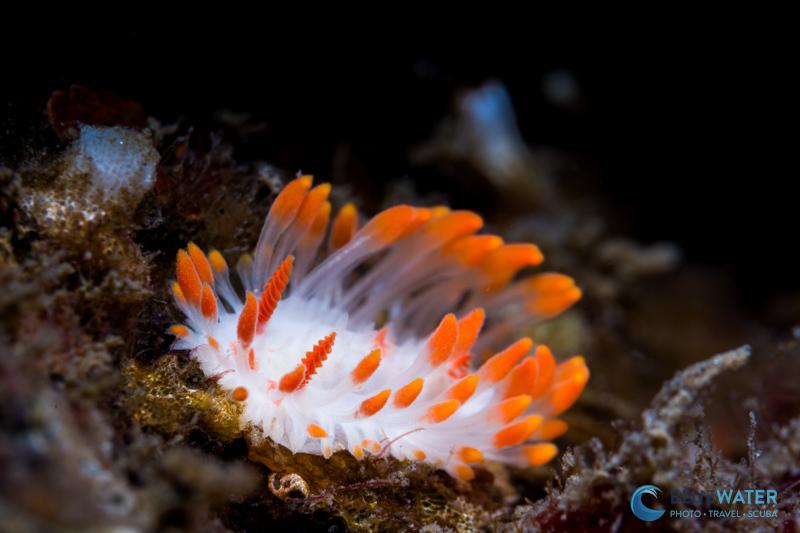
A nudibranch photographed with the Sony 100mm macro and the Sony A7 V
Canon Lenses for the Sony A7R V
Canon lenses can be attached to the Sony A7R V with the Metabones, Sigma MC-11, or Photodiox adapters, but auto-focus is generally better with Sony lenses. Lenses like the Canon 8-15mm, 16-35mm, 17-40mm, and 100mm can work well. I found that the Canon 8-15mm fisheye lens worked better with the Sigma MC-11 adapter than with the metabones adapter for photography.
Is It Worth the Upgrade?
Overall, I do think the Sony A7 V is worth the upgrade over the A7 IV. The autofocus imrovements are noticeable for underwater photography as well as the improvements in stabilization and battery life. Most importantly, video shooters are getting a cinema grade camera capable of filming in 4K/120p.
If you are shooting a Sony A6700 and looking for the next step, the A7 V is probably your best bet. Especially because the camera is the perfect mix of a photo and video camera.
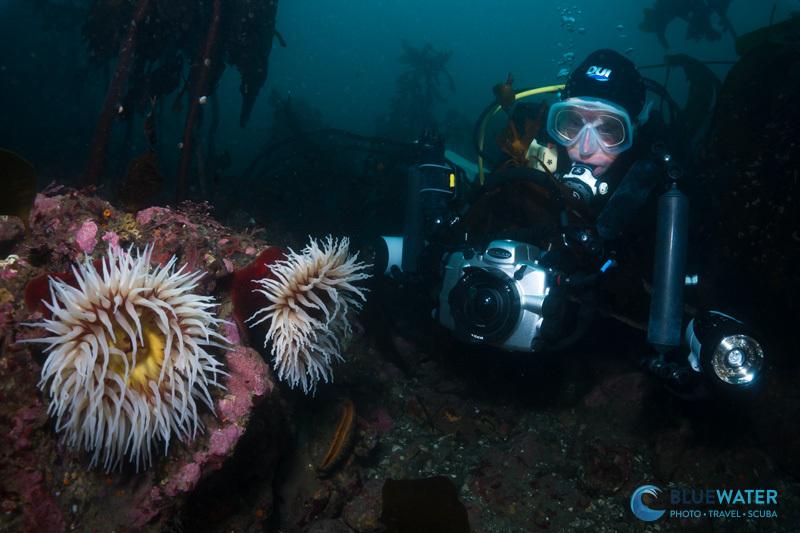
Mark Hatter photographing anemones. Photographed with the Sony A7V
Cons: A Few Glitches to Work Out
I did however, notice a few glitches that need to be worked out in the Sony a7 V - hopefully in the next firmware update. These issues are rare and may just be my experience, but I did think it was worth noting:
In a few low light situations I noticed that the camera would freeze for 30 seconds if I tried to autofocus and turn on my autofocus light on at the same time.
I also noticed that the white balance capture in photo mode was generally pretty good, but it could also be significantly off. This sometimes resulted in a magenta tint. The moral of the story is ALWAYS SHOOT RAW. It's not an issue when shooting RAW because you can set your white balance in post. But if you are shooting JPEG or want to see an accurate image review, it could be an issue.

A kelp crab photographed with the Sony A7 V and dual Ikelite DS 232 strobes
Conclusions
After several dives with the Sony A7 V underwater, it’s clear that Sony has refined what was already one of the best hybrid cameras on the market. The partially stacked sensor improves readout speed for better autofocus tracking, reduced rolling shutter, and stronger video performance, while the 33-megapixel resolution continues to offer an excellent balance of image quality, low-light performance, and manageable file sizes.
For underwater photographers, the improvements in autofocus, stabilization, and battery life are noticeable. Video shooters benefit even more, with full-frame 4K/60p recording and 4K/120p slow motion making the A7 V a much stronger hybrid camera than the A7 IV.
Overall, the Sony A7 V is an outstanding underwater camera and one of the most versatile hybrid systems currently available. Whether you're shooting macro, wide-angle scenes, or cinematic underwater video, the A7 V delivers excellent performance in a compact and reliable package.